Showing posts with label Historical Fiction. Show all posts

Sunday, June 16, 2024

The Last Hope (A Maggie Hope Mystery #11) by Susan Elia MacNeal

The Last Hope: A Maggie Hope Mystery
by Susan Elia MacNeal


I'm a little on the OCD side and although I closed The Children's War in December 2023, I find I can't not review the final book in the Maggie Hope series. So here goes...

The Last Hope is the eleventh and final (?) book in Susan Elia MacNeal's wonderful WWII mystery series featuring Maggie Hope. Maggie has had some scary adventures since the war began and she became an SOE agent to do her bit, but her final mission may just be the most difficult.

It’s January 1944 and no sooner has Maggie returned from Los Angeles with the love of her life, John Sterling, then she gets an early morning call from Kim Philly, head of the Iberian Section of MI-6. Word is that the Germans are working on a fission bomb that could erase a whole city from the face of the earth and it is suspected the Werner Heisenberg, a pioneer in quantum theory, may be behind their research. Maggie’s new mission is to travel to Madrid, Spain under the alias Paige Kelly (see Mr. Churchill's Secretary, Maggie Hope #1), where Heisenberg is giving a lecture and to assassinate him. But Maggie being the mathematician that she is decides that she needs to determine whether the Nazis have such a bomb or not. If they do, Heisenberg dies, if not, he lives.

Realizing that the war is not going well, and since Allied demand for an unconditional surrender is not an option, it is decided by Heinrich Himmler and General Walter Schellenberg that Germany’s only hope of survival would depend on negotiating a separate peace with the Allies sans that Soviet Union. The hope is this would keep communism out of western Europe. And now that information about the Final Solution is leaking out, one of their bargaining chips would be the lives of the remaining Jews. And Schellenberg has just the right contacts for getting the offer of a separate peace into the hands of Winston Churchill: Axis spies Coco Chanel and her current amor, Hans von Dincklage will be traveling to Madrid on the pretext of hearing Heisenberg’s lecture.

It turn out that Maggie as Paige Kelly owes Coco a favor after she saved Maggie’s life back in 1942 (see The Paris Spy, Maggie Hope #7) and Coco has every intention of calling the favor in, insisting that Maggie/Paige personally deliver the peace proposal including a handwritten letter from Coco herself directly into the hands of Winston Churchill.

And, of course, Maggie being Maggie, she attracts the attention of the famous bull fighter Juanito Belamonte, whose fame gives him all kinds of useful connections so that he can unwittingly help Maggie.

There's a lot going in in this novel that will keep you on the edge of your seat. Does Maggie assassinate Heisenberg? Obviously not (not a spoiler), but she has some very interesting conversations with him about quantum theory and his uncertainty principal. And the whole time she is carrying out her mission, Maggie has her personal life and her relationship with John Sterling very much on her mind.

The Last Hope was a bittersweet read. It was so good that I could hardly put it down, but then again, I didn’t want to finish it and say good bye to Maggie and her friends. I found it particularly interesting since I’ve take quantum theory courses and really thought that MacNeal did an excellent job making it accessible for those of us who are not physicists or mathematicians.

The story is loaded with names of real people and I found myself going to the internet to find out more about them. In fact, all the Maggie Hope books have been like that and I like a historical novel that gets my curiosity going. MacNeal is so great at incorporating her research seamlessly into her stories.

I’m going to miss Maggie, but I can highly recommend each and every one of her wartime adventures, but by 1944, she has certainly done more than her bit for the war effort.

So, good-bye, Maggie, good luck and marry John Sterling as soon as possible.

Thank you to Ballantine/RH and NetGalley for allowing me to read this E-ARC.

Friday, October 21, 2022

My Own Lighting by Lauren Wolk

It's 1944 and WWII is still being fought far from the home front in this sequel to Wolf Hollow. Annabelle McBride, 13, is finding it hard to move on from the events of the past winter when she tried to save her friend Toby, a homeless, shell shocked WWI veteran, from the cruelty of a girl named Betty Glengarry. Now, summer vacation has just started and Annabelle has promised to help her teacher clean up the schoolhouse for next September. While there, an unpleasant stranger named Drake Graf shows up looking for his lost dog Zeus. And just as Annabelle and Mrs. Taylor are leaving the schoolhouse, not only to they hear thunder in the distance, but Andy Woodbury, Betty's partner in crime, is not far away watching them.

As Annabelle is walking home, the storm begins and a lightning strike hits her, knocking her out and stopping her heart. But then someone appears, pounding her chest and getting her heart started again, before they run off and Annabelle is carried home by someone else. When she regains consciousness, she doesn't remember who helped her , but her senses - smell, hearing, vision - are so heightened her brothers call them superpowers. The morning after the lightning strike, as Annabelle's petting their dog Hunter, she is overcome with a strong sense of real peace. Then, she learns that her brother's dog Buster is missing and that Andy Woodbury has been living in their potato house with Mr. McBride's permission after he was badly beaten at home. Later, Annabelle realizes she knows animals better than before and in a whole new way. 

Being able to understand animals and feel what they feel proves to be very useful as more dogs begin to disappear. Animals are so much easier to understand than people are for animal-loving Annabelle. And so she sets out to try and discover where the missing dogs are, often in the contentious company of Andy Woodbury, while also trying to solve the mystery of who saved her life. In the course of all this, Annabelle meets the newly arrived to the area Mr. Edelman and his reclusive daughter Nora, who has her own healing to do and who has been secretly taking in injured and sick animals in need of attention that her father finds.   

Annabelle had just wanted to put the traumatic events caused by Betty and Andy behind her, but she soon learns that she must reconsider some things in order to come to terms with those events. She had never wanted to see Andy again, but after learning about the abuse he is subjected to at home and also seeing how kind and gentle he is with animals, Annabelle is forced to reconsider her feelings toward him. Annabelle and Andy are both very flawed characters but their individual journeys - one towards forgiveness, the other towards redemption - show us that we don't always know people as well as we think we do. I know it sounds like there's a lot of disparate threads running through this coming of age novel, but they do all come together in the end. And although Annabelle's journey includes references to Wolf Hollow, it is not absolutely necessary to have read that first novel to understand this one. 

My Own Lightning is a wonderfully layered novel that tackles themes of abuse, family, friendship, family, and acceptance and an excellent sequel to Wolf Hollow.

Monday, October 10, 2022

Yonder by Ali Standish

In 1940, Danny Timmons was 10 and living in a small Appalachian town called Foggy Gap the first time he really noticed Jack Bailey. Jack had rescued toddler twins caught in the floodwaters after the Watauga River burst its banks during a powerful rain storm. 

Three years later, Danny is almost 13, Jack is almost 16, and World War II is raging far from Foggy Gap and yet still touching the lives of its residents. Danny's father was only one of the men who had left for the war and now residents of Foggy Gap are doing all sorts of jobs men used to do. Danny and Jack have been delivering newspapers all over town for a year and a half now. But one summer morning in 1943, Jack never shows up for his share of the papers, so Danny delivers all of them, surprised since he knew Jack and his father really needed the money he brought home. 

Danny had always been bullied by Bruce Pittman and his pal Logan Abbot until one day in 1941 Jack had come to his rescue and became Danny's personal hero. Now, worried that Jack hadn't shown up to deliver papers. Danny and his mother, who was a reporter for the newspaper, drive out to see if he's alright. Jack lives with his father in a cabin with no indoor plumbing or electricity in the woods. His father, known for his temper and cruelty, isn't at all concerned that Jack has been missing since the day before, saying he is probably hunting, and chases them off his property.

Danny has reason to be worried about Jack. Back in December 1941, Jack had shown up at the newspaper office with swollen eyes, a bloody nose and bruises on his body. Jack stayed with the Timmons until Christmas, when his father came to get him. It was now also clear that Jack's father beat him on a fairly regular basis.  

With Mr. Timmons away at war, Jack and Danny become more than friends, with Jack mentoring Danny the way a father would. Jack also shares stories with Danny that his mother used to tell him, especially about a place called Yonder, an idyllic town with no trouble and no war. Naturally, when Jack goes missing, Danny is sure he has run away to Yonder and sets out to discover where it is and to bring Jack back home. 

While Jack's story plays out, so does the stories about Lou, Danny's former best friend, as girl obsessed with Nancy Drew, and Widow Wagner, a woman of German descent who, according to Bruce Pittman, was hiding Germans who has escaped POW camps and plotting an attack on the town. 

Yonder is a home front story and as the author writes in her Historical Notes, "...not many books have focused on the American homefront." And she's right - we don't know all that much about how Americans lived even though they were greatly impacted by the war. And yes, she has included the usual things like rationing, collecting scrap, women taking on men's jobs (Mrs. Timmons, who is pregnant, took over her husband's job at the newspaper), blue or gold stars hanging in the windows of families with soldiers in the war. But two things set this novel apart for me. The first is her interrogation of the idea of what makes a person a hero. And as Danny learns through Jack and his story it isn't always what we think it means. Second, Standish dispels the long held belief that Americans didn't know what was happening to the Jews in Europe. The headline WARSAW that Danny sees in an article his mother is reading in New Republic magazine, referring to the Warsaw Uprising, sparks a conversation about why the Jewish genocide isn't included in the media, something Mrs. Timmons tries to rectify in their local paper. 

Yonder is told in the first person present by Danny with recurring flashbacks that detail both his and Jack's story and friendship. Danny is a compelling narrator and keeps the story moving along very nicely. Through him and his keen observations, the novel explores themes of bullying, racism, abuse, bravery, courage, outsiders, family and friendships. 

Monday, September 12, 2022

Resist: One Girl's Fight Back Against the Nazis by Tom Palmer

A few years ago, I read a book called Dutch Girl: Audrey Hepburn and World War II by Robert Matzen, so I knew about her experiences during the war. What I didn't know when I started reading Resist, the new WWII book by Tom Palmer, was that it is a fictionalized story inspired by Audrey's life during the war. 

It's 1943, and Edda, 15, has a sheaf of illegal resistance newsletters stuffed inside her socks to be delivered to certain addresses. The delivery is her first her first resistance assignment and Edda is nervous, knowing if she were caught, it would mean death at the hands of the Nazis. Edda volunteers at the hospital, and had  asked Dr. Hendrik Visser't Hooft, a leading figure in the resistance, if she could help there, too. Years of studying ballet in England had given Edda an excellent memory, and she proved herself able to easily memorize the addresses for the newsletter delivery.

The Nazis had been occupying the Netherlands since 1940, forcing Edda's brother Alex to go into hiding to avoid being picked up by the Nazis and sent to a slave labor camp in Germany, and her Uncle Otto was one of 460 men who had been arrested and executed by the Nazis. So imagine Edda's stunned surprise when she sees her mother's name listed as a Nazi sympathiser in the newsletters she's carrying. How could Edda possible prove that her mother wasn't a collaborator?

When Dr. Visser't Hooft asked Edda if she would be interested in dancing as part of an evening of entertainment, a secret performance done after dark, to raise money to help people in hiding. she thinks this would help prove her mother's support for the resistance. But when she asks her mother's permission, Edda was told no, she could not participate, it is just too dangerous. After the Germans pick up her other brother Ian, 17, to send to Germany, Edda's mother has a change of heart and gives her permission to perform. On the way home from the performance, Edda finally asks her mother why she had been listed as someone not to be trusted and is relieved to learn that her mother feels it was a mistake to support Hitler and is now on the side of the resistance.

By 1944, the Dutch are hearing on illegal radios that the Allies are moving closer to Holland. But the Germans are getting desperate and are stealing most of the food for themselves and letting the Dutch starve. When the British finally arrive not far from Velp, everyone begins to hope the war will end for them soon. But the British are defeated, as is the hope of the Dutch. Then, one day, Edda is caught by German soldiers along with other girls her age. Afraid she would be sent to Germany like her brother Ian, Edda takes a chance and runs away, knowing how to avoid the soldiers because her resistance activity had taught her all she needed to know about the streets of Velp. 

When her mother hears what happened, Edda is sent to the cellar for her own safety with the rest of her family as the war continues above them. Early one morning, there's a knock on their front door,  and after her mother and grandfather go see who it is, they return with a box of food, apparently from the American army. Could it be that the war and the Nazi occupation in the Netherlands is finally coming to an end? And will Edda ever see her brother Ian again?

Resist is an interesting story, in part because I knew it was inspired by Audrey Hepburn's family and her resistance work. More importantly, however, Palmer shows his readers, without being too graphic, just what it was like for the Dutch people under Nazi occupation - the cruelty of the Nazi soldiers, the disregard for the lives of the Dutch people, and the extent of the starvation they were subjected to. 1944 was infamously known as the Hunger Winter. And just as importantly, the strength of the Dutch during that time. At one point, Edda, already an accomplished dancer, even gave ballet lessons to the local children. 

Palmer's portrayal of Edda is sensitive and I think true to who the real Audrey Hepburn was. He has brilliantly captured her thoughts, her fears for herself and her family, her anger at the Nazis for what they have done to her beloved country, friends and neighbors, and her need to resist the occupiers. These are the same qualities that followed Audrey Hepburn throughout her life, and lead her to do so much humanitarian work as well as acting.  

Back matter includes information about Audrey Hepburn as the inspiration for Edda, the occupation and starvation of the Netherlands, resistance activity there, a bit about Audrey Hepburn and Anne Frank, Audrey Hepburn and her work with UNICEF. and finally, Tom Palmer's research for this novel, including several biographies of Audrey Hepburn, and recommended children's books, such as Tamar by Mal Peet, among others. 

Resist is published by Barrington Stoke known for their books that are adapted for dyslexic and reluctant readers. and as a dyslexic, I can't recommend them highly enough.

Tuesday, July 19, 2022

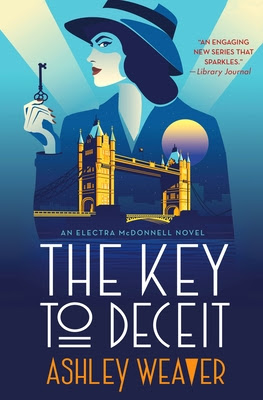
The Key to Deceit (An Electra McDonnell Novel #2) by Ashley Weaver

It's September 1940 and it's only been a few weeks since Ellie McDonnell helped the handsome, aristocratic Major Gabriel Ramsey break  into a house to retrieve some important blueprints before they could be given to the Nazis in A Peculiar Combination. Naturally, she's antsy for another chance to work with Major Ramsey, but first a little background information for those who haven't discovered this great series: Ellie was raised by her Irish Uncle Mick in London after her mother was arrested and imprisoned for supposedly killing Ellie's father, Uncle Mick's brother. Uncle Mick is a locksmith by day, and He, his three sons and Ellie were a safe crackers by night until Major Ramsey caught them in the act and gave the McDonnell family an ultimatum: live on the straight and narrow and help in the war effort or go to prison. I guess you can figure out which choice they made.

Luckily, Ellie doesn't have to wait long for the Major to need her safe cracking skills. A woman found dead floating in the Thames is wearing a curious bracelet - it's a thick cuff that is locked to the wearer's wrist. Ellie is a little queasy about picking the lock on the wrist of a dead woman and stalls by going over her clothing, which was new and expensive. Once Ellie has picked the lock open, they determine it contains a miniature camera. Major Ramsey dismisses Ellie and sends her home, but not for long. Turns out the clothing description helped them determine that the woman was doing something underhanded - there was a bag of precious gemstones hidden in her coat. 

Ellie and her sorta, kinda boyfriend Felix Lacey call on a pawnbroker friend to help them identify and figure out the source of the gems, the women, now identified as Myra Fields, had hidden in her coat. Myra was engaged in espionage for the Germans and the photographs she had taken would be very useful to the Germans should they ever begin bombing London. They also learn that she had been staying in a boarding house run by a Mrs. Paine. 

Ellie and Major Ramsey decide to visit the boarding house as an engaged couple and cousin of Myra's, to see what they can find. And in the midst of gathering evidence of a possible spy ring, the Nazis begin bombing London. Once bombing begins, not knowing who is part of the spy ring or how large it is makes the need to capture the spies taking pictures of possible bombing sites and their ring leader even more imperative. 

There's a lot going on in this novel and it moves at a pretty quick pace, but it is by no means overwhelming. In fact, some of it is a nice break from the mystery at hand. First, there is the relationship between Ellie and Major Ramsey. She is feisty, and can be a buster, while he is aristocratically uptight. Yet, there is chemistry brewing between them and Ellie's family would be pleased a punch to see her involved with him. And Ellie does think about it, but wait, what about Felix? He's so sweet and things could get more serious between them and he is more her sort, criminally speaking. Then, there is the case of Ellie's mother, who maintained her innocence right up until her death from the flu epidemic. Can Ellie find a way to clear her mother's name? And of course there are the everyday changes that war brings on in people's lives. I just love details. 

All in all, I found The Key to Deceit an enjoyable mystery, with lots of details and good plotting so that when the culprit was finally revealed, I was surprised.  The fact is that I was a little skeptical about the Electra McDonnell series when I first heard about it, but after reading these first two novels, I can't wait for the third book. 

Thank you, NetGalley, for supplying me with an EARC.

Saturday, June 11, 2022

Lines of Courage by Jennifer A. Nielsen

It should have been an exciting visit to Sarajevo with his father, but
instead Felix Baum, a 12-year old Jewish boy, witnesses the assassination of Archduke Franz Ferdinand and his wife, and feels he is a coward for not warning anyone when he saw the assassin with a hand grenade. Returning home, the Baums are visited by Major Dressler and his daughter Elsa from Germany, who gives Felix the gift of a carrier pigeon . War is soon declared, and Felix's father is called up. Learning that the Russians are coming, Felix and his mother try to leave Lemberg, but instead run into the cruel Russian Captain Garinov. Felix manages to irritate Garinov and pays dearly for it. Luckily, Elsa and her mother rescue Felix and his mother, enabling them to escape to Vienna.

Kara Webb, 13 almost 14, wants to be a Red Cross nurse more than anything, just like her mother. Allowed to accompany her mother on the Red Cross Ambulance train traveling throughout France picking up the wounded at Casualty Clearing Stations, Kara may only act as an orderly, never leaving the train. When the Germans begin using poison gas, the number of wounded increase, then the rail line are destroyed, so everyone has help carry soldiers from the battlefield to the train. When an orderly is injured, Kara is finally allowed to help. But when she rescues and hides an injured enemy soldier named Baum, she is no longer allowed to do anymore work on the train, even after Sergeant Baum leaves. Reaching Verdun around Christmas, Kara meets Juliette Caron, selling items to get money for her family to bribe a German guard to get her father out of their prison. Kara buys a bright red hat, but gives it right back to Juliette.  

Juliette and her family try to leave Verdun, but are soon caught by the Germans. Juliette manages to hide in the woods, but the Germans set up camp so close she can't run away without being seen. After falling asleep, she wakes up on Kara's Red Cross train, but now she doesn't know where her mother and two younger brothers are. After two months, Juliette leaves the train, searching for her family and hoping to free her father. In Lille, she runs into an old friend, Monique, who brings her home, but double crosses Juliette, taking her money. Then, the girls are captured by Germans and taken to a farm to work. Monique does help Juliette escape the farm, but then she runs into Major Dressler, who knows and admires her father. Dressler lets her go instead of sending her back to the farm, and she finds herself back on the ambulance train with Kara. Two months later, Juliette is on the road again, looking for her family when she sees an injured young boy and rescues him, bringing him to the cave she has found shelter in. 

The boy's name is Dimitri Petrenko, 14, and he's been serving in the war under Captain Garinov, now a Bolshevik who intensely dislikes him for supporting the Tsar. Garinov sends him into no man's land to get a rifle, where he is knocked unconscious and left for dead. After Juliette nurses him back to health, he returns to his unit, knowing what he now wants is freedom. But as soon as Garinov sees him, he orders Dimitri to lead a charge, one that costs him dearly. When news of the Russian Revolution reaches the trenches. Garinov refuses to fight anymore, wanting to return to Russia. After Garinov's mutiny, Dimitri finds himself fighting with the French in Belgium, where he is taken prisoner by the Germans. Taken to Major Dressler's home to work in Freiburg, Dimitri runs into Captain Garinov, also a prisoner. When Garinov finds an old medal in Dimitri's pocket, he tries to get him in trouble, but Elsa Dressler recognizes the medal as belonging to Felix's family. Convinced he didn't steal it, Major Dressler arranges for Dimitri to be driven to the French border and released. Meanwhile, Garinov has stolen a horse from Dressler and run away. 

The medal that is found on Dimitri is a red thread running through this story and connecting each of the main characters to each other. Felix refused the medal when his father offered it to him. Sergeant Baum had taken it with him to war as a reminder of his own father's courage. He had given it to  Kara, who gave it to Juliette. Later, Juliette gave it to Dimitri and Elsa had recognized it. 

The novel begins in 1914, with the assassination of the Archduke and goes through to November 11, 1918, the end of the war. It is a well-researched work and includes information I did not know, for example, the Red Cross Ambulance Train.

But...
I've always enjoyed Jennifer Nielsen's historical fiction for young readers, but I'm sorry to say, for me, this is not one of her best books. Writing a story about five very different characters from different countries who are connected to one another and including Dressler and Garinov in the mix is hard to do because so much much depends on coincidences not found in reality. And the novel is so filled with coincidences plus the improbability of its five characters running into each other the way they do was just too hard for me to believe. Nielsen does include some interesting WWI history in the story and in her Author's Note, but the multiple story lines overwhelmed me. I felt like she had five short stories and decided to turn it into a novel by knitting them together using a medal from an earlier Austrian conflict, but it just didn't work for me.

I think that given what is going on in Ukraine right now, this would be an interesting novel for anyone interested in history and especially WWI as long as the coincidences doesn't bother them. It is of note that so many young teens were asked to do the job of adults in this war. I can't imagine sending 14-year-olds to war, but I know it could happen again. 

Thank you to Edelweiss+ and Scholastic Press for providing me with a digital review copy of this novel.

Monday, June 6, 2022

The Memory Keeper of Kyiv by Erin Litteken

If you have been following the invasion of Ukraine by Putin's Russian army, you may find this to be a very interesting and compelling story, even though the events take place in 1930s Ukraine. The story introduces readers to Katya in 1929, 15 and surrounded by a loving family, and a future husband name Pavlo she is passionately in love with, and a table filled with an abundance of wonderful Ukrainian food, breads (Ukraine is, after all, the breadbasket of Europe). and delicacies. 

Six months later, in January 1930, Joseph Stalin begins his invasion of Ukraine, which was already part of the Soviet Union, but his goal is to get rid of the Ukrainians by starving them to death. Stalin's activists encourage the people to join them and become part of their collective farming scheme, but Katya's family resists. Those not joining the collective have high taxes inflicted on them, then their food, farming equipment, and farm animals are taken in lieu of the tax money the Russians know they don't have. The resisters begin to disappear. As things become worse, Katya's father is arrested. And it is decided she will marry Pavlo, and her sister Alina will marry his brother Kolya. But when Pavlo hears that a resistance movement is being put together in the next village, he decides he must go and fight.

Flash forward seventy years to Illinois. Cassie, a widow who lost her husband a year earlier in a car accident while take their daughter out for ice cream, has all but withdrawn from life. But then her mother convinces her to move in with her Ukrainian grandmother, whom she calls Bobby, because of her age and her recent odd behavior. Cassie hears her taking to herself, and then begins to find food hidden all around the house and yard. She also finds a diary her grandmother has been writing in, but it is in Ukrainian. Luckily, there is an unattached, handsome man named Nick living down the street who is friends with her grandmother and who knows Ukrainian. Eventually, her grandmother decides that her story needs to be told and gives Cassie permission to work on it with Nick. 

Ultimately, the two stories, told in alternating chapters, come together, and I don't think you will be very surprised to hear that Katya and Bobby are the same person. If I sound like I am making light of this novel, I am not, I just don't want to give too much away, and there is a lot going on. I found myself so drawn to young Katya's story, but some of the details were really difficult to read. I knew that Stalin was cruel, but I didn't know that he had committed genocide through starvation in Ukraine (the Ukrainian word for this is the Holodomor). I felt exactly like Cassie when she learned what her grandmother had survived "How did I not know about this?" And it certainly compelled me to do some research of my own to find out more about the Holodomor.

On the other hand, I have to be honest and say I wasn't particularly interested in Cassie's story. As soon as I read about Nick, I knew where things where going to go. So yeah, that part was predictable. But she was a good vehicle for adding more information about Bobby into the story. Trauma just doesn't go away and Bobby's life after she left Ukraine up to the present needed to be included.

The Memory Keeper of Kyiv is a book that I definitely recommend and I believe it will appeal to history geeks like myself, to anyone who have been following events in present day Ukraine, and there is even enough romance for fans of that genre.

Thank you, NetGalley and Boldwood Books for granting me a review copy of this book. 

Friday, May 6, 2022

Great or Nothing by Joy McCullough, Caroline Tung Richmond, Tess Sharpe and Jessica Spotswood

My first memory of Louisa May Alcott's Little Women is my older sister sitting in an easy chair in the living room and crying her eyes out while reading the book. When I asked why she was crying, she just said "You'll see." And I did indeed  discover why a few years later when I read Little Women in fourth grade. And I've never re-read it. But I have been enjoying some of the new retellings like So Many Beginnings by Bethany C. Murrow, More to the Story by Hena Khan, and Meg, Jo, Beth and Amy by Rey Terciero, among others. The latest retelling, Great or Nothing, takes place during a war like the original, but this time it is World War II.

The story begins in the spring of 1942. The United States has entered the war and people are still adjusting to the change. And that includes the March sisters, who are also still reeling from the recent death of their sister Beth. Now, their father is has enlisted as a Navy chaplain, Marmee is overly involved in charity work, and Laurie is a pilot stationed overseas. Laurie had asked Jo to marry him before he left, but she said no. Jo loved Laurie just not romantically. Then, she and Meg had harsh words. Jo couldn't understand why Meg would give up everything for math teacher John Brooke, and Meg couldn't understand why Jo had refused to marry Laurie. 

Unable to write after Beth's death and needing to get out of the house after her fight with Meg, Jo is living in a boarding house, while working in a factory producing airplanes. But when she meets Life reporter Charlotte "Charlie" Yates, and helps her write a story about the airplane factory, she realizes that she also needs to sort out her feelings for Charlie.

Meanwhile, Meg is still at home with Marmee, continuing to teach, content to wait for John, whom Amy called "that boring old fuddy-duddy," to come home and to get married. But when an old "friend" decides Meg needs to party, to have some fun, and to meet other more exciting men, she begins to question whether she would really be happy in a quiet marriage with John.  

Amy, who has been crushing in Laurie since she was a child, is supposed to be studying art in Montreal. Instead, unknown to her family, she has decided to join the Red Cross. At first turned down for being too young, Amy fortuitously finds another girl's application and uses that at another recruiting station, where she is accepted. After training, Amy is sent overseas with other recruits to work in a mobile canteen, where they serve coffee and donuts to American servicemen in London. And she runs smack into Laurie.  

And Beth? She's there, a spectral poetic voice following her sisters adventures, providing insight, and giving unheard, unheeded advice about life in between the chapters. 

Needless to say, as the story unfolds, it is clear that each sister has some big problems to deal with and some big challenges they need to overcome while navigating the war and their profound grief. 

I really enjoyed reading Great or Nothing, finding it a thoughtful, appealing story that could be seen as simply a YA wartime romantic novel, but it is actually more elevated than that. Racial and sexist issues are introduced in both Meg and Amy's stories. Meg has a student who is Japanese American and Amy encounters an African American soldier who is not totally accepted by everyone, including Amy's friend Edie. And then there is Jo, who finally figures out who she is and why she didn't have romantic feelings for Laurie.  

I also enjoyed some of the details included, like Victory Gardens, Victory Red lipstick, and of course, how women arranged their hair in Victory rolls, as well as the impact that shortages and rationing had on everyone. There isn't a lot of action to this story, but plenty of coming-of-age drama. And if I remember right, there wasn't much action in the original Little Women. I also felt that the original message about the importance of family bonds wasn't lost in this novel, even though the March sisters were scattered for much of the story. Sometime, you just need to get away from the security of home family to find yourself and appreciate what you have.  

The story is told in alternating chapters, each character written by a different author who a different voice and point of view to each of the March sisters. In case you are wondering who wrote who - Beth is written by poet Joy McCullough, Amy by Caroline Tung Richmond, Jo by Tess Sharpe and Meg by Jessica Spotswood.  

Lastly, there are some delightfully wonderful Easter eggs to be found throughout Great or Northing. Happy hunting!

Saturday, April 30, 2022

A Sunlit Weapon (a Maisie Dobbs Mystery #17) by Jacqueline Winspear

It's October 1942, and Maisie Dobbs is now Mrs. Scott, having married her American beau Mark Scott, investigator with the U.S. Department of Justice and not a political attaché in the American embassy. And now that the United States has entered the war, Maisie just might need her husband's help with her new case. 

Jo Hardy is pilot with the Air Transport Auxiliary, or ATA, ferrying planes wherever they are needed in England. While flying a Spitfire to Biggin Hill in Kent, she heard a sound in the plane aft, as if she were hit by a bullet. Sure enough, circling back, Jo noticed a man standing outside a barn with a gun aimed skyward. A few days later, Jo and her friend Diana returned to the area, and to Jo's surprise, she discovered an African American soldier, Private Matthias Crittenden, bound and gagged. Taking him back to Biggin Hill, the soldier was immediately taken by the American MPs. It seems his white companion, Private Charles Stone, is missing and they think Mattias may have killed him. 

Jo's fiancee had been killed when his plane had crashed in the countryside. Now, after being shot at herself, and then hearing that another ATA pilot had crashed on her way to Biggin Hill two days later, Jo has her suspicions about what might have happened. And she turns to Maisie Dobbs in hopes of getting some answers.  As she begins her investigation, there seems to be two plotlines going on - who is shooting at planes and what happened to Michael Stone.  And the more Maisie investigates, the more these two plotlines begin to come together. 

Into the mix of plotlines comes Eleanor Roosevelt, in England to a goodwill tour and to meet with women doing war work, such as the pilots of ATA. This is a visit that Mark Scott is involved in, making sure that security is tight because there is a evidence of German plot to kill Mrs. Roosevelt. 

At the same time, Anna, Maisie's adopted daughter, has gone from being a happy 7-year-old who loved going to school and had lots of friends there to being a clingy, unhappy child with bruises on her body and who has lost all her friends and no longer likes school. It is another problem for Maisie to get to the bottom of. 

I found this 17th Maisie Dobbs mystery to be every bit as compelling and as rich and vibrant as the previous novels in this series. In fact, I actually found myself liking Maisie more and in a different way than she was in the previous books. Maisie seemed happier and less formal than before. Perhaps it is her American husband, and/or her adopted Italian daughter. whatever it is, I really like it. 

And because the American military are now in England, it is a good opportunity to explore racism and  segregation in the United States, both at home and abroad. I thought Winspear did a pretty good job of showing how the English were accepting of Black Americans in ways that the US, including the military abroad, were not, but also how the English had their own issues about race when Maisie's daughter became a target because of her dark hair and olive complexion, and assumed to be something she isn't. 

Winspear nicely brought in the work of the ferry pilots, showing the dangers these woman faced every time they got into a plane that carried no weapons they could use should they be attacked by a German plane, or even someone on the ground. And readers meet a group of Land Girls working on a farm to help with those chores. I was glad that the farmer they worked for turned out to be a good guy instead of one who took advantage of these young women. I loved all the little details Winspear threw in about both of these wartime jobs. 

On the whole, A Sunlit Weapon is imminently readable and I am still amazed at how, after 17 books, each one still feels fresh and exciting. I can't wait to read #18. 

Monday, April 11, 2022

The Most Dazzling Girl in Berlin by Kip Wilson

April is National Poetry Month so what better time to read this novel-in-verse by Kip Wilson, author of the excellent White Rose. Like me, Kip has a PhD in German Literature and also seems to have an interest in the Weimar years and its aftermath. After all, how could you write two novels that are this good without some serious interest in this time period?

The story begins in February 1932. Eighteen-year-old Hilde has just aged out of the Catholic orphanage she has lived in since her mother's passing eight years ago, leaving with the clothes on her back, a few possessions, and some Reichsmarks in her pocket. After sleeping a few nights in a park, unable to find a job, Hilde discovers and wanders into a Berlin cabaret called the Café Lila after getting drenched in a rainstorm.

Feeling out of place, but before she can leave, Hilde is stopped by Rosa, a beautiful performer and waitress at the café. Before she knows it, Hilde is waiting tables, serving round after round of drinks to the patrons and, at the end of the night, hired on the spot. Realizing that Hilde has no place to go, Rosa takes her to the home she shares with her Tante Esther. 

It doesn't take long for Hilde to realize that Rosa and her aunt are Jewish, that the Café Lila is a queer cabaret, and that she is attracted to Rosa. But, while Hilde quickly finds herself feeling at home in the café, making friends with the other women and working hard waitressing tables, she learns that she is also expected to perform. Although Hilde has a beautiful singing voice and would like to pursue a career in music, she is hesitant to perform at Café Lila.

As Hilde begins to come into her own as a queer woman, and her relationship with Rosa begins to become more mutual, outside in Berlin, things are heating as the political climate changes and Hitler's popularity grows, especially after the runoff election in April 1932. Soon, Brownshirts are everywhere, spreading hate and violence. But when Brownshirt violence comes into Café Lila, will Hilde lose everything she loves and for which she has worked so hard?

I really enjoyed reading The Most Dazzling Girl in Berlin. I've read a lot of books that were written and set in those turbulent last days of the Weimar Republic and this book felt like it could have been written by anyone of those authors. The research is so impeccable that Hilde's Berlin became another important character for me, not just a good setting for a novel. Little details like the park Hilde slept in, or walking alone the Kurfürstendamm, the newspapers of the time, and so much more give the story a real sense of authenticity. I even pulled out my 1928 street map of Berlin to follow Hilde's footsteps whenever possible.

The Weimar period is really an interesting study in contrasts. On the one hand, there were those who wanted the conservatism of Adolf Hitler and the Nazis, on the other, there was the sense of openness and freedom to be who one really is, and as Hilde tries navigate this new-to-her Berlin, I think that Wilson has absolutely captured that dichotomy, presenting the two differences very realistically.  

The Most Dazzling Girl in Berlin is a poignant novel, taking place between February and August 1932, and written in spare free verse. Each poem adds to an at times broad, at other times personal picture of the dying of Weimar Republic and people's reactions that Wilson has so brilliantly created. Today's readers will most definitely have no trouble relating to Hilde's coming-of-age story, whether or not they are part of the LGTBQ+ community, and given the times we are living in now. Confession: the biggest surprise for me is just who the most dazzling girl in Berlin turned out to be. I wasn't expecting that. 

Be sure to read the back matter, which includes the author's inspiration for this novel, an explanation of what is factual and what is fiction, and a glossary of German words and phrases. You might also be interested in checking out the author's blog for a more personal look at her research and a playlist on Spotify.

Thank you to NetGalley for providing me with a digital ARC

Saturday, March 19, 2022

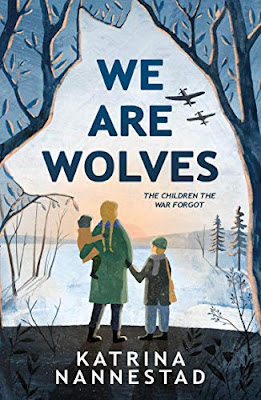
We Are Wolves by Katrina Nannestad

Despite the war, the Wolf family - Opa, Oma, Papa, Mama, Liesl, 11, Otto, 7, and baby Mia - had lived a relatively comfortable life in East Prussia. But now it is October 1944, the Russian army is advancing westward, and in desperation, Hitler has called up teen boys, older men, and those who are disabled to fight to save his Reich. Papa, who was injured in WWI, is drafted and by Christmas Eve, he is missing in action.

Soon after, the family learns that the Russian army has broken through German lines and are advancing in East Prussia. Everyone to told to quickly flee because it was well known that the Russians have been doing terrible things to German men, women, and children, as they advanced. Luckily, Opa manages to find an old car, but that only takes the family so far, and soon they are fleeing on foot in blizzard conditions with so many others. Soon, Opa and Oma decide they need to rest and will catch up with the family later. Opa tells them to head for the Vistula Lagoon and to try to get on a ship to Denmark.  Mama and the children get separated trying to cross the frozen lagoon on a sled, but by the time Liesl, Otto, and Mia make it to the other side, Mama has disappeared from the ice. 

Liesl had already promised Mama that no matter what, she would take care of the brother and sister. While staying in an abandoned house, they are discovered by some Russian soldiers. Luckily, one is a kind man and he takes them to a Russian army camp where they are treated with some kindness, but when Liesl realizes that the Captain has designs on taking Mia away from her and sending the baby to his wife in Russia, she knows it is time to take her siblings and run away. And the only place to run to is the forest. There, they discover they are not alone when they meet other homeless children trying to survive on their own in the woods and stay out of Russian hands. 

Life in the woods isn't easy, continually foraging for food and some measure of shelter. But long the way, they also meet Karl, who helps them learn the ropes, even if it sometimes means learning how to steal what they need to survive. Learning that there is food in Lithuania, Liesl and Karl decide they should try to get there and plan on jumping into a train as it moves out of the station. Karl and Otto make it, but Liesl, holding Mia, doesn't. Thinking she's lost Otto, Liesl is surprised when he comes running back, having jumped off the train. When they finally do make it to Lithuania, Mia is quite sick and Liesl isn't sure she will survive. But, they are taken in by a couple, Magdalena and Dovydas, who help nurse Mia back to health. And while their situation is comfortable and safe, Liesl wonders if they will ever be reunited with their family again. 

Nannestad's book highlights a phenomena that occurred toward the end of WWII when East Prussian children were separated from their parents for one reason or another as the Russian army advanced and took to living in the forests to survive. These homeless children became known as Wolfskinder or wolf children. Some were adopted by Lithuanians, despite harsh punishment by the Russians if they were found helping Germans, even if the Germans were only children.   

I thought We are Wolves did a great job at depicting the harsh conditions and difficulties the Wolf children faced from the moment their family decided to flee until they were finally taken in by kind Lithuanians. I liked the way Nannestad explored themes of family, courage, resilience, and identity (especially important given that the Wolf children had to have their names changed in Lithuania for safety's sake). I also like the way the name Wolf was capitalized on throughout the novel as Liesl kept reminding herself and her siblings that they were Wolfs, and each section was captioned using the word wolves, for example: Proud Wolves, Wild Wolves Vanishing Wolves.

The Wolfskinder may be a little known aspect of WWII, but given what is happening right now in the Ukraine, I believe We are Wolves will definitely resonate with today's readers, who are seeing for themselves what the ravages of war does to families. I highly recommend this book.

This book was purchased for my personal library.

Tuesday, March 8, 2022

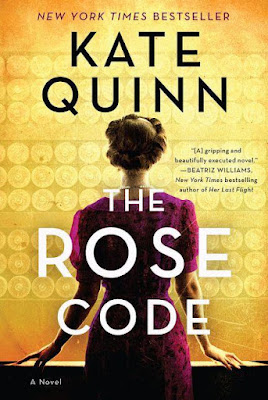
The Rose Code: A Novel by Kate Quinn

The Rose Code is one of those books I've been wanting to read ever since I first heard about it, but it just seemed like I could never find the time. Well, since I found myself with lots of time this past February, it was the first book I reached for. And I'm so glad I did.

The story revolves around three very different women who become friends after they begin working on code breaking at the Bletchley Park in Buckinghamshire, England during World War II. Mab (rather than Mable) Churt was born and raised in a cramped flat with a shared bathroom in Shoreditch in London's East End. Wanting more out of life than what her mother settled for, Mab worked hard to self-educate, reading the classics and she had even come in tops in typing and shorthand. Now, with war, she was ready to do her part for king and country.

Osla Kendall's upbringing couldn't be more different than Mab's. A society debutante, her mother hadn't really wanted her around, and had shipped her off to cousins in Canada. Now, Osla was back in London and dating a navy lieutenant named Philip Mountbatten (formerly Prince Philip of Greece). But once her mother cut off her allowance, Osla realizes she needs a job. Thanks to a German governess, Osla can speak fluent German and Philip suggests she use that skill to help the war effort.

After having mysterious interviews in London, Mab and Osla meet on the train the Bletchley, and instantly become friends, having received almost identical and very mysterious letters telling them where to go once they arrive. 

After another interview and signing the Official Secrets Act, the two women are taken to the Finch home where they will board while working at Bletchley. There, they meet Bethan Finch, the 23-yer-old daughter of their nosy, overbearing and overly critical landlady, Mrs. Finch. Meek and shy, Beth might have been beaten down by her mother, but she also is a whiz at crossword puzzles, able to finish the Sunday crossword in eight minutes. As Mab and Osla get settled into their respective jobs at Bletchley, they become more aware of what is going on in the Finch household, including the way Mrs. Finch abuses Beth. Thanks to Osla, Beth is soon working in Bletchley for expert cytologist Dilly Knox. 

Though Beth has always been shy and withdrawn, she shines at her job breaking codes at Bletchley. She even joins the book club that Mab and Osla start for the workers there. Then, on June 5th, 1944, as Beth is working on a difficult cipher file she had come to think of as Rose because the short messages reminded her of the way a rose's petals wrap it, she discovers that there was a traitor at Bletchley, but no matter what she says, no one believes her. The next day, as the Normandy Invasion was taking place, Beth finds herself committed to Clockwell Sanitarium for a supposed nervous breakdown. 

Now, it's 1947 and Beth is facing a lobotomy and desperately trying to get her former friends, Mab and Osla to come to her rescue. If they could decipher the Rose Code, they could expose the Bletchley traitor. But would they come? And if not, why not?

The Rose Code is a long, detailed, multi-layered novel and I couldn't put it down. The three main characters are so clearly defined and so deliciously flawed, as different from one another as they are united in their desire to do their part for the war effort. I loved the inclusion of real people like Dilly Knox and Prince Philip and even a mention of Alan Turing, but the other minors characters also fit the story so well. In fact, I became invested in everyone's story very quickly (even the horrible, abusing Mrs. Finch). Bletchley itself is so well depicted it felt like another character instead of just the place that brought everyone together for the sake of the story.

Beth, Mab, and Osla's stories unfold in alternating chapters, as well as in chapters where they all play a part. And the narrative covers two timelines - the war years, while the women were working at Bletchley, and 1947. Actually, 1947 covers only the weeks leading up to the royal wedding of Princess Elizabeth and Prince Philip (yup, Osla's old love interest). 

The Rose Code is a sophisticated, well plotted, well researched and well written novel My only objection is that I didn't really get why the traitor did what they did. I didn't like the character, but I also didn't suspect them yet I wasn't surprised when I found out who they were. 

The Rose Code was one of ten winning titles for ALA's 2021 Alex Award - adult books that also have appeal for young adult readers ages 12-18.

This book was purchased for my personal library.

Tuesday, February 15, 2022

The Light in Hidden Places by Sharon Cameron

I usually think of Sharon Cameron as a writer of science fiction not historical fiction, but she has really outdone herself with The Light in Hidden Places. It is a fictional account of the life of Stefania "Fusia" Podgorska and her yonger sister Helena who were ultimately named as Righteous Among Nations by Yad Vashem for hiding and saving the lives of 13 Jews during the Holocaust. 

At age 12, Fusia decides to leave her family's farm to live with the Diamants, a Jewish family that runs a grocery store in Przemsyl, Poland. Welcomed into the family, Fusia lives there for 3 happy years, during which a secret attraction developes between Catholic Fusia and Jewish Izio Diamant. But in September 1939, Poland is attacked and invaded by the Nazis and life changes for everyone. 

In April 1942, the Diamants are forced to move into the Przemsyl ghetto. Fusia is tasked with helping them survive by bringing what she could sneak in by squeezing through the fence. But then she learns that the Nazis have killed Izio, Grieving, Fusia decides to go back to the family farm. There she finds everyone gone, except her 6-year-old sister Helena, whom she brings back to Przemsyl with her. 

One night, in November 1942, Max Diamant shows up at Fusia's door and asks to stay the night. His parents and some of his siblings had already been rounded up in a Aktion, and sent to their deaths and he and his brother have escaped the ghetto. When they decide to stay with Fusia and Helena, Fusia realizes she needs a larger place for hiding them. She finds a small cottage and before she knows it, Fusia is hiding 13 Jews in it. Then, the Nazis build a hospital across the street and move three nurses into the cottage, as well. Fusia begins to panic, but the nurse only stay seven months. 

Fusia's story held me spellbound from start to finish. I kept thinking what a brave young woman she was to take the kinds of risks she continually chose to take for the family that had shown her so much more love and kindness than her own family had, spending her pay to by food for everyone, and risking death if caught. The novel reads like a taut drama, filled with tense moments and events throughout. Then I remember much of what I'm reading really happened.

Cameron's research for this story is impeccable. Through interviews, research trips to Poland and Stefania's own unpublished memoir, Cameron has woven together a coherent, reality-based Holocaust narrative. She includes extensive back matter, including photos and information about what happened to the Jews Fusia hid after the war ended and they were liberated.  

This book was gratefully received from Edelweiss+  

Sunday, January 2, 2022

The Blitz Bus by Glen Blackwell

The Blitz Bus by Glen Blackwell
Zoetrope Books, 2021, 218 pages
NetGalley E-ARC 

When his teacher assigns her class to write a fictional diary entry of a WWII evacuee, Jack, 12, just can't think of anything to write. Somehow, the war seems so long ago and he just can't relate. And now, he's going to be late meeting his best friend, Emmie Langford after school. Being a good friend, Emmie has been waiting at their bus stop when Jack finally shows up.

Everything seems normal until they reached their stop and notice a new blue storefront with a mannequin wearing a long coat and a gas mask in the window. Suddenly, there is a flash of light and it begins to rain heavily, so they head to the nearby Tube station for shelter, along with everyone else.

Everything at the Tube station feels like it's out of time, causing Emmie to think they are in the midst of a film set in 1940. But gradually she and Jack realize they have landed in the midst of a WWII air raid, instead, and that somehow they have traveled back in time. With no money, no food, and no friends, Jack and Emmie begin to try to figure out how they can return to their own time. Along the way, they become friends with Jan, a Polish boy who arrived in England a few years earlier on the Kindertransport. The three discover an old Anderson shelter behind a bombed and abandoned house as Jan helps them navigate this unfamiliar London. When they discover what appears someone trying to build a makeshift radio, they are convinced the mysterious boy/man they have noticed is a German spy. 

The German spy turns out to be Stan, who also arrived in London on the Kindertransport, but unlike Jan, whose foster family is quite kind, Stan's treats him terribly. As they become friends with Jan and Stan, can Jack and Emmie trust them with their secret and perhaps get some ideas of how they can return to the own time? Or will they be stranded in 1940 forever?

The Blitz Bus is an interesting time travel novel that points out how as things recede into history, they don't carry the same level of interest or impact that they once had. Jack may live in East London, which had been heavily bombed and damaged during the war, but he's interested in video games and football, not history. I thought that Blackwell portrayed what London in the Blitz was like quite well, layering it with the different experiences of the two Kindertransport kids, their loneliness and homesickness, emotions Jack comes to appreciate firsthand. 

The novel also points out how people were so suspicious of foreigners during the war that they often suspected them of being spies, just as Jack, Emmie, and Jan thought that about Stan. 

Interestingly, the Tube station that Emmie and Jack shelter in was the Bethnal Green Station which was destroyed in 1943, killing 173 people. Blackwell includes more about it in his back matter, that also includes information on the Kindertransport, and instructions for making the kind of radio out things found, similar to the radio Stan builds to listen to new about Poland. 

I have to admit that I was hoping that once they returned to their own time, Jack and Emmie would try to find out what happened to Jan and Stan, whether they were living, and if they were, did they remember their two time traveling friends? 

Readers looking for a time travel adventure, as well as those who enjoy historical fiction set in WWII will no doubt enjoy reading about Jack and Emmie's exploits in this imaginative novel.

This book was an eARC gratefully received from NetGalley

Monday, September 20, 2021

The Swallows' Flight by Hilary McKay

Yes, The Swallows' Flight is a book about WWII and, yes, it is a companion to the WWI novel The Skylarks' War (Love to Everyone in the US) that told the story of siblings Clarissa (Clarry) and Peter Penrose and their friends, and whose children play a part in this novel.  In fact, this novel revolves around 5 children whose lives eventually come together - Erik and Hans in Berlin, Kate Penrose in Oxford, Ruby in Plymouth, and a scrapyard dog in London, though for the most part, the timeline isn't linear.

In 1931 Berlin, ten-year-olds Erik and Hans are best friends with big plans for the future - Erik plans to become head zookeeper at the Berlin Zoo and Hans plans to open a kiosk outside the zoo and sell strudel. But right now, Erik is collecting flies to feed the young swallows he has just rescued. Hans has an Uncle Karl who introduces the boys to flying, which they love, and eventually causes them to become Luftwaffe pilots even though they never supported Hitler and the Nazis.

Although she comes from a family where the girls are all named after flower, in 1927 Plymouth, England, Violet decides to name her daughter Ruby Amaryllis. Not only does Ruby have a different name, but she is born with red birthmarks scattered over her face, causing her feel self-conscious and to shy away from people as she gets older. As if birthmarks aren't bad enough, older brother Will, 8, has no use for his new sister, and as children, he never lets her forget that. Ruby's mother Violet's best friend is Clarry Penrose from Oxford, who is given the honest of becoming Ruby's godmother. 

Peter Penrose, now a doctor has married Vanessa and they have six children, including Kate, born in 1928 and who is their youngest. As it happened, Clarry is also Kate's godmother. Into this mix is unofficial cousin Rupert, who is as exciting and interesting to the Penrose children as is Han's Uncle Karl to him and Erik. But Kate is the only one who doesn't get to experience any adventures with Rupert. Kate is a sickly child, with lung problems and a constant cough, and by the time she would have been old enough, WWII had begun. But she is also inquisitive and a keen observer, and begins to keep a diary of everything that happens to everyone else. 

Dog lives in East London and no one knows just how old he is. He is kept chained up in the scrapyard, and is supposed to bark away potential thieves, but dreams of running free. The only kindness he experiences is the scrapyard girl who at least acknowledges him with an occasional "hello, dog" and who, at the start of the war, attaches a luggage tag to his collar with the name Pax burned into it. Not long after, Pax is released to fend for himself, but luckily meets the kindhearted Rupert. 

The story that unfolds is told in alternating chapters that recounts how the war impacts the lives of each of these five character until their lives converge. It's an unusual format, but one the works beautifully and the non-linear timeline is not at all confusing.  Don't worry if you haven't read the first book. While it is well worth reading, The Swallows' Flight stands alone and there is a even brief family tree for each of the human characters.  

McKay's writing is just beautiful and she has skillfully created a heartwarming, inspiration novel that includes appealing character's with distinct characteristics and personalities. There is just enough information about what is going on in the world, especially Germany, to give historical context to the individual stories. There is a glossary in the back matter as well as some historical background. 

The Swallows' Flight is available now in the UK and will be available in the US on October 19, 2021

This book is recommended for readers age 9+
This book was purchased for my personal library

Tuesday, August 10, 2021

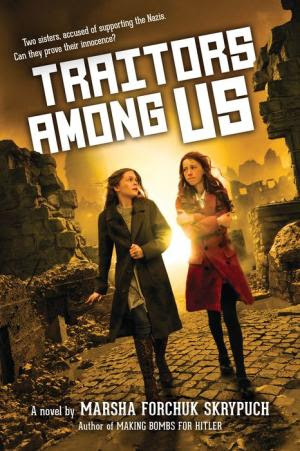
Traitors Among Us by Marsha Forchuk Skrypuch

Traitors Among Us is the third book in the story of Krystia and Maria Fediuk, two Ukrainian sisters who had been separated when the Nazis occupied their country beginning in 1942. Maria, who was then 11-years-old, had decided to leave their home in Viteretz to work in the German Reich and hopefully be able to send money home to her sister Krystia, then 12-years-old and mother. 

Now, it is June 1945, the war is over and the reunited sisters, Krystia, now 16, and Maria, now 14, have just arrived, exhausted, at an American refugee camp in Karlsfeld, Germany and are feeling somewhat safe and hopeful for the first time in years. The girls are hoping to be able to travel to Toronto, Canada to live with their mother's sister Auntie Stefa and her husband Uncle George.    

But Krystia and Maria's initial feelings of safety are short lived when Sophie Huber arrives in their barracks using the name of Maria's friend Blanka Holata, who had done slave labor with Maria on the Huber farm. Sophie was a Hitler girl, and rather a staunch, cold-hearted believer in Hitler and his Reich. And, yes, when Russian soldiers show up at their barracks, kidnaping anyone they believe had betrayed the Soviet Union during the war, Sophie can't denounce Krystia and Maria as Nazi collaborators quickly enough in an attempt to save herself. An attempt that doesn't work - the Soviets know who she is and suspect her of being a Werewolf, part of an underground network of Hitler youth working to bring the Nazis back to power.

Krystia and Maria find themselves in the back of a truck with a man, Elias, and his son Finn, a woman named Olga and her baby Piotr, as well as Sophie. Along the way, they learn that Elias and Finn are Volksdeutsche or ethnic Germans who originally lived in the Ukraine but were moved from their home by the Nazis in order to Germanize Poland early in their occupation of that country. Olga has British papers, but was arrested became her father had joined the White Army during the Russian Revolution, to fight the communist takeover, but Olga's husband had fought with the Nazis to defeat the Soviets (be sure to read the author's notes at the end for more historical information).

Eventually, the truck arrives at an interrogation house in Soviet occupied Germany. And it doesn't take long for the Soviets to begin their interrogations, torture, and even stage a fake execution of Maria to get Krystia to sign a fake confession. When she continues to refuse to sign their confession, the Soviet soldiers finally let Maria go but tell her to report to the train station where she will be taken to a Soviet labor camp. Maria is taken in by Birgit, who lives in the basement of a bombed building. Birgit has been bringing food to the Soviets at the interrogation house hoping to eventually be able to rescue her grandson, Mychailo, being held prisoner there, too. With two prisoners released (Elias is also free, but not Finn), and four still being held and tortured, can a rescue attempt possible be successful in such a heavily guarded, locked and barb wired building? 

Traitors Among Us is a fascinating story and a great conclusion the the trilogy about Krystia and Maria. As she always does, Skrypuch brings a lot of history into her narrative that unravels so seamlessly while, at the same time, she weaves together a story that is readable, believable and so realistic. My only complaint is the same as Ms. Yingling's - it all ended to abruptly and I wanted to know more. But isn't that often a problem when great stories end?

There are some graphic depictions in this novel, but only to the extent to give readers a real sense of what was happening at the time, yet not to such an extent that middle graders would be freaked out by it. I did like that in the middle of trying to save their lives and escape, Maria feels resentment at being treated like a helpless younger sister, and Krystia's constant need to protect her. Sibling resentments added an almost normal touch to their otherwise treacherous situation. I also loved how Maria used her sewing skills to make two pairs of underpants out of a Nazi flag - sort of like poetic justice.

Just as the second book in this trilogy, Trapped in Hitler's Web, worked as a stand alone novel, thanks to Skrypuch's including just enough background information from the first book, Don't Tell the Nazis, Traitors Among Us also works as a stand alone novel, with just enough information from books 1 and 2, though I recommend reading all of them. They are just that good. I started Traitors Among Us one evening and sat up until about 3:30 AM reading to the end, because I couldn't put it down and needed to know what Krystia and Maria's fate was going to be. 

Traitors Among Us will be available September 7th, 2021, giving readers just enough time to read books 1 and 2 before then, if they haven't already. 

This book is recommended for readers age 9+
This book was an eARC received from Edelweiss+

Saturday, July 31, 2021

The Hollywood Spy (a Maggie Hope Mystery #10) by Susan Elia MacNeal

It's hard to believe I've just finished the 10th Maggie Hope mystery. It feels like I read the very first book, Mr. Churchill's Secretary, just yesterday. And yes, Maggie has had some incredible adventures since then. But now she is off to Hollywood, California to help her old friend John Sterling solve the mystery of his fiancée's death. You may recall that at one time John had been Maggie's love interest. Later,as an RAF Pilot, he had been shot down over Germany. John was originally presumed dead, he did return to England. No longer able to fly, he was an aide to Winston Churchill, until Mrs. Roosevelt's Confidante, when he leaves at Christmastime 1941 for Hollywood to work for Walt Disney, hoping to develop a gremlin story idea he has. 

It's now July 1943 and solving a murder in sunny Hollywood, California couldn't be more different than Maggie's dangerous bomb-defusing work in war-torn London. Now, Maggie is staying at the plush Chateau Marmont on Sunset Boulevard with her old friend Sara Sanderson, a ballet dancer who has a small part in a film that George Balanchine is choreographing. 

But Hollywood isn't as sunny as Maggie first thought. America has been in the war since December 1941 and the country has mobilized - more or less - to support the war effort. But, there is also pollution from the nearby factories,  Zoot Suit clashes between Mexican Americans and whites in the Navy, crooked cops, Ku Klux Klan and Nazi supporters, and, of course, the death of Gloria Hutton, John's fiancée. When Gloria was found dead in the swimming pool of the Garden of Allah Hotel after a party, her death was ruled an accident. But Gloria was also involved in a high profile divorce from her husband of a few months, Titus Hutton, that involved a hefty financial settlement for her. 

As Maggie investigates Gloria's death, she discovers there have been other suspicious deaths, all linked to a sedition trial of some Nazis in Sacramento. Gloria had been promised protection because she was afraid the if the Nazis discovered she had testified, her life would be in danger. After all, she had worked as a secretary for one of the Nazi leaders in Los Angeles. 

Needless to say, this is an exciting novel. It can be tough to keep a series fresh and interesting, but MacNeal has put Maggie into so many different eventful global situations that each novel retains its own crispness. And honestly, I was ready for a little glitzy glamour in Maggie's life after the darkness of the  last book, The King's Justice. Am I ready for a redo of Maggie and John? I don't know and if Susan Elia MacNeal knows, she wasn't telling in this book. 

I did like that we learned a little more about Maggie's Aunt Edith, a forward thinking woman, and her partner Olive. I always picture Aunt Edith as an old woman wrapped up in math problems, but was happy to hear about her war work. It made her feel more lively and energetic. I hope we readers really get to know her better someday.

There is a lot of American history in this novel and I think readers may be surprised at how much unrest and racism there was back them. One of the things I like about this series, and it's also very true in The Hollywood Spy is the amount of authentic flavoring that is always a part of a Maggie Hope mystery. People, places, songs and movies play their part in bringing the time period to life for readers. And I think more than any other Maggie Hope mystery, this one will really resonate in today's world. 

What's next for Maggie Hope? Well, there is a bit of a hint at the end of the book, but I guess fans will just have to wait and see. I hope it's not a long wait.

This book is recommended for readers 14+
This book was an eARC received from NetGalley

Wednesday, June 30, 2021

The Summer of Lost Letters by Hannah Reynolds

When a box of her O'ma's stuff arrives at the house addressed to her mother, Abby Schoenberg, 17, can't resist opening it. Inside, she finds a stack of love letters addressed to her O'ma, Ruth Goldman, living in New York City from someone named Edward living on Nantucket island, and who refuses to send Ruth a necklace she has asked to be returned to her. Not knowing much about her O'ma's past other than that she came alone from Germany as a 4-year-old shortly after Kristallnacht. Now, Abby is determined to discover more about her O'ma's life - who is Edward, why was he writing love letters to her in the 1950s and what happened to the necklace, which her Grandmother obviously never got back. 

After doing some research, Abby discovers the letter writer is Edward Barbanel, who mentions a place called Golden Doors on Nantucket. Luckily, Abby lands a job working in a bookstore on the island, and a room shared with a girl named Jane, with whom she immediately becomes friends. And yes, everyone she meets knows the very wealthy Barbanel family, who are having a party at which Abby is invited to help serve. Naturally, her curiosity overcomes her and she is caught snooping around by Noah Barbanel, 18 and the handsome grandson of Edward. 

To try to keep his family's personal business private and to protect his grandparents, Noah agrees to help Abby with her search to discover more about her O'ma and her family history. O'ma never talked about her parents and all the Schoenberg's knew was that they have perished in Auschwitz, but who they were and where they lived had always been a mystery. 

In between her job at the bookstore and her attempts to discover more about her O'ma, there are parties on the beach, sailing, ice cream and new friends, even Shabbat dinner with the Barbanel family. Abby hadn't been looking forward to this summer with her friends away, but decides to take the advice of best friend Niko who tells her to go crazy, be bold, have some chutzpah. And that is just what Abby does. 

The Summer of Lost Letters is a contemporary romance with some interesting historical fiction and some interesting historical facts throughout the novel and Reynolds has incorporated it all easily into the story. I thought it was interesting how she introduced some of the chapters with Edward's love letters almost as a portend of what is going to happen. I also thought that never getting to know who Ruth Goldman responded to the letters or what she felt was a great way to keep the mystery going. Of course, readers can  surmise her feelings for Edward by the fact of keeping the letters, despite having married another man (whom she did in fact love, too). 

At first the tension and bickering in between getting along really well was kind of fun as Abby and Noah dances around their attraction to each other. But after a certain point, I honestly felt that this could have used some editing when I found myself muttering "oh my God, own it already." Others may find this kind of dance appealing.  

In the end. all is revealed and I never saw it coming - and I really liked that. The end could come across as a little to pat, but that was fine with me. After all, this is a great summer romance to read, enjoy, and learn a few things.

This book is recommend for readers age 12+
This book was an eARC gratefully received from NetGalley

Friday, June 18, 2021

The Last Hawk: Pilot, Patriot, Spy by Elizabeth Wein

This is Elizabeth Wein's third novella about a female flier in WWII. The first, White Eagles, is the story of Kristina Tomiak who is accepted into the Polish Air Force Reserve in 1939, and whose job it is to fly a person carrying important information to a meeting in Lvov, Poland. In the second novella, Firebird, it's 1942 and teen Anatasia "Nastia" Viktorovna Nabokova is a Soviet flight instructor who is ultimately accused of treason for defying Stalin's orders.  

Now, it's 1944 and 17-year-old Ingrid Hartman is a talented glider pilot, who loves the feeling of freedom that being in the air gives her. Ingrid has a stutter and in Hitler's view, that means she does not belong in his master race. People like Ingrid are taken away, never to be seen again. So Ingrid has learned how to not speak unless absolutely necessary. When a German officer shows up at her home and becomes angry because she didn't respond to his knocking on the front door and forgets to greet him with Heil Hitler,  Ingrid and her father both fear possible harsh reprisals.  

Ingrid's cousin Jonni agrees to give her an official title at his glider school, where she is his best gliding instructor, giving her some sense of protection. One day, when she is there alone, a woman arrives looking for her. It turns out that the woman is Hanna Reitsch, Germany's most famous female test pilot. Ingrid's friend, Emil Bruck, had recommended her to Hanna because of her gliding skills. It seems she wants Ingrid to accompany her on a propaganda tour of Luftwaffe bases, where Reitsch will give speeches to new pilots and recruit the top glider pilots among them for a special mission.

Naturally, Ingrid jumps at the chance to work with this famous pilot who doesn't seem the least bit bothered by her stutter. And this new job will only require Ingrid to follow Reitsch in a Hawk glider, doing some synchronized fancy flying, but to take down the information of the enthusiastic recruits - none of which requires her to speak. But the mission Reitsch wants these young men to volunteer for begins to bother Ingrid. The project Reitsch is promoting is called the Leonidas Squadron, and it is her job to convince the young pilots that dying for their country is the right this to do for the Fatherland without actually telling them that they would be flying suicide missions.    

Ingrid is thrilled when her friend Emil lands at one of the air bases she and Reitsch are also at. Emil had already said things to Ingrid about the treatment of Jews and others forced to work in munitions factories. Ingrid knows that's a fate she could have met under different circumstance because of her stutter. Now, while forcing a kiss on her, Emil carefully slips something into the waistband of her skirt. At first, feeling betrayed by him, Ingrid is angry - after all, they are only friends - but once she sees what he gave her, she knows she must follow his pleading for her to fly to the safety of the Allied forces not so far away now and show them the photos of the concentration camps Emil had taken as proof of what Germany has been doing. 

But will Ingrid find the courage she needs do fly this last mission, knowing it would be treason?

Narrated in the first person by Ingrid, readers are introduced to a lot of information, from Nazi Germany's eugenics program to the almost formed suicide squadron. Ingrid not only has a stutter, but her mother, a nurse, had worked in a youth hospital for children who had learning difficulties, so the Hartman family knew firsthand about forced sterilization, followed by forced neglect, and that those who didn't die then were simple taken away to a place where they all died from "pneumonia," including the mayor's son. (pg 10-11) 

Readers will really feel the indecision Ingrid experiences when she learns about the Leonidas Squadron and why she and Hanna Reitsch are putting on glider shows. Hanna Reitsch is a friendly, accepting mentor who just happens to be helping to plan the possible deaths of so many young men, most not much older than Ingrid. It is also an opportunity for Wein, herself a pilot, to provide background information the different kinds of planes and gliders used in Nazi Germany, as well as the unmanned vengeance or V-bombs that terrorized England for a while in 1944. And all this is so seamlessly woven into Ingrid's narrative. 

The Last Hawk is published by Barrington Stoke in a dyslexic- and reluctant reader- friendly format. I really like these books, but as an adult dyslexic who has been reading a lot longer than most kids, I wondered if kids would find them as reader-friendly as I do. So, I gave one to a young friend (age 11) who has also been diagnosed as dyslexic and not a fan of reading. Sure enough, they not only liked the format but enjoyed the story, too. 

Pair this with White Eagles and Firebird for an amazing trilogy about girls who fly in WWII.  

This book is recommended for readers age 9+
This book was purchased for my personal library