Showing posts with label Refugees. Show all posts

Sunday, January 16, 2022

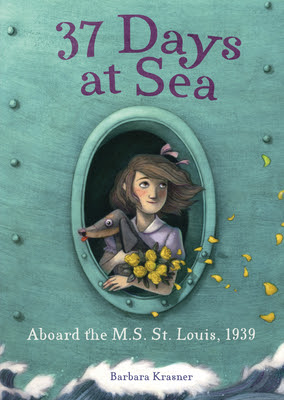
37 Days at Sea: Aboard the M.S. St. Louis, 1939 by Barbara Krasner

This is the second book by Barbara Krasner that I have read about the 938 European Jews who set sail in 1939 aboard the M.S. St. Louis hoping to escape the Nazis and find safety in Cuba. The first book was called Liesel's Ocean Voyage. It is a fictionalized story based on the real experiences of Liesel Joseph Loeb (1928-2013) and I highly recommend it, and in fact, I would read it in tandem with 37 Days at Sea to get a broader picture of a voyage that began with so much hope ended in such disappointment. 

Here, Krasner introduces readers to Ruthie Arons, 12, from Breslau, Germany. The decision to leave and eventually settle in America came shortly after Kristallnacht, when their beautiful home was ransacked by Nazis who broke into Jewish homes and businesses all over Germany, stealing, breaking and destroying everything in their path. 

Now, onboard the M.S. St. Louis, missing the family they had to leave behind, Ruthie, a somewhat mischievous girl thinks that  "Adventure/ across the Atlantic Ocean beckons." And indeed it does, when she quickly makes friends with Wolfie, a twelve-year-old Jewish boy traveling with his mother and whose father is already living in Havana.

Secure in the knowledge that they have the necessary papers to enter Cuba, people on the ship enjoy a wonderful voyage of good food, entertainment, and friendliness, including Captain Schroeder. And although the crew wear their NSDAP pins, there is a problem with only one, Kurt Steinfelder. Ruthie's mother suffers from seasickness and her father, an attorney, is busy with some other business, so that leaves her plenty of time to hang out with Wolfie, exploring the ship and getting into mischief: "Grown-up, watch out. We/ are a band of trouble,/ and by we, I mean/ Wolfie and me." (pg 24)

There is a, however, a very concrete reminder of what was left behind in Germany, when a group of men with shaved heads come on board and Ruthie's father must explain to her about concentration camps and the arrest of so many Jewish men on Kristallnacht, including him. Some were released, others sent to camps, released with the promise never to return.

After two weeks at sea, on the fifteenth day, the M.S. St. Louis enters Havana, Cuba but it doesn't take long to realize that there is more trouble ahead for these Jewish refugees. No one is allowed to disembark and enter Cuba, including Wolfie and his mother, even though his father is already there. Negotiations take place, the United States refuses to help and eventually the ship is forced to return to Europe. Needless to say, the trip back is nothing like the trip to Cuba.

37 Days at Sea is written in free verse from Ruthie's first person point of view, which gives it an interesting perspective. Ruthie may have experienced some of the cruelty of the Nazis in Breslau, but she was younger and her parents seem to have been able to shield her from some of the worst events. The trip to Cuba and the return to Europe makes this a kind of end of innocence story, but the beginning of understanding the seriousness of what was happening to the Jews in Europe for Ruthie (and hopefully today's reader).    

Krasner used a few different poetic forms, and although the free verse is sometimes a little off, it is still an important book for young readers, especially in the lower middle grades. She really knows how to build the excitement and expectation of landing in Cuba and being free to come and go as they please as the ship travels to its destination, and the disappointment and dejection the passengers feel when they are forced to go back. The first half of the books is devoted to the trip to Cuba, and the second half covers the trip back, which I think is an important part of the story to include. 

Back matter includes an Author's Note, a Timeline of Events, suggestions for Further Information including Films, Oral Testimonies, and Books.

This book was a digital version purchased for my personal library.

Monday, September 13, 2021

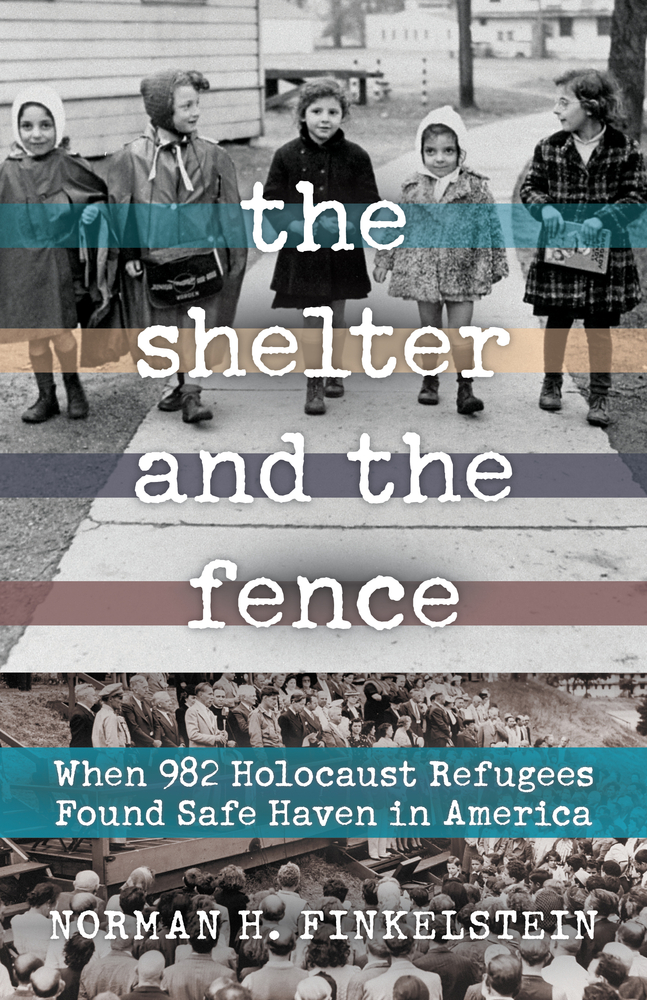
The Shelter and the Fence: When 982 Holocaust Refugees Found Safe Haven in America by Norman H. Finkelstein

In 1944, 982 Jewish refugees living in Italy were allowed to come to the United States, "invited" by President Franklin Roosevelt. Their story is one that is often overlooked or just given cursory mention in the history of America and the Holocaust, especially where middle grade readers are concerned. Now, librarian and history teacher Norman H. Finkelstein has written a history of this event aimed at those young readers. 

After providing some rudimentary information about the rise of the Nazis and their treatment of Jews through the 1930s in Germany and countries which they invaded, and ultimately Hitler's "Final Solution," Finkelstein turns his focus to those Jews who had sought safety in Italy. Italy had early on allied itself to Hitler, but Italians often refused to help them deport Jews. By 1943, Italy's fascist dictator had been overthrown and Allied troops had liberated southern Italy, but German troops were quickly moved into Central and Northern Italy, and immediately began deporting all the Jews they captured to death camps in Poland. 

Then. in 1944, Roosevelt issued an executive order setting up the War Refugee Board to rescue as many "persecuted minorities of Europe" as possible. Immigration laws were bypassed because the refugees who would be rescued were considered guests of the president and would not be allowed to stay in the US once the war was over. 

A diverse group of 982 refugees living in Rome were selected, most of whom were Jews, and after a rough two-week trip aboard the USS Henry Gibbons, followed by an overnight train trip from New York City to Oswego, New York, the refugees arrived at Fort Ontario on August 5, 1944. And though they were welcomed by the people of Oswego, for many refugees living in a confined space like the fort, surrounded by a chain link fence toped with barbed wire and watched by guards made many of them skeptical. And yet, the fort's barracks had been converted into furnished apartments for them, complete with laundry, bathing and toilet facilities for men and women, there was plenty to eat, though the refugees ate in dining halls instead of in their makeshift apartments. 

Soon, many of the refugees found work, while their children were allowed to attend school outside the fort. They could speak on the telephone with their family members already living in the US, but they were not allowed to visit anyone (well, there were a few forays out of the camp by some teens that no one knew about). Creating a safe haven for the 982 refugees was not without its problems and Finkelstein doesn't skip over these. The biggest problem was what to do with them when the war ended. The refugees had all signed an agreement that they would return to their homeland once the war was over, but now many had adjusted to living in the US and had no home or family to return to, and wished to remain in America. This resulted in a long legal fight and  Finkelstein devotes a lot of time to it. 

The Shelter and the Fence is a great introduction to this overlooked part of World War II history. It is easy to read, and there are lots of photographs and text boxes containing personal reflections by some of the people who were part of the rescue effort. I did find that at times I found the writing was confusing and I had to go back and reread parts of the book. Some things were too glossed over and without knowing the history could be disconcerting. This would make it a book that is best used as a supplementary text for social studies classes. The book does describe the many kindnesses on the part of the people living in Oswego, as well as those who did not want the refugees in their town or country. 

And while saving 982 people may seem like a token rescue compared to the overwhelming number of people who perished during the Holocaust and even the refusal to allow the 937 refugees aboard the St. Louis in 1939 to enter the US, it needs to be remembered that every life is important and so this rescue should not be trivialized.

The Shelter and the Fence is a compelling book and I think that the plight of the refugees will definitely resonate with today's readers when once again America's borders have become an issue. 

The New York Times published an article a year ago (September 11, 2020) about the 982 refugees who lived in Fort Ontario in Oswego, NY and you can read it HERE.

This book is recommended for readers age 9+
This book was borrowed from the NYPL

Tuesday, August 10, 2021

Traitors Among Us by Marsha Forchuk Skrypuch

Traitors Among Us is the third book in the story of Krystia and Maria Fediuk, two Ukrainian sisters who had been separated when the Nazis occupied their country beginning in 1942. Maria, who was then 11-years-old, had decided to leave their home in Viteretz to work in the German Reich and hopefully be able to send money home to her sister Krystia, then 12-years-old and mother. 

Now, it is June 1945, the war is over and the reunited sisters, Krystia, now 16, and Maria, now 14, have just arrived, exhausted, at an American refugee camp in Karlsfeld, Germany and are feeling somewhat safe and hopeful for the first time in years. The girls are hoping to be able to travel to Toronto, Canada to live with their mother's sister Auntie Stefa and her husband Uncle George.    

But Krystia and Maria's initial feelings of safety are short lived when Sophie Huber arrives in their barracks using the name of Maria's friend Blanka Holata, who had done slave labor with Maria on the Huber farm. Sophie was a Hitler girl, and rather a staunch, cold-hearted believer in Hitler and his Reich. And, yes, when Russian soldiers show up at their barracks, kidnaping anyone they believe had betrayed the Soviet Union during the war, Sophie can't denounce Krystia and Maria as Nazi collaborators quickly enough in an attempt to save herself. An attempt that doesn't work - the Soviets know who she is and suspect her of being a Werewolf, part of an underground network of Hitler youth working to bring the Nazis back to power.

Krystia and Maria find themselves in the back of a truck with a man, Elias, and his son Finn, a woman named Olga and her baby Piotr, as well as Sophie. Along the way, they learn that Elias and Finn are Volksdeutsche or ethnic Germans who originally lived in the Ukraine but were moved from their home by the Nazis in order to Germanize Poland early in their occupation of that country. Olga has British papers, but was arrested became her father had joined the White Army during the Russian Revolution, to fight the communist takeover, but Olga's husband had fought with the Nazis to defeat the Soviets (be sure to read the author's notes at the end for more historical information).

Eventually, the truck arrives at an interrogation house in Soviet occupied Germany. And it doesn't take long for the Soviets to begin their interrogations, torture, and even stage a fake execution of Maria to get Krystia to sign a fake confession. When she continues to refuse to sign their confession, the Soviet soldiers finally let Maria go but tell her to report to the train station where she will be taken to a Soviet labor camp. Maria is taken in by Birgit, who lives in the basement of a bombed building. Birgit has been bringing food to the Soviets at the interrogation house hoping to eventually be able to rescue her grandson, Mychailo, being held prisoner there, too. With two prisoners released (Elias is also free, but not Finn), and four still being held and tortured, can a rescue attempt possible be successful in such a heavily guarded, locked and barb wired building? 

Traitors Among Us is a fascinating story and a great conclusion the the trilogy about Krystia and Maria. As she always does, Skrypuch brings a lot of history into her narrative that unravels so seamlessly while, at the same time, she weaves together a story that is readable, believable and so realistic. My only complaint is the same as Ms. Yingling's - it all ended to abruptly and I wanted to know more. But isn't that often a problem when great stories end?

There are some graphic depictions in this novel, but only to the extent to give readers a real sense of what was happening at the time, yet not to such an extent that middle graders would be freaked out by it. I did like that in the middle of trying to save their lives and escape, Maria feels resentment at being treated like a helpless younger sister, and Krystia's constant need to protect her. Sibling resentments added an almost normal touch to their otherwise treacherous situation. I also loved how Maria used her sewing skills to make two pairs of underpants out of a Nazi flag - sort of like poetic justice.

Just as the second book in this trilogy, Trapped in Hitler's Web, worked as a stand alone novel, thanks to Skrypuch's including just enough background information from the first book, Don't Tell the Nazis, Traitors Among Us also works as a stand alone novel, with just enough information from books 1 and 2, though I recommend reading all of them. They are just that good. I started Traitors Among Us one evening and sat up until about 3:30 AM reading to the end, because I couldn't put it down and needed to know what Krystia and Maria's fate was going to be. 

Traitors Among Us will be available September 7th, 2021, giving readers just enough time to read books 1 and 2 before then, if they haven't already. 

This book is recommended for readers age 9+
This book was an eARC received from Edelweiss+

Saturday, April 17, 2021

Maurice and His Dictionary: A True Story by Cary Fagan, illustrated by Enzo Lord Mariano

Maurice and His Dictionary: A True Story
written by Cary Fagan, illustrated by Enzo Lord Mariano
Owlkids Books, 2020, 56 pages

It's May 10, 1940 and the Nazis have just invaded Belgium. For 14-year-old Maurice Fajgenbaum and his family - parents Adéle and Max, older siblings Adeline and soccer-loving Henri - that means having to leave Brussels, the only home they had ever known, as quickly as possible, packing only what they could carry and leaving the rest of their possessions for the Nazis to pillage. And simply because they are Jewish.

Page 6

Luckily, father Max has business contacts in Paris and so the family heads there. Since there were warnings about the Nazi invasion, Max had already bought the train tickets his family would need. But after days on the train, the family is dropped off in a small village. Weeks later, father Max is almost rounded up with other refugees, and the family is quickly on the move again. This time, they find themselves in Pau, at the foothills of the Pyrenees in Vichy, France, the unoccupied so called free zone. 

In Pau, life is a little easier for the refugee family and Maurice even begins school again, hoping to fulfill his dream of becoming a lawyer one day, comforting himself with his father's conviction that "the law will make us all equal." But once again, the Nazis begin to round up Jews, sending them to camps in Poland and Germany, and the Fajgenbaum family is on the run. 

This time, they make it to port city Lisbon, Portugal, but only long enough to get the papers and passage on a ship that will take them to Jamaica. It is on the ship that they are separated from each other for the first time. Arriving in Jamaica, the Fajgenbaums, along with their fellow passengers, are taken to an internment camp indefinitely. Maurice, still dreaming of becoming a lawyer, finds teachers all over the camp willing to tutor him, including an English teacher who recommends he get permission to go to town to buy a dictionary.  

Safe from the Nazis, Maurice continues to study hard, improving his English with the help of his tutor and his new dictionary, graduating high school and going on to college and law school in Canada.  

Maurice and His Dictionary is a picture book for older readers told in graphic format, an homage based on the true story of the author's father's experience during the Holocaust. While this book may lack some of the hair-raising details of how Jews were treated by the Nazis and even the French, it is definitely a survival story, and the Fajgenbaum family proved to be very resourceful, especially Max, and they were lucky enough to meet enough kind people to help them escape the Nazis and Europe just in time. 

The story is also a homage to Maurice's perseverance. He never wavered in his desire get an education and become a lawyer. And despite all the setbacks Maurice faced, he always followed his father's motto "Solve one problem, then the next, and then the next" which is how he finally finished high school.

The stylized illustrations, in sepia tones giving them a feeling of age, are simple but if you look closely you will discover all kinds of interesting details. The illustrations and the wide white borders around each page provide readers with lots of space to extend the story.

This is such an inspiring story, all the more so because it is a true story. Be sure to read the Author's Note for more information about Maurice, including photographs (there's even one of his dictionary). 

And there is a Teacher's Guide that can be downloaded courtesy of the publisher, Owlkids Books. 

This book is recommended for readers age 8+
This book was borrowed from the NYPL

Thursday, December 17, 2020

Saving Hanno: The Story of a Refugee Dog by Miriam Halahmy

It's November 1938, almost two weeks after Kristallnacht, and life is getting even more difficult for German Jews. For Rudi, 9, it means being picked on by the Hitler Youth boys in his Frankfurt school and now his kind teacher has been replaced with a cruel Nazi teacher. That afternoon, Rudi and his best friend Emil skip school and never return. By January 1939, Rudi and his older sister Lotte, 16, are pretty bored being at home, but when he is told that they will be traveling to England to live with a couple there, he doesn't want to leave his parents. The worst part is that Rudi will not be able to take his beloved dachshund, Hanno, with him. Now he really doesn't want to leave. Luckily, someone volunteers to take Hanno to England and put him in quarantine, then if all is well, he and Rudi will be reunited.

That makes leaving home a little better, but Rudi still doesn't want to leave his parents. Besides, he doesn't speak any English and then he learns that Lotte won't be living with him, that she'll be with another nearby family. 

The couple Rudi lives with, Auntie Irene and Uncle Don Evans, are very kind and patient, but Rudi is reticent to speak English. They do seem to know that he can't eat pork, so that isn't a problem though Rudi does miss Friday night Shabbos with his parents and Lotte. What he really worries about is school. What if the kids there don't like Jewish German boys and are mean, picking on him the way the Hitler Youth always did. But Rudi immediately makes a friend, a genial boy named Sidney Scudder. And through Sidney, Rudi makes even more friends.

Things are really great when Hanno comes out of quarantine. Rudi takes him everywhere during summer vacation and all the kids love him. But as summer goes by, England going to war with Germany becomes more and more of a possibility. In September 1939 war is declared, and the possibility of losing Hanno looms again. It seems the everyone is have their pets put down because of the war and rationing. When Rudi hears Uncle Don and Auntie Irene talking about having Hanno put down, Rudi knows he must act to save his beloved dog's life. But what can he do? Perhaps Sidney has an idea.

Saving Hanno is a story about an aspect of World War II that most people don't know or just don't want to think about. But the act of putting pets down was quite widespread at the beginning of the war in Britain. Pets weren't allowed in shelters, and rationing meant little left over for feeding a pet. This is the dilemma that Rudi faced with Hanno. After all he had given up - his home, his parents, to some extent even his sister - how could he give up his beloved Hanno, this time with no hope of getting him back? 

Besides depicting the fate of one beloved pet, Saving Hanno also illustrates two different situations that Jewish kids who were sent to England on the short-lived Kindertransport (1938-1940). Rudi is very welcomed by the childless Don and Irene Evans, who show consideration for his dietary needs,  as well as just treating with kindness and understanding. Lotte, on the other hand, ends up in a family that treats her like a free servant, keeping her out of school and giving her only one day off a week. One can only imagine what other situations the Kindertransport children found themselves in. 

Throughout his stay in London, Rudi never loses hope that his parents will find a way to leave Germany and get to England. To keep that hope alive, he keeps a notebook of things they might find helpful once they arrive. I thought it was a sweet touch, but also lets readers know some of the day-to-day things Rudi faced as a refugee.

After I finished reading Saving Hanno, I discovered that Miriam Halahmy had written an early book called The Emergency Zoo, a longer novel that is about the saving animals about to be put down because of the war. Now, I can't wait to read it. Saving Hanno is an ideal book for kids in the early middle school grades, while The Emergency Zoo looks to be a book for kids in later middle school. 

I think Saving Hanno is a story that kids will definitely like.

This book is recommended for readers age 8+
This book was purchased for my personal library 


Tuesday, September 1, 2020

Letters from Cuba by Ruth Behar

It's 1938 and Papa has been in Cuba for three years, working to save money to bring the rest of his family there from Poland and away from the  increasing Nazi threat to Jews. Normally, it would be the eldest son, Moshe, who would be the first child to join his father, but 11-going-on-12-year-old Esther Abraham, the eldest daughter, makes such a convincing case to Papa, that she is chosen to join him, much to her mother's consternation. 

But, on her own, Esther travels through Poland, Nazi Germany, and Holland, boards a ship to cross the Atlantic, only to learn that the first stop is Mexico, not Cuba and that she will be the only passenger when they leave port. But Esther, being a naturally friendly girl, has made friends with the animals on board, spending time with them until they reach Havana, Cuba and the next delay.

In the end, Papa is there and, before they head to the town where he lives, he has to conduct some business, introducing Esther to Zvi Mandelbaum. It turns out Papa's job in Cuba is as a itinerant peddler, not the shopkeeper his family thought he was, and he gets his wares from Mandelbaum, who immediately gives Esther a pair of sandals so she can take off her hot woolen stockings. 

From the moment Esther began her trip, she decided to write down "every interesting thing that happens" in letters for her younger sister Malka. That way when the rest of the family are finally in Cuba, they can read the letters and it will be as if they had been together the whole time. (pg 2) The result is detailed descriptions of the people Esther meets, the places she goes, and her daily life with Papa.

Esther is friendly, outgoing, and smart, picking up Spanish quickly. And she is also quite enterprising, helping her father sell the items he is given by Mandelbaum. Despite being the only Jews in the town of Matanzas, almost everyone friendly and giving, accepting her and her father. But after Esther sews herself a new dress to wear in the hot Cuban weather, she soon begins a successful trade as a dressmaker to help make money to bring her family to Cuba. 

Their lives in Cuba are basically pleasant and enjoyable, filled with new friends of diverse backgrounds, including Manuela and her Afro Cuban grandmother, and the Changs from China, as well as the local doctor and his wife, Señora Graciela. It is she who gives Esther a sewing machine that helps her begin her dressmaking business. But Cuba are not without its Nazi sympathizers, including the doctor's brother, Señor Eduardo. He wants to start a Nazi party in Cuba with an anti-immigrant agenda to get rid of the Jews there.

As the situation in Europe becomes more perilous for the Jews there, it becomes more and more imperative to get the money to bring the whole Abraham family to Cuba. 

Esther's letters to Malka are quite detailed. And though the story may not be the kind of exciting tale we are accustomed to from this period in history, it is still a wonderful window into a life we don't often read about. Small wonder it reads so authentically. Behar based this novel on her grandmother's experience of traveling to Cuba in 1927 to join her father. Like Esther, her family had lived in Govorvo, Poland. And like Esther, one beloved family member didn't make to Cuba. 

I enjoyed reading Letters from Cuba a lot. Sometimes I just don't want a lot of action and an epistolary novel like this is just the ticket for an evening of reading during COVID-19 time. Esther is a great character - a bold feminist yet respectful of her elders, especially Papa, and her religious traditions. I can't even imagine letting an 11-year-old girl travel from Poland to Cuba, part of the way in Nazi territory, all by herself. She is a character with perseverance, fortitude, and a maturity beyond her age, as well as a pretty good business woman.

Behar includes an extensive and very interesting Note from the Author about her family and how they settled in Cuba, and her research for writing this book. There is also a list of Resources for further reading.

An Educator's Guide is available to download courtesy of the publisher Nancy Paulsen Books HERE

This book is recommended for readers age 10+
This book was an EARC gratefully received from Nancy Paulsen Books through NetGalley

Tuesday, November 14, 2017

Refugee by Alan Gratz

In Refugee, Alan Gratz has seamlessly woven together the stories of three refugee children and their families from different time periods and different places in the world and brought their harrowing experiences together as each flees their homeland in the hope of finding safety and freedom elsewhere.

On Kristallnacht in 1938 Berlin, Nazis enter and destroy contents of the home of the Landau family, terrorizing Josef, 12, his younger sister Ruth, his mother, and arresting his father, Arron. When his father finally returns home, he is a broken man after spending time in Dachau. Luckily, the Landau family has secured tickets and the needed visas to emigrate to Cuba. 

On board the MS St. Louis, a luxury passenger ocean liner, the Jews fleeing Nazi Germany are treated well all the way across the Atlantic, but for Josef, the trip also brings stress. His father refuses to leave their cabin, insisting it is all a Nazi trick to send them to a concentration camp. When Josef turns 13 on the trip, he is able to make his Bar Mitzvah with the help of other passengers and ship’s crew. It would have been wonderful for Josef, if only his father could be at his side. 

When the ship reaches Cuba, it is held offshore for what feels like endless days. Then comes the news that Cuba has cancelled all visas and ordered the St. Louis to leave Cuban waters. The ship sails to the US, where the passengers are also refused entry. But if no country will take this ship full of Jewish refugees, the only recourse is to return to Germany and certain death.

For Isabel, 11, living in Fidel Castro’s communist Cuba, immigrating to the United States, el norte, is only an impossible dream. That is, until 1994, when Castro announces that anyone who wishes to leave Cuba would not be stopped. Then, Isabel discovers that her best friend Iván’s father has been secretly building a boat to travel the 90 miles to the Florida coast with his family.

Isabel is determined to go with them when her Papi is threatened with imprisonment by the Cuban police. Discovering that there is no gasoline for the escape boat, Isabel sells her beloved trumpet for what they need. In the middle of the night, two families, 9 people in all, pile into the boat, including Isabel’s pregnant mother, and take off for el norte, and hopefully leaving their homes in Havana behind. 

Fleeing the the US isn’t as easy a just enough gasoline, there is also the “wet foot, dry foot” policy. If you make it to the beach, you can stay, but if they catch you still in water, you are sent back to Cuba. Everything goes well for a short time, but then the trip begins to run into all kinds of problems and el norte seems even further away than before. Will they all make it before their boat sinks or the US Coast Guard finds them?

For Mahmoud Bishara,12, life in Aleppo, Syria in 2015 means trying to make himself invisible and making sure his younger brother Waleed is safe. But when the building the Bishara’s live in is hit and destroyed by a missile attack, the family knows it is time to leave Syria with its violent civil war behind and try to find refuge in Germany. 

Starting out in a Mercedes, and heading to Turkey, the Bishara’s have food, money and cell phones, but are soon caught in the cross hairs of fighting between Sunni and Shia Muslims once again, losing most of what they are carrying, including the car. Luckily, they manage to keep a cell phone. They finally make it to the border town of Kilis, Turkey by walking, and where Mahmoud’s father finds a ride to Izmir, Turkey and the possibility of a ferry to Greece. But they also discover that there are people along the way who will do anything to take advantage of the plight of desperate Syrian refugees in a country where they are not welcomed.

After waiting days for a ferry to arrive, they finally board an overly crowded, not very sea worthy  boat. But when a storm hits, they are thrown overboard into an angry sea, where Mahmoud must make a heartrending decision in order to try to save at least one person in his family.

Each of these stories are heartbreaking and harrowing to read and really bring home what it is like to be a refugee in a world that just doesn’t want you. Gratz draws out the tension by telling the stories of Josef, Isabel, and Mahmoud in alternating chapters, each chapter ending in a bit of a cliff hanger, not for the sake of drama, but to emphasize the level and frequency of danger that is faced by refugees.

And though their stories are separated by time and place, Gratz manages to highlight the universal similarities refugees faced in the 20th and 21st centuries. Though each protagonist stands on the cusp of adulthood, they all must take responsibility and make hard decisions that impact their families and the outcome of their flight when the adults around them are incapable of doing it. 

Readers can trace the route Josef, Isabel, and Mahmoud traveled to their final destinations with the maps found at the back of the book (and I continuously referred to them while reading), and please read the Author’s Note for more information about these young heroes.

Facing hardship, trauma, loss, hunger, and invisibility, the stories of Josef, Isabel, and Mahmoud form a poignant look at life on the run. But ultimately, each one gives us reason to hope. 

A useful discussion guide from the publisher can be found HERE

This book is recommended for readers age 10+
This book was an ARC sent to me by the publisher, Scholastic Press

Thursday, August 3, 2017

Mr. Benjamin's Suitcase of Secrets written and illustrated by Pei-Yu Chang

When I was in grad school, getting ready to write my dissertation, I read a lot of Walter Benjamin’s literary criticism, particularly what he wrote about children’s literature and toys. Benjamin was a prolific writer, cultural critic and philosopher. He was also a German Jew who had left Germany because of Hitler and Nazism, and, like so many other German intellectuals at the time, he moved to Paris. But after France fell to the Nazis in June 1940, Paris’s German population knew they were at risk and it was time to leave Europe. And that’s where the story of Mr. Benjamin’s Suitcase of Secrets begins.

But getting out of Europe wasn’t all that easy, so Mr. Benjamin sought out the help of Mrs. Fittko. Pack light so as not to draw attention to yourself, she told the few people she was willing to lead to safety. But on the night of their escape, Mr. Bennie, as Mrs. Fittko calls him, doesn’t pack lightly, in fact, he packs a big heavy suitcase, one he could barely carry. The problem is that the suitcase would have to be carried over rough terrain and then across the mountains and it was heavy and awkward.

Couldn’t Mr. Benjamin just leave the suitcase behind? Mrs. Fittko asks again. No, he can’t, as he tells her “The contents of this case can change everything.” But just as the group arrive at the border and the possibility of safety is just ahead of them, the guards refuse the allow Mr. Benjamin over the border crossing. He returns to the hotel where he had spent the previous night, and then, Mr. Benjamin and his mysterious suitcase simply disappeared. And to this day no one knows what he had been carrying that was so important to him.

This historical fiction picture book for older readers is as unusual as it is interesting. It is based not only on what actually happened to Walter Benjamin and why he was forced to flee, but also on the mystery surrounding the fate of the suitcase and its contents, which he tells Mrs. Fittko are “more important than my life.”

I have to admit, I never thought I would see a children’s book written about Walter Benjamin yet I really like the way some things were presented. I thought the way it shows that intellectual ideas were such a threat to the Nazis that they felt it necessary to arrest those people “who had extraordinary ideas" was very effective throughout the book, as represented by the importance of the suitcase and Benjamin's need to hold on tightly to it. I also liked that the soldiers who were arresting people didn’t have swastikas on their armband, but a kind of generic mark making it relevant to any act of this type. I did enjoy the variety of people speculating about what they thought was actually in Benjamin’s mysterious suitcase, which also defects the reader from wondering what Benjamin's fate was (in fact, he committed suicide after being turned back).

The textured mixed-media illustrations are wonderful. They are both quirky and serious. Look closely at the different bits that go into making the collages on each page, they almost tell their own story. I thought the one below was really effective at conveying the fear that people must have lived with during that time

This is a book I would definitely recommend for units on WWII, or even on units about refugees. Benjamin was a refugee twice over - once fleeing Germany, once trying to flee Nazi occupied France. Pei-Yu Chang has successfully depicted a world where ideas and opposition are seen as dangerous by those in power, making this a potent and relevant story for today's readers.

You can find a detailed essay on Walter Benjamin, his suitcase, and his attempt to flee the Nazis HERE

Who exactly was Mrs. Fittko? She was a courageous Holocaust activist who helped many people escape the Nazis over the Pyrenees working with her husband and with Varian Fry. Find out more about Mrs. Fittko HERE  

This book is recommended for readers age 7+
This book was borrowed from the NYPL

Friday, July 7, 2017

Letters from the Lighthouse by Emma Carroll

I was inspired to read this novel when I read about it on Mr. Ripley’s Enchanted Books 
last June. So I ordered a copy from The Book Depository and began reading the day it arrived and finished it in one sitting. Needless to say, it is a really good novel.

It’s February 1941, and even though it isn't usual, older sister Sukie Bradshaw has decided to take siblings Olive, 12, and Cliff, 8, to see a movie after tea. But no sooner do they get through the newsreel but the air raid siren goes off. To make matters worse, Sukie has disappeared. Leaving her brother at the Underground shelter, Olive goes in search of Sukie, and just as she reaches her sister, another bomb falls way too close to them. When Olive wakes up in hospital, she learns that Sukie is still  missing, and that she and younger brother Cliff are going to be evacuated to Budmouth Point, on the Devon coast, for safety. 

Olive has already lost her dad to the war when his plane was shot down, and can’t bear that her sister may be gone too. But how can she figure out where Sukie is and who the man she met just before that bomb fell is if she’s in Devon? Still, as soon as she is able, Olive and Cliff are sent to live with Queenie, the sister of their London neighbor, and Sukie's supposed pen-pal. 

Things don’t work out at Queenie’s, who is always busy doing all kinds of work in the cellar, and using Olive to make deliveries for her around the village. It gets especially hairy after Olive is forced to share her room with Esther Jenkins, an evacuee with whom Olive already has a contentious relationship. Olive and Cliff soon find themselves living with Ephraim, the lighthouse keeper. Life is better at the lighthouse, where Ephraim insists on doing everything, where the food is better and Cliff even has a dog to pal around with. 

It doesn’t take long for Olive to realize that there’s an awful lot of activity on the lighthouse radio, much more that seems right. Meanwhile, Olive is also trying to work out the coded message she found in the coat Sukie was wearing the night she disappeared. The longer Olive is lives in Budmouth Point, the more she realizes that Sukie’s disappearance just might have something to do with the clandestine activity she's noticed among some of the village residents…but what could it possibly be?

Letters from the Lighthouse is an exciting adventure and Olive is very appealing, lively narrator. There was something about her story that reminded me so much of the books I read about kids in WWII that were written during the war. The thing I noticed in those books was the ability to carry on despite the uncertainly of the future. One always hopes for the best, and that is the feeling that Carroll captured writing about Olive's search for Sukie - she is so convinced her sister is okay somewhere in the world and she needed to figure out where.  

As Olive's story unfolds, Carroll also provides the reader with a window though which to see and understand just what it means to be a child and live in a country at war and under siege, realistically depicting the fears and the privations, as well as the importance of family. the value of friends and neighbors, and need to learn trust and tolerance. Heading each chapter with expressions, warnings, and advice that were common during the war also helps give the novel a sense of authenticity.

As much as I enjoyed Letters from the Lighthouse, I did have a few plot points that bothered me - like how did Olive end up with the coat Sukie was wearing when the bomb fell in London, and how what happened to Sukie actually happened. They were explainable, but not to my satisfaction. BUT, these were not game changers for me, and if you like historical fiction about WWII, they shouldn't be for you either. 

This book is recommended for readers age 9+
This book was purchased for my personal library

Thursday, March 16, 2017

Adrift at Sea: A Vietnam Boy's Story of Survival by Marsha Forchuk Skrypuch with Tuan Ho, art by Brian Deines

The plight of refugees have been in the news a lot these days because of the war in Syria. As more and more borders are closed to them, it might be a good time to remember another group of refugees who arrived on North America's shores and have contributed so much to their adopted country.

When the Vietnam War ended in 1975, and the communist government took over South Vietnam, daily life became so difficult and unbearable that families were willing to risk escaping their country in rickety boats not made for long sea voyages. But these boats were the only way out, unless you were rich.

In the Ho family, six year-old Tuan's father and older sister Linh were had escaped Vietnam in 1980 and made their way to Canada. Now, in 1981, it is Tuan's time to escape with this mother and two sisters, Lan, 9. and Loan, 10. His youngest sister Van, 4, would  have to be left behind for now. She is just too young for the trip. No one, not even the neighbors must know what Tuan and his family are up one dark night as they sneak out of the house.

Their journey to freedom begins after a truck drops them off close to the water's edge. Running for their lives, dodging soldiers and their gun fire, they are picked up in a skiff. Still dodging bullets, the overcrowded skiff takes them to a fishing boats further out in the sea.

It is hot and humid and there isn't much drinking water. When the boat springs a leak, Tuan's mother and aunt help bail out the water as quickly as they can. On the third day, the boat's engine dies and the refugees find themselves adrift on the huge and unpredictable Pacific Ocean. One day six, an American aircraft carrier is spotted and the refugees are welcomed aboard.

The Ho family, we learn, survives they harrowing ordeal, and are reunited with Tuan's father and sister in Canada. And yes, Van and her grandmother both arrive in Canada in 1985, safe and sound.

Adrift at Sea is told from Tuan's point of view, and aimed at readers about the same age as he was when he escaped Vietnam. Such a young narrator may not capture the truly difficult and risky trip in the kind of detail a book for older readers might, but he still very clearly depicts the fear, the hot sun, lack of water, and relief at being rescued at an age appropriate level that any young reader will be able understand.

Skrypuch has included a number photos of the Ho family, both in Vietnam and in Canada. She has also included a brief history of the "boat people" as the refugees came to be called. The refugees faced not only the kinds of problems that the Ho family dealt with, but there were storms, pirates and always the threat of dying of thirst and hunger, and sometimes, they found that they were not welcomed everywhere.

Using a color palette mainly of oranges, yellows and blues, Deines's highly textured oil on canvas illustrations capture all the secrecy, fear, and perils, all wrapped up in the dangerously hazy, hot, and humid weather that these refugees faced in their desire for freedom and a better life.

Adrift at Sea is a powerful historical nonfiction story that can certainly help shed light on events of the past that share a similarity to those that are happening in the world today.

This book is recommended for readers age 6+
This book was sent to me by the publisher, Pajama Press

Saturday, February 25, 2017

The Mitchells: Five for Victory by Hilda van Stockum

It is July, 1943 and John Mitchell, father of the five Mitchell children and an electrical engineer, has just left from Union Station in Washington, D.C. to join his ship.

Back home, the three older Mitchell children, Joan, 10 1/2, Patsy, 8, Peter, 6, along with two friends decide to form the Five for Victory Club to help with the war effort. The purpose of the club is to help people who need it, to collect scrap and bottles, to help in their mother's victory garden, and even to do some babysitting. Anything they earn pays for stamp to paste in their V for Victory Bond book and eventually to exchange that for a bond. And the children believe they have found the perfect place to hold their club meetings - a small playhouse in the yard of an empty house they call the 'white elephant.'

No sooner do they get the playhouse all set up, however, than a mother, Mrs. Trotter, and her son, Henry, 12 and a bully, move in the house, and the first thing Henry does is kick them out of the playhouse.

Meanwhile, their mother, Rita Mitchell, has decided to rent a room for some extra income. The first woman, Mrs. Merryvale, to move in doesn't last long. She may have written a book about how to discipline children, but in fact, she doesn't really seem to like them very much and the Mitchells are way to unruly for her. Her leaving, however, is based on a complete misunderstanding which is because of a very funny misunderstanding.

The next boarder is a businessman named Mr. Spencer. Mr. Spencer believes he has lost his daughter, son-in-law and granddaughter in the bombing of Rotterdam (Holland) in 1940, although he never had any official word about that. Luckily, he really likes the Mitchell children, especially Angela, age 3.

And it turns out that Mrs. Trotter has a young refugee girl named Una, who is about 8 years old, living with her beside her son Henry. Henry doesn't much care for Una and delights in tormenting her whenever he can. When the Mitchel children discover Una, they all become instant friends.

There is one other subplot concerning Lieutenant Mitchell's admonishing to his family NOT to get a pet while he is away. Well, you can certainly guess what happens there.

The Mitchells: Five for Victory was written in 1945 as the war was coming to an end.  In the novel, Hilda van Stockum has created a charming look at everyday life on the home front and peopled it with an endearing, lively family. The book takes place over the course of one year and there are three generations living under one roof, Grannie (and Mr. Spencer), mother and the five children, so you know that there are lots of antics as well as ups and downs.

We hear a lot about refugees these days, and I think the story of Una will resonate with today's young readers. Van Stockum has really captured the trauma of a child who has lost her family in the war, and who was shuffled from country to country by people whose language she didn't understand, until she reached the United States, to be fostered by Mrs. Trotter. One particularly poignant scene takes place in a movie theater, where Una is left alone to watch a film while Mrs. Trotter and Henry shop for clothes for him. The movie she's left at is Journey for Margaret, a film about a young girl who has been traumatized by the Blitz. Judging by Una's reaction to the movie, it is clear that van Stockum had a very good understanding of how she felt.

Today's readers may find it odd that the children have so much freedom, but that was how it was back in those days. They may also find a few things a little outdated, like the children calling an escalator the moving stairs, but none of that detracts from the novel, in fact it really serves to give it a feeling a authenticity and charm. And yes, I find the van Stockum is a master at giving each of her characters just enough quirky characteristics to make them interesting, but still believable.

The Mitchells: Five for Victory is the second WWII novel by Hilda van Stockum I've read (The Winged Watchman was the first) and I have to say, they are as different from each other as possible and yet both are really interesting stories. I understand there is a third one called The Borrowed House that takes place in van Stockum's homeland, Holland, that I would like to read.

Should you fall in love with the Mitchell family as I did, you will be happy to know that their adventures continue in two more books that take place after the war is over. They are Canadian Summer and Friendly Gables.

This book is recommended for readers age 9+
This book was sent to me by Boissevain Books

Tuesday, January 31, 2017

Two Refugee Stories: The Journey by Francesca Sanna and Stepping Stones by Margriet Ruurs

Refugees seeking asylum and safety is a old as humanity and a recent as today’s news. It is hard to imagine having to leave the home you have always known, the place you have always thought of as safe, leaving behind your beloved possessions whether it is a doll, or a stuff toy, perhaps pawning your great grandfather’s pocket watch or your great grandmother’s tea service to get money to pay for the trip you and your family are about to embark on. But that is just what these two excellent books are about.


The Journey written and illustrated by Francesca Sanna
Flying Eye Books, 2016, 48 pages, age 5+

The Journey begins with a young girl, the narrator, introducing her happy close-knit family living in a city near the sea, until war arrives and bad things began to happen. But when the war takes her father, her mother decides it is time to leave their homeland despite the dangers, and to try and reach a country where they can live without war and fear. So the family packs up what belonging they can and leave. But the journey is difficult, and little by little they begin to leave belongings behind to lighten their load and make traveling easier.

And they face all kinds of obstacles - a high guarded wall, a sea that stretches far and wide, a scary ferry boat ride, followed by a long train ride, all in search of a home where the family can begin their story all over again.  

Sanna used a collage of migration stories from different people she interviewed at a refugee center in Italy to create The Journey, inspired by the story of two girls she met there. Using simple language, and folk art style illustrations, Sanna has written a book that really captured what it is like to be a refugee, to be fleeing friend, family and home for your life with no idea how it will all end. Kids who may have heard about the ongoing problems in Syria this year may greatly benefit from this book, not because it will help them understand the politics of what is happening, but because, on a more personal level, it will help them understand what being a refugee means.

Stepping Stones: A Refugee Family's Journey written by Margriet Ruurs, 
artwork by Nizar Ali Badr, translation by Falah Raheem 
Orca Books, 2016, 28 pages, age 5+

Stepping Stones is a collaboration of Canadian author Margriet Ruurs and Syrian stone work artist Nizam Ali Badr that tells the story of Rama and her family.  For Rama, living in Syria means waking up to breakfast prepared by Mama, with tomatoes from the garden. It means playing outside with her friends and brother Sami, and it means stories in the evening when Papa comes home from work. So many wonderful days and memories, until war comes to Rama's country. Families started leaving her village and one day, she also left with Mama, Papa, Jedo (grandfather), and Sami. Walking with only the things they can carry, they join the "river of people" fleeing the war with its destructive bombs. Then Rama and her family take an overloaded boat to a new land, walk some more, until finally they are welcomed by the people living in their new village far away from the war in Syria. 

The story of Rama and her family is similar to the story that the young narrator tells in The Journey and certainly just as compelling. The text is simple and Ruurs has really captured how confusing and frightening it is to go from a life filled with love and serenity to one that knows only fear and upheaval and the hardships refugees experience on their journey. To it credit, the story is written in both English and Arabic, increasing its accessibility to young readers. 


What makes this book unusual is the artwork done by Syrian artist Nizar Ali Badr. Using carefully and skillfully placed stones, he has created Rama's tight-knit family and surroundings, creatively capturing all the mixed emotions and feelings that they experience as they flee.  


I liked that in The Journey there are no names used for the family, making it a kind of Everyman tale, encompassing all refugees regardless of when, where, or what the circumstances of their leaving might be, while Stepping Stones personalized the story by naming the family members on their journey to freedom and safety, yet both stories are so much the same.

War inevitably leads to people fleeing from the fighting, the persecutions, because their homes, schools, cities, towns and villages have been bombed and/or shelled to smithereens, because of the color of their skin, their religion, or simply because they have been caught in the middle of someone else's war. We see it everyday on the news and so do our children. The Journey  and Stepping Stones are two excellent books that will help young readers understand what is happening to the children they see on TV. I can't recommend these two books highly enough.

These books were both purchased for my personal library.

Wednesday, July 6, 2016

Skating with the Statue of Liberty by Susan Lynn Meyer

Skating with the Statue of Liberty continues the story of Gustave Becker begun in Black Radishes.  Gustave, now 12, and his family, along with his cousin Jean-Paul and his mother, all French Jews who have finally gotten American visas to leave Nazi-occupied Europe and sail to America.  It's January 1942, and the ship the family is sailing must dock in Baltimore to avoid the Nazi U-boats patrolling the waters around New York City.  Gustave is disappointed that the Statue of Liberty won't be his first view of America, but arriving in the US is his first taste of freedom since before WWII began.

However, life isn't all that easy for the Becker family in NYC.  After staying with kind relatives, they find a small, affordable one room apartment with a shared bathroom on West 91st Street in Manhattan.  His father must settle for a low-paying job a as janitor in a department store, and his mother ends up sewing decorations onto hats.   Gustave begins school at Joan of Arc Junior High school, hoping the name is fortuitous for him in his new school, home and country.

School issn't too bad for Gustave, who already knows a little English, with except for his homeroom teacher, Mrs. McAdams, who believes that raising her voice at him will make Gustave understand her better.  And she also decides that his name is too foreign and begins to call him Gus.  He does have one African American student in his class, September Rose, but he doesn't understand why she keeps her distance.  Eventually they do become friends, and face some nasty physical and verbal incidents because of it.

Gustave's English improves quickly, and he even gets an after-school job delivering laundry.  He and his cousin Jean-Paul, who now lives with his mother at a relative's home in the Bronx, join a French boy scout troop run by a French priest and a French rabbi, the same rabbi who has begum preparing the two cousins for their Bar Mitzvahs. And through his friendship with September Rose, Gustave learns about the Double V campaign in which her older brother Alan and his friends are involved.

But Gustave also worries about his friend Marcel in hiding back in France.  Luckily, he is able to write to his friend Nicole in Saint-Georges, France, whose father is in the French Resistance, so there is always hope that there will be good news about Marcel.

I had very mixed feelings about this novel.  There is no real conflict in it, really.  It is mostly about Gustave's assimilation into American life.  And while that is very interesting and realistic, it isn't very exciting.  In fact, the whole issue around the Double V campaign, including the demonstration staged by Alan and his friends outside a department store in Harlem that refuses to hire African Americans is actually the most exciting part of the book and, I think, it should have been a story in its own right.

On the other hand, and perhaps because my dad was an immigrant, I personally liked reading about Gustave's life in America, perhaps because it is inspired on the author's father's real experiences after arriving in this country.  For sure, America isn't portrayed perfect and even Gustave faces incidents of racism and anti-Semitism, but for the most part, he does make friends and has a nice support system in his family, Boy Scouts and school.  I certainly appreciate his mixed feelings about which country to give his loyalty to and how that is resolved.  

Themes of friendship, family, refugees, racism, hate, and acceptance make this historical fiction novel as relevant in today's world as in 1942.  It is a quiet, almost gentle novel that will give young readers a real appreciation of what their family may have lived through coming to a new, unfamiliar country, finding a place in it and giving back as productive members of society.

This book is recommended for readers age 9+
This book was borrowed from the NYPL

Did the Statue of Liberty really skate in this book?  Of course not, but you'll have to read to the end to find out where the title comes from.

Gustave lived on the Upper West Side of Manhattan, just as Meyer's father did.  His school, Joan of Arc Junior High School on West 93rd Street, is referred to in the book as a "skyscraper school" which only means that it was built up not out because of rising property values.  But it is also a real school, now landmarked and on the NY Art Deco Registry.  As you can see, it is an unusual school:


Gustave also spends a lot of time at the Joan of Arc statue in Riverside Park, at the end of West 93rd Street.  It is also a famous landmark and you can read all about it at one of my favorite blogs, Daytonian in Manhattan (he has better photos)

Sunday, May 22, 2016

Salt to the Sea by Ruta Sepetys

It's 1945, Germany is losing the war it had began in 1939, and now, as the Red Army approaches the East Prussian countryside, thousands of people who can are fleeing to escape the brutality that the Russians have been inflicting on Germans everywhere they go.

Among the refugees trying to reach the seaport city of Gotenhafen, where they hope to board a ship that will evacuate them out of the path of the Russians, are three young people whose paths converge en route.  There is Joana, 21, a Lithuanian nurse who believes she is a murderer; Florian, a Prussian carrying questionable orders from a top Nazi official; and Emilia, 15, a traumatized young Polish girl wearing a pink hat.  Also traveling with them are an elderly shoemaker, one little boy who has just witnessed his grandmother's death, a blind girl named Ingrid and Eva, a large older woman.  A fourth young narrator, Alfred, is a Nazi sailor assigned to the ship MV Wilhelm Gustloff docked in Gotenhafen.

The novel is told in first person alternating points of view by Joana, Florian, Emilia and Alfred.  Each one has a history and a secret that slowly unfolds through their narration.  Florian is a talented artist who was mentored as a restoration artist by a Nazi, Dr. Lange, at a museum in Königsburg under Prussian Gauleiter Erich Koch supposedly for the purpose of restoring and saving Europe's greatest art treasures.  Now, feeling disillusioned and betrayed by his mentor, he is carrying information about what may have been the Nazi's greatest art plunder, information that the Nazis definitely do not want made public.

Because of her Aryan looks, Joana was repatriated to Germany as a Volksdeutsche (one with German ancestry).  Now, however, even as she works to save lives with her nursing experience, she is racked by guilt regarding a choice she made in 1941, a choice that separated her from her family and their fate in her homeland of Lithuania.

Emilia is the youngest, the most vulnerable and the most traumatized of the four narrators and has already run into the advancing Red Army twice, narrowly escaping with her life.  She no long has a homeland and a family, and to make matters worse, she is traveling without any identification papers, and guarding her secret with her life - literally.

Alfred, a lowly sailor, obsessively writes love letters in his head to a girl back home describing the importance of his work in the German Navy in general and on the MV Wilhelm Gustloff, in particular. Right from the start, Alfred is a smarmy, untrustworthy character, whose shameful secret involves his behavior towards the girl back home.

Salt to the Sea is a character-driven story about a little known maritime tragedy that resulted in the loss of over 9,000 lives, and about 5,000 of them were children.  Each character moves the story forward even as they take the reader back to their past.  I found this to be a compelling novel, even though it lacks a traditional plot.  But I think the structure that Ruta Sepetys uses makes this a more exciting novel, and the way it is structured lets the reader learns everything they need to know straight from the narratives of the four main characters.

The scenes each narrator provides are emotionally harrowing in their detailed descriptions of fleeing refugees and the chaotic aftermath of the torpedoing of a ship.  Just as she did in Between Shades of Grey (my review), Sepetys doesn't spare the reader uncomfortable truths any more than she does her characters when it comes to the horrors of war, but she also reminders us that there are still good, caring people who will never lose their humanity.

Do pay attention to the maps at the beginning and end of the novel to get your bearings of where the refugees traveled from and to.  There is lots of great back matter, including an Author's Note and information about the resources and sources Sepetys used.  This is the kind of information that adds so much the a novel and why characters like the ones drawn here are so realistic and believable.

Although I wasn't too crazy about the very end of the novel, this is still one of the best novels I read this year, and I've a lot of good ones so far.  I particularly loved the way each person introduces themselves to the reader: Joana tells us: Guilt is a hunter; Emilia says: Shame is a hunter; Florian begins: Fate is a hunter; and Alfred: Fear is a hunter.  Right off the bat our curiosity is peaked by knowing these are conflicted characters who feel hunted, the question is why.  And the answers combined with the historical setting make this a truly riveting novel.

A useful Discussion Guide has been made available for download by the publisher, Penguin Books

This book is recommended for readers age 12+
This book was an ARC from the publisher

Tuesday, June 2, 2015

Tropical Secrets: Holocaust Refugees in Cuba by Margarita Engle

This free verse novel, written from a first person perspective by three separate and distinct voices, introduces the reader to Daniel, a 13 year old German Jewish refugee who held the hand of his grandfather as he died on Kristalnacht; Paloma, the 12 year old daughter of a corrupt Cuban official who determines, for a high price, who gets a visa to enter Cuba.  Paloma also works at a shelter to help the refugees adjust to their new surroundings; and David, an elderly Russian Jew who fled his country in the 1920s because of pogroms and with whom Daniel is able to communicate in Yiddish.

The novel begins in June 1939 and, as each of these three characters tell their story, the reader also learns that Daniel's parents are musicians who decided to save Daniel because they could only scrape together enough money to pay for one ticket on a ship and send him away from the Nazis.  It was his and their hope that they would be reunited in New York someday.  

Paloma, ashamed of her father's abuse of power and the high price he charges desperate people for a visa, works with the American Quakers in Cuba to help people find shelter and provide them with food and clothing more suitable to a warm climate.

David, who hands out ice cream and food to the refugees with Paloma, befriends Daniel and convinces him to take off the heavy winter coat he brought from home, and metaphorically shedding his old life.  Over time, Daniel, David and Paloma become friends and David helps Daniel begin to move on with his life, though never forgetting his parents.  

In December 1941, when Japan attacks Pearl Harbor, paranoia that Germany has sent spies to Cuba increases and the Cuban government orders all non-Jewish Germans to be arrested.  The three friends watch husbands and wives torn from each other because one spouse is Jewish and the other is Christan, and think of the oldest couple in the shelter.  Having crossed Europe together, hiding from Nazis any way they could, Miriam, a Jew, and Marcos, a Christian, are about to be separated in what should have been their place of safety.  Are Paloma, Daniel and David willing to risk everything to help this elderly couple hide from the police?  Does the fear of German spies mean that ships from Germany will now be turned away from Cuba?

Despite being written in free verse, each one of three characters begins to really come to life as they tell their thoughts and secrets and share the different obstacles they must face and overcome, but each is also willing to do what they can to help others in the difficult times and circumstances they find themselves in.    

This is the fourth book I've read about the experience of Jews fleeing Europe and Hitler's cruelty, seeking refuge in Cuba.  This book covers a three year period, from June 1939 to April 1942.  Read carefully, because Engle packs a lot of information about life in Cuba during that time as the characters speak.  There is both corruption and kindness to be found, as well as the anti-Semitic propaganda campaign launched by Germany in Cuba; the eventual turning away of other ships and forcing them to return to Germany and death, and the rounding up of Christians married to Jews and believed to be spies.  Engle includes that and more in her spare, yet graceful poetic style.

There are a lot of excellent stories written about the experience of people during the Holocaust, but not many about the experience of Jews and Cuba.  Books like Tropical Secrets give us another side of what life was like for Jews living under Hitler and their desperate attempts to escape - sometimes successfully, sometimes not.  Ships like Daniels continued to be turned away from the US and Canada, and even though Cuba eventually did the same, it did provide a relatively safe haven for 65,000 refugees.

Be sure to read the Author's Note at the end of the book to learn more about Cuba in WWII.

Tropical Secrets is a very moving novel about family, friendship, tolerance, love, and survival.

A reading guide can be downloaded HERE

This book is recommended for readers age 11+
This book was borrowed from the NYPL