Showing posts with label YA/Adult. Show all posts

Sunday, June 16, 2024

The Last Hope (A Maggie Hope Mystery #11) by Susan Elia MacNeal

The Last Hope: A Maggie Hope Mystery
by Susan Elia MacNeal


I'm a little on the OCD side and although I closed The Children's War in December 2023, I find I can't not review the final book in the Maggie Hope series. So here goes...

The Last Hope is the eleventh and final (?) book in Susan Elia MacNeal's wonderful WWII mystery series featuring Maggie Hope. Maggie has had some scary adventures since the war began and she became an SOE agent to do her bit, but her final mission may just be the most difficult.

It’s January 1944 and no sooner has Maggie returned from Los Angeles with the love of her life, John Sterling, then she gets an early morning call from Kim Philly, head of the Iberian Section of MI-6. Word is that the Germans are working on a fission bomb that could erase a whole city from the face of the earth and it is suspected the Werner Heisenberg, a pioneer in quantum theory, may be behind their research. Maggie’s new mission is to travel to Madrid, Spain under the alias Paige Kelly (see Mr. Churchill's Secretary, Maggie Hope #1), where Heisenberg is giving a lecture and to assassinate him. But Maggie being the mathematician that she is decides that she needs to determine whether the Nazis have such a bomb or not. If they do, Heisenberg dies, if not, he lives.

Realizing that the war is not going well, and since Allied demand for an unconditional surrender is not an option, it is decided by Heinrich Himmler and General Walter Schellenberg that Germany’s only hope of survival would depend on negotiating a separate peace with the Allies sans that Soviet Union. The hope is this would keep communism out of western Europe. And now that information about the Final Solution is leaking out, one of their bargaining chips would be the lives of the remaining Jews. And Schellenberg has just the right contacts for getting the offer of a separate peace into the hands of Winston Churchill: Axis spies Coco Chanel and her current amor, Hans von Dincklage will be traveling to Madrid on the pretext of hearing Heisenberg’s lecture.

It turn out that Maggie as Paige Kelly owes Coco a favor after she saved Maggie’s life back in 1942 (see The Paris Spy, Maggie Hope #7) and Coco has every intention of calling the favor in, insisting that Maggie/Paige personally deliver the peace proposal including a handwritten letter from Coco herself directly into the hands of Winston Churchill.

And, of course, Maggie being Maggie, she attracts the attention of the famous bull fighter Juanito Belamonte, whose fame gives him all kinds of useful connections so that he can unwittingly help Maggie.

There's a lot going in in this novel that will keep you on the edge of your seat. Does Maggie assassinate Heisenberg? Obviously not (not a spoiler), but she has some very interesting conversations with him about quantum theory and his uncertainty principal. And the whole time she is carrying out her mission, Maggie has her personal life and her relationship with John Sterling very much on her mind.

The Last Hope was a bittersweet read. It was so good that I could hardly put it down, but then again, I didn’t want to finish it and say good bye to Maggie and her friends. I found it particularly interesting since I’ve take quantum theory courses and really thought that MacNeal did an excellent job making it accessible for those of us who are not physicists or mathematicians.

The story is loaded with names of real people and I found myself going to the internet to find out more about them. In fact, all the Maggie Hope books have been like that and I like a historical novel that gets my curiosity going. MacNeal is so great at incorporating her research seamlessly into her stories.

I’m going to miss Maggie, but I can highly recommend each and every one of her wartime adventures, but by 1944, she has certainly done more than her bit for the war effort.

So, good-bye, Maggie, good luck and marry John Sterling as soon as possible.

Thank you to Ballantine/RH and NetGalley for allowing me to read this E-ARC.

Tuesday, September 20, 2022

Mother Daughter Traitor Spy by Susan Elia MacNeal

Mother Daughter Traitor Spy is a home front novel like no other home front novel I've ever read. It begins in 1940 on such a high note as Veronica Grace, aspiring journalist, is graduating from Hunter College (my alma mater) and about to begin working as a guest editor for Mademoiselle magazine after winning their annual competition. 

But all that comes to a crashing end when Mademoiselle's editor in chief calls on graduation night and tells Veronica will not be welcomed as their guest editor after learning about an affair she had with a married man, who happened to be married to a woman, Mrs. Applebaum, whose father is a "titan of New York City publishing." In a call to Mrs. Applebaum, Veronica is told she will never get a job in publishing in New York City, and to just get out her the city.

When Veronica tells her mother and her Uncle Wally what happened, it is decided that she and her mother, Mrs. Violet "Vi" Engle Grace, would immediately leave NYC for Santa Monica, California. There, they could live in her uncle's summer cabin rent free. 

Vi's husband had been in the Navy, but she's been widowed for the last 6 years earlier. She's an accomplished seamstress and embroiderer and has considered opening her own atelier. Her parents were both born in Germany and needless to say, both Veronica and Vi look like perfect Aryan woman. 

It doesn't take long for the Grace women to be approached by some of the other woman of German descent, who wish to have Vi do some embroidery for them - swastika's and other Nazi symbols. Meanwhile, Veronica is having trouble getting a job in journalism and is referred to a Mr. Donald McDonnell who needs someone to take dictation and type. It turns out McDonnell and his wife Harriet produce a pro-Nazi tabloid and other Nazi propaganda. Veronica, who does not support the Nazis in any way, tries to report what she learns to the FBI, who don't seem very interested in Nazis, instead focusing on communists per instructions from J. Edgar Hoover. 

Discouraged and annoyed at the FBI, Vi makes a call to one of her husband's colleagues in the Navy, Commander Ezra Zabner, to tell him what they suspect about their new acquaintances. Zabner is interested and introduces Vi and Veronica to Ari Lewis. Lewis, along with his friend Jonah Rose, are trying to learn what fifth columnists like McDonnell and his fellow Nazis are up to and they enlist Veronica and Vi to gain the confidence of these traitors,while they are in reality spying on them and reporting back to Ari and Jonah. A dangerous job for this mother and daughter? You bet, but it makes for some very exciting reading. 

When I said that this book is a home front novel like no other, what I meant is that rather being a story  about fifth columnists and quislings, MacNeal takes the reader right into the heart of one such America First group to give them a clear picture of how those groups worked, their anti-Semitic beliefs, their efforts to keep America out of the war in Europe, and how they recruited more members through the connections that Veronica and Vi make once they get to California. Persuasion propaganda is an interest I developed as a student in Hunter College (thank you, Serafina Bathrick, "Propaganda and the Mass Media") and continue to have an interest in, so this novel was right up my alley. This is, to say the least, a well researched, well written novel that I found I couldn't put down.

Mother Daughter Traitor Spy is based on a real mother-daughter team, Sylvia and Grace Comfort, as are all the other main players, giving the story the in-depth sense of authenticity because so much of the Grace's undercover work and the content of America First's beliefs are taken from reality. Added to this is such a strong, almost cinematic sense of time and place, that I felt transported back to 1940s New York and California. MacNeal's use of fashion throughout adds even more flavor to the book's historicity.  

I have to admit that I was a little disappointed when I first heard that MacNeal's next book was going to be a stand alone novel and not a Maggie Hope mystery, which I've been enjoying since Maggie first appeared. But Mother Daughter Traitor Spy has turned out to be a thrilling spy novel about two courageous women involved in some extraordinary work, and yes, there is some love interest, too. By the end, I found myself wondering if MacNeal would perhaps grace her fans a sequel to Veronica and Vi's story. Maybe? 

Thank you, Katie Horn at Random House Group, for providing me with a copy of this novel to review.

Tuesday, July 19, 2022

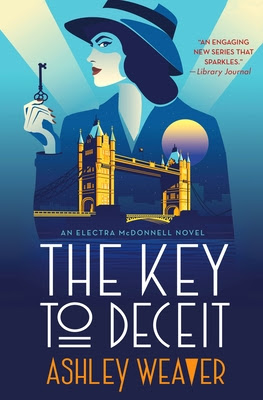
The Key to Deceit (An Electra McDonnell Novel #2) by Ashley Weaver

It's September 1940 and it's only been a few weeks since Ellie McDonnell helped the handsome, aristocratic Major Gabriel Ramsey break  into a house to retrieve some important blueprints before they could be given to the Nazis in A Peculiar Combination. Naturally, she's antsy for another chance to work with Major Ramsey, but first a little background information for those who haven't discovered this great series: Ellie was raised by her Irish Uncle Mick in London after her mother was arrested and imprisoned for supposedly killing Ellie's father, Uncle Mick's brother. Uncle Mick is a locksmith by day, and He, his three sons and Ellie were a safe crackers by night until Major Ramsey caught them in the act and gave the McDonnell family an ultimatum: live on the straight and narrow and help in the war effort or go to prison. I guess you can figure out which choice they made.

Luckily, Ellie doesn't have to wait long for the Major to need her safe cracking skills. A woman found dead floating in the Thames is wearing a curious bracelet - it's a thick cuff that is locked to the wearer's wrist. Ellie is a little queasy about picking the lock on the wrist of a dead woman and stalls by going over her clothing, which was new and expensive. Once Ellie has picked the lock open, they determine it contains a miniature camera. Major Ramsey dismisses Ellie and sends her home, but not for long. Turns out the clothing description helped them determine that the woman was doing something underhanded - there was a bag of precious gemstones hidden in her coat. 

Ellie and her sorta, kinda boyfriend Felix Lacey call on a pawnbroker friend to help them identify and figure out the source of the gems, the women, now identified as Myra Fields, had hidden in her coat. Myra was engaged in espionage for the Germans and the photographs she had taken would be very useful to the Germans should they ever begin bombing London. They also learn that she had been staying in a boarding house run by a Mrs. Paine. 

Ellie and Major Ramsey decide to visit the boarding house as an engaged couple and cousin of Myra's, to see what they can find. And in the midst of gathering evidence of a possible spy ring, the Nazis begin bombing London. Once bombing begins, not knowing who is part of the spy ring or how large it is makes the need to capture the spies taking pictures of possible bombing sites and their ring leader even more imperative. 

There's a lot going on in this novel and it moves at a pretty quick pace, but it is by no means overwhelming. In fact, some of it is a nice break from the mystery at hand. First, there is the relationship between Ellie and Major Ramsey. She is feisty, and can be a buster, while he is aristocratically uptight. Yet, there is chemistry brewing between them and Ellie's family would be pleased a punch to see her involved with him. And Ellie does think about it, but wait, what about Felix? He's so sweet and things could get more serious between them and he is more her sort, criminally speaking. Then, there is the case of Ellie's mother, who maintained her innocence right up until her death from the flu epidemic. Can Ellie find a way to clear her mother's name? And of course there are the everyday changes that war brings on in people's lives. I just love details. 

All in all, I found The Key to Deceit an enjoyable mystery, with lots of details and good plotting so that when the culprit was finally revealed, I was surprised.  The fact is that I was a little skeptical about the Electra McDonnell series when I first heard about it, but after reading these first two novels, I can't wait for the third book. 

Thank you, NetGalley, for supplying me with an EARC.

Saturday, April 30, 2022

A Sunlit Weapon (a Maisie Dobbs Mystery #17) by Jacqueline Winspear

It's October 1942, and Maisie Dobbs is now Mrs. Scott, having married her American beau Mark Scott, investigator with the U.S. Department of Justice and not a political attaché in the American embassy. And now that the United States has entered the war, Maisie just might need her husband's help with her new case. 

Jo Hardy is pilot with the Air Transport Auxiliary, or ATA, ferrying planes wherever they are needed in England. While flying a Spitfire to Biggin Hill in Kent, she heard a sound in the plane aft, as if she were hit by a bullet. Sure enough, circling back, Jo noticed a man standing outside a barn with a gun aimed skyward. A few days later, Jo and her friend Diana returned to the area, and to Jo's surprise, she discovered an African American soldier, Private Matthias Crittenden, bound and gagged. Taking him back to Biggin Hill, the soldier was immediately taken by the American MPs. It seems his white companion, Private Charles Stone, is missing and they think Mattias may have killed him. 

Jo's fiancee had been killed when his plane had crashed in the countryside. Now, after being shot at herself, and then hearing that another ATA pilot had crashed on her way to Biggin Hill two days later, Jo has her suspicions about what might have happened. And she turns to Maisie Dobbs in hopes of getting some answers.  As she begins her investigation, there seems to be two plotlines going on - who is shooting at planes and what happened to Michael Stone.  And the more Maisie investigates, the more these two plotlines begin to come together. 

Into the mix of plotlines comes Eleanor Roosevelt, in England to a goodwill tour and to meet with women doing war work, such as the pilots of ATA. This is a visit that Mark Scott is involved in, making sure that security is tight because there is a evidence of German plot to kill Mrs. Roosevelt. 

At the same time, Anna, Maisie's adopted daughter, has gone from being a happy 7-year-old who loved going to school and had lots of friends there to being a clingy, unhappy child with bruises on her body and who has lost all her friends and no longer likes school. It is another problem for Maisie to get to the bottom of. 

I found this 17th Maisie Dobbs mystery to be every bit as compelling and as rich and vibrant as the previous novels in this series. In fact, I actually found myself liking Maisie more and in a different way than she was in the previous books. Maisie seemed happier and less formal than before. Perhaps it is her American husband, and/or her adopted Italian daughter. whatever it is, I really like it. 

And because the American military are now in England, it is a good opportunity to explore racism and  segregation in the United States, both at home and abroad. I thought Winspear did a pretty good job of showing how the English were accepting of Black Americans in ways that the US, including the military abroad, were not, but also how the English had their own issues about race when Maisie's daughter became a target because of her dark hair and olive complexion, and assumed to be something she isn't. 

Winspear nicely brought in the work of the ferry pilots, showing the dangers these woman faced every time they got into a plane that carried no weapons they could use should they be attacked by a German plane, or even someone on the ground. And readers meet a group of Land Girls working on a farm to help with those chores. I was glad that the farmer they worked for turned out to be a good guy instead of one who took advantage of these young women. I loved all the little details Winspear threw in about both of these wartime jobs. 

On the whole, A Sunlit Weapon is imminently readable and I am still amazed at how, after 17 books, each one still feels fresh and exciting. I can't wait to read #18. 

Monday, April 11, 2022

The Most Dazzling Girl in Berlin by Kip Wilson

April is National Poetry Month so what better time to read this novel-in-verse by Kip Wilson, author of the excellent White Rose. Like me, Kip has a PhD in German Literature and also seems to have an interest in the Weimar years and its aftermath. After all, how could you write two novels that are this good without some serious interest in this time period?

The story begins in February 1932. Eighteen-year-old Hilde has just aged out of the Catholic orphanage she has lived in since her mother's passing eight years ago, leaving with the clothes on her back, a few possessions, and some Reichsmarks in her pocket. After sleeping a few nights in a park, unable to find a job, Hilde discovers and wanders into a Berlin cabaret called the Café Lila after getting drenched in a rainstorm.

Feeling out of place, but before she can leave, Hilde is stopped by Rosa, a beautiful performer and waitress at the café. Before she knows it, Hilde is waiting tables, serving round after round of drinks to the patrons and, at the end of the night, hired on the spot. Realizing that Hilde has no place to go, Rosa takes her to the home she shares with her Tante Esther. 

It doesn't take long for Hilde to realize that Rosa and her aunt are Jewish, that the Café Lila is a queer cabaret, and that she is attracted to Rosa. But, while Hilde quickly finds herself feeling at home in the café, making friends with the other women and working hard waitressing tables, she learns that she is also expected to perform. Although Hilde has a beautiful singing voice and would like to pursue a career in music, she is hesitant to perform at Café Lila.

As Hilde begins to come into her own as a queer woman, and her relationship with Rosa begins to become more mutual, outside in Berlin, things are heating as the political climate changes and Hitler's popularity grows, especially after the runoff election in April 1932. Soon, Brownshirts are everywhere, spreading hate and violence. But when Brownshirt violence comes into Café Lila, will Hilde lose everything she loves and for which she has worked so hard?

I really enjoyed reading The Most Dazzling Girl in Berlin. I've read a lot of books that were written and set in those turbulent last days of the Weimar Republic and this book felt like it could have been written by anyone of those authors. The research is so impeccable that Hilde's Berlin became another important character for me, not just a good setting for a novel. Little details like the park Hilde slept in, or walking alone the Kurfürstendamm, the newspapers of the time, and so much more give the story a real sense of authenticity. I even pulled out my 1928 street map of Berlin to follow Hilde's footsteps whenever possible.

The Weimar period is really an interesting study in contrasts. On the one hand, there were those who wanted the conservatism of Adolf Hitler and the Nazis, on the other, there was the sense of openness and freedom to be who one really is, and as Hilde tries navigate this new-to-her Berlin, I think that Wilson has absolutely captured that dichotomy, presenting the two differences very realistically.  

The Most Dazzling Girl in Berlin is a poignant novel, taking place between February and August 1932, and written in spare free verse. Each poem adds to an at times broad, at other times personal picture of the dying of Weimar Republic and people's reactions that Wilson has so brilliantly created. Today's readers will most definitely have no trouble relating to Hilde's coming-of-age story, whether or not they are part of the LGTBQ+ community, and given the times we are living in now. Confession: the biggest surprise for me is just who the most dazzling girl in Berlin turned out to be. I wasn't expecting that. 

Be sure to read the back matter, which includes the author's inspiration for this novel, an explanation of what is factual and what is fiction, and a glossary of German words and phrases. You might also be interested in checking out the author's blog for a more personal look at her research and a playlist on Spotify.

Thank you to NetGalley for providing me with a digital ARC

Tuesday, March 8, 2022

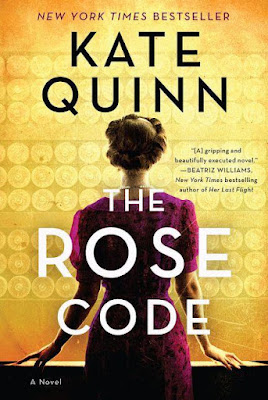
The Rose Code: A Novel by Kate Quinn

The Rose Code is one of those books I've been wanting to read ever since I first heard about it, but it just seemed like I could never find the time. Well, since I found myself with lots of time this past February, it was the first book I reached for. And I'm so glad I did.

The story revolves around three very different women who become friends after they begin working on code breaking at the Bletchley Park in Buckinghamshire, England during World War II. Mab (rather than Mable) Churt was born and raised in a cramped flat with a shared bathroom in Shoreditch in London's East End. Wanting more out of life than what her mother settled for, Mab worked hard to self-educate, reading the classics and she had even come in tops in typing and shorthand. Now, with war, she was ready to do her part for king and country.

Osla Kendall's upbringing couldn't be more different than Mab's. A society debutante, her mother hadn't really wanted her around, and had shipped her off to cousins in Canada. Now, Osla was back in London and dating a navy lieutenant named Philip Mountbatten (formerly Prince Philip of Greece). But once her mother cut off her allowance, Osla realizes she needs a job. Thanks to a German governess, Osla can speak fluent German and Philip suggests she use that skill to help the war effort.

After having mysterious interviews in London, Mab and Osla meet on the train the Bletchley, and instantly become friends, having received almost identical and very mysterious letters telling them where to go once they arrive. 

After another interview and signing the Official Secrets Act, the two women are taken to the Finch home where they will board while working at Bletchley. There, they meet Bethan Finch, the 23-yer-old daughter of their nosy, overbearing and overly critical landlady, Mrs. Finch. Meek and shy, Beth might have been beaten down by her mother, but she also is a whiz at crossword puzzles, able to finish the Sunday crossword in eight minutes. As Mab and Osla get settled into their respective jobs at Bletchley, they become more aware of what is going on in the Finch household, including the way Mrs. Finch abuses Beth. Thanks to Osla, Beth is soon working in Bletchley for expert cytologist Dilly Knox

Though Beth has always been shy and withdrawn, she shines at her job breaking codes at Bletchley. She even joins the book club that Mab and Osla start for the workers there. Then, on June 5th, 1944, as Beth is working on a difficult cipher file she had come to think of as Rose because the short messages reminded her of the way a rose's petals wrap it, she discovers that there was a traitor at Bletchley, but no matter what she says, no one believes her. The next day, as the Normandy Invasion was taking place, Beth finds herself committed to Clockwell Sanitarium for a supposed nervous breakdown. 

Now, it's 1947 and Beth is facing a lobotomy and desperately trying to get her former friends, Mab and Osla to come to her rescue. If they could decipher the Rose Code, they could expose the Bletchley traitor. But would they come? And if not, why not?

The Rose Code is a long, detailed, multi-layered novel and I couldn't put it down. The three main characters are so clearly defined and so deliciously flawed, as different from one another as they are united in their desire to do their part for the war effort. I loved the inclusion of real people like Dilly Knox and Prince Philip and even a mention of Alan Turing, but the other minors characters also fit the story so well. In fact, I became invested in everyone's story very quickly (even the horrible, abusing Mrs. Finch). Bletchley itself is so well depicted it felt like another character instead of just the place that brought everyone together for the sake of the story.

Beth, Mab, and Osla's stories unfold in alternating chapters, as well as in chapters where they all play a part. And the narrative covers two timelines - the war years, while the women were working at Bletchley, and 1947. Actually, 1947 covers only the weeks leading up to the royal wedding of Princess Elizabeth and Prince Philip (yup, Osla's old love interest). 

The Rose Code is a sophisticated, well plotted, well researched and well written novel My only objection is that I didn't really get why the traitor did what they did. I didn't like the character, but I also didn't suspect them yet I wasn't surprised when I found out who they were. 

The Rose Code was one of ten winning titles for ALA's 2021 Alex Award - adult books that also have appeal for young adult readers ages 12-18.

This book was purchased for my personal library.

Wednesday, August 18, 2021

Censorettes by Elizabeth Bales Frank

It's 1941 and Germany has been bombing London relentlessly. For Cambridge educated, Lucy Barrett, 20, it means the loss of her Italian-born mother, Tessa, in hospital being treated for illness when the building is bombed. And it means wondering what happened her beloved brother Matty, an RAF pilot, missing since Dunkirk (1940). Now, in an effort to keep his daughter safe, Lucy's father has sent her to Bermuda, to work as a Censorette for the Imperial Censorship Detachment, reading letters and looking for coded messages. And even though Bermuda is beautiful and relatively safe, Lucy intends to return to England just as soon as she turns 21, to really do her bit for the war.

Working in the basement of the Princess Hotel, Lucy shares rooms, first in the Bermudiana Hotel with Rebecca Lark, called Lark, and later moving to the Princess Hotel, where she and Lark acquire two more roommates - Georgina Taylor, called Georgie, and Ruth Smith, who chooses to sleep in a closet rather than in the bedroom with the other three women. Each of these women have particular talents for the job they do reading mail and looking for anything suspicious. Like the letters Lucy reads from a man they call Brooklyn Joe, whose English isn't very good, and who misquotes Shakespeare in them. But even after her supervisor, Colonel McKay, dismisses the first few letters, Lucy persists. Is she on to something? 

Into this mix of four roommates, come more woman working for the Imperial Censorship Detachment, including McKay's secretary Rebecca Gwynne, two Belgian sisters called Fleur and Roos and then, there are the American soldiers, there to build an airport. It doesn't take long for some weekend partying to begin, complete with a piano, an accordion player and a well-stocked wet bar, thanks to the Americans, who aren't in the war and so not dealing with rationing. 

One American soldier, Lieutenant William Inman, is particularly attracted to Lucy, and while she's not quite as attracted to him, it doesn't take long for his temper and possessiveness to rear their ugly heads. He is especially annoyed at all the attention Lucy gives to Ruth, whom she has taken under her wing and brought her into the fold. Ruth, who likes to paint using watercolors, has always been told that she is "an odd duck. Mental. Looney." Under Lucy's mentoring, she begins to come out of her shell and participate in dances, movie going, and parties. Much to the chagrin of Bill Inman. But when Ruth is found murdered in a park one Sunday morning, her death is not really investigated and her family is disinterested. Lucy, however, has her suspicions.

This is not a mystery novel and Ruth's death is not at the heart of it. What is at the heart is women's friendships and the ways in which women were treated by the men in their lives at the time. From the moment Lucy's father exerts his parental control by sending her to Bermuda for his own peace of mind, to McKay's dismissing Lucy's suspicion about Brooklyn Joe and his letters despite her Cambridge education and her fluency in English, Italian, French, German, and Shakespeare, to Bill Inman treating her as if she were a piece of his personal property, Lucy's strength and intelligence are devalued at every turn. It is only among her female companions that she find the validation she craves. The novel changes time frames to capture the interesting back stories of Lucy and each of her roommates, so the reader knows exactly where they are coming from in life and why they are who they are.  

Censorettes is a multilayered, well textured novel that moves along at an unhurried, never boring pace (reflecting a sunny, leisurely life on Bermuda, even in wartime?). It kept my interest all the way through, so much so that I hated to have to put the book down for different reasons and couldn't wait to get back to it. There is much going on in the novel, but I don't want to spoil it. There are also lots of timely details about life on Bermuda during there war adding depth to the story and which I found very interesting. Movies, songs, different places are all mentioned and are all spot on correct. In this respect, it reminded me of the Maggie Hope mysteries by Susan Elia MacNeal. 

If you are interested in women in WWII, you might find this is a book for you. It is based on the real Censorettes working in Bermuda then, and I highly recommend reading the author's Notes and Acknowledgments in the back matter. You might also want to read about how Elizabeth Bales Frank was inspired to write Censorettes while visiting Bermuda on Sarah Johnson's blog Reading the Past.

This book is recommended for readers age 15+
This book is was gratefully received from the author.

Saturday, July 31, 2021

The Hollywood Spy (a Maggie Hope Mystery #10) by Susan Elia MacNeal

It's hard to believe I've just finished the 10th Maggie Hope mystery. It feels like I read the very first book, Mr. Churchill's Secretary, just yesterday. And yes, Maggie has had some incredible adventures since then. But now she is off to Hollywood, California to help her old friend John Sterling solve the mystery of his fiancée's death. You may recall that at one time John had been Maggie's love interest. Later,as an RAF Pilot, he had been shot down over Germany. John was originally presumed dead, he did return to England. No longer able to fly, he was an aide to Winston Churchill, until Mrs. Roosevelt's Confidante, when he leaves at Christmastime 1941 for Hollywood to work for Walt Disney, hoping to develop a gremlin story idea he has. 

It's now July 1943 and solving a murder in sunny Hollywood, California couldn't be more different than Maggie's dangerous bomb-defusing work in war-torn London. Now, Maggie is staying at the plush Chateau Marmont on Sunset Boulevard with her old friend Sara Sanderson, a ballet dancer who has a small part in a film that George Balanchine is choreographing. 

But Hollywood isn't as sunny as Maggie first thought. America has been in the war since December 1941 and the country has mobilized - more or less - to support the war effort. But, there is also pollution from the nearby factories,  Zoot Suit clashes between Mexican Americans and whites in the Navy, crooked cops, Ku Klux Klan and Nazi supporters, and, of course, the death of Gloria Hutton, John's fiancée. When Gloria was found dead in the swimming pool of the Garden of Allah Hotel after a party, her death was ruled an accident. But Gloria was also involved in a high profile divorce from her husband of a few months, Titus Hutton, that involved a hefty financial settlement for her. 

As Maggie investigates Gloria's death, she discovers there have been other suspicious deaths, all linked to a sedition trial of some Nazis in Sacramento. Gloria had been promised protection because she was afraid the if the Nazis discovered she had testified, her life would be in danger. After all, she had worked as a secretary for one of the Nazi leaders in Los Angeles. 

Needless to say, this is an exciting novel. It can be tough to keep a series fresh and interesting, but MacNeal has put Maggie into so many different eventful global situations that each novel retains its own crispness. And honestly, I was ready for a little glitzy glamour in Maggie's life after the darkness of the  last book, The King's Justice. Am I ready for a redo of Maggie and John? I don't know and if Susan Elia MacNeal knows, she wasn't telling in this book. 

I did like that we learned a little more about Maggie's Aunt Edith, a forward thinking woman, and her partner Olive. I always picture Aunt Edith as an old woman wrapped up in math problems, but was happy to hear about her war work. It made her feel more lively and energetic. I hope we readers really get to know her better someday.

There is a lot of American history in this novel and I think readers may be surprised at how much unrest and racism there was back them. One of the things I like about this series, and it's also very true in The Hollywood Spy is the amount of authentic flavoring that is always a part of a Maggie Hope mystery. People, places, songs and movies play their part in bringing the time period to life for readers. And I think more than any other Maggie Hope mystery, this one will really resonate in today's world. 

What's next for Maggie Hope? Well, there is a bit of a hint at the end of the book, but I guess fans will just have to wait and see. I hope it's not a long wait.

This book is recommended for readers 14+
This book was an eARC received from NetGalley

Saturday, April 10, 2021

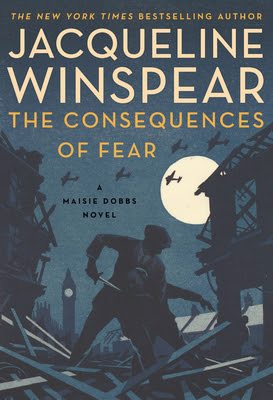
The Consequences of Fear (a Maisie Dobbs Mystery #16) by Jacqueline Winspear

It's October 1941, Britain has been at war with Germany for two years with no end in sight, and Londoners are still being bombed and dealing with the aftermath. For 12-year-old Freddie Hackett, the fastest runner in school, it means running messages to and from agents all over London, to earn a few shillings that his cruel father will spend in the local pub. But when Freddie witnesses a murder one night while running a message, only to deliver the message to the man who had done the killing, he's terrified and needs to tell someone about what he saw. And he knows just who to talk to.

Meanwhile, Maisie Dobbs has been enjoying motherhood ever since adopting Anna, the young evacuee who has been staying with Maisie's father and stepmother in Kent. But Maisie is also realizing that she has fallen in love with Mark Scott, the American agent from the Department of Justice that she worked with for the British Intelligence services under Robbie MacFarlane, senior detective with Scotland Yard's Special Branch. Yet, as much as Maisie might want to spend most of her life in Kent taking care of Anna, she decides to take Freddie Hackett's case pro bono, after finding out that Scotland Yard doesn't believe him and discovering blood at the site of the murder. 

In the midst of her investigation, Maisie accompanies MacFarlane to Scotland where they are to test and evaluate twenty British recruits and a few French volunteers, all wanting to become overseas intelligence agents. But when Maisie meets Major André Chaput, there to observe the French recruits, she is sure that he is the murderer that Freddie Hackett described in such detail, including the deep ridges on either side of his face and the patch of pale skin under his eye. Could it possibly be a coincidence? MacFarlane has been annoyed at Maisie for taking on the Freddie Hackett case to begin with, but when she brings up her thoughts about Major Chaput, he immediately sends her back to London.

Once again, Maisie has a lot on her plate, but now that Anna and Mark have come into her life, you can really feel how torn she is between them and the happiness they bring her and her work, which brings its own satisfaction. Added to all that is Freddie Hackett, a child with a cruel alcoholic father who has had to grow up to fast in order to take care of his mother and younger sister, Grace, who has Down Syndrome. We all know Maisie is a softy when it comes to children and so, not surprisingly, she also manages to find the Hackett family a safe place to live away from Mr. Hackett while things are sorted out. 

I have a feeling this may be a pivotal novel in the life and career of Maisie Dobbs. Throughout the novel, she contemplates the possibility of turning her business over to Billy, her right hand man, marrying Mark Scott and being a full-time mother to Anna. Maybe that's why this novel wasn't as exciting as previous novels. Which is fine, I still enjoyed reading it. But now I really wonder what's in store for Maisie. I have to admit, I was crushed when Alan Bradley ended his Flavia de Luce series, but there are a few more war years left, so hopefully we aren't that close to saying good-bye to Maisie. 

This book is recommended for readers age 14+
This book was an eARC gratefully received from NetGalley

Saturday, February 27, 2021

The Paris Library by Janet Skeslien Charles

It's February 1939, and Parisian Odile Souchet has just landed her dream job as a librarian at the American Library there. Odile has been visiting the library since she was a child and already knows many of the people who frequent it on a daily basis. Meanwhile at home, and much to the amusement of Odile and her twin Rémy, her father, a police captain, has been inviting protégés from various precincts to the house for Sunday dinner, in the hope she will be attracted to one. And finally, it happens - a blond policeman named Paul, who actually shows up at the library bearing daffodils and looking for reference books.

Odile also meets Bitsi, the friendly children's librarian who loves reading as much as she does, and wealthy, but unhappy Margaret, the wife of an attaché at the British embassy who can't adjust to living in Paris, missing her mum, England, and speaking English.

Odile brings Margaret into the library fold as a volunteer while teaching her French. Like Odile, Margaret blooms in the library, finding friends, confidence, and meaning in her life and the two women become fast friends. 

It feels like an idyllic life until France falls to the Nazis and everything changes. Libraries in Paris are now controlled by the Nazis, who have already closed some and banned certain books. When the day for the inspection of the American Library arrives, it turns out that Miss Reeder, the director of the American Library, knows the inspector, Dr. Fuchs, a librarian himself. He basically leaves the most of the library's books intact, but forbids some to circulate and says certain people, namely Jews, may no longer be allowed into the library. Miss Reeder is determined to keep things going, however, and everyone pitches in to secretly deliver books to the homes of the banned Jewish subscribers and to send books to soldiers to help keep up morale.  

Meanwhile, Rémy has fallen in love with Bitsi, has joined the army and is taken prisoner. Odile has fallen in love with Paul, and Margaret's husband has left Paris. But when Odile learns about some of the things Paul is doing, and begins to notice changes in Margaret, she starts to question her feelings towards both of them, and unwittingly betrays Margaret to Paul.

Juxtaposed to Odile's life and these events in wartime France, is the story of Lily, a bored, lonely teenager living in 1980s Froid, Montana, right next door to the elderly, mysterious and reclusive but worldly Mrs. Odile Gustafson, the town's only war bride. Wanting to know more about her and what makes her so different from the other ladies in Froid, Lily decides to make to do a school report on France, hoping to get help from Mrs. Gustafson. And surprisingly, Mrs. Gustafson does agree to help her. Over time, the two become friends, and when Lily's mother passes away, Mrs. Gustafson is there for her. 

I found the chapters with Lily's story to be somewhat of a relief from the tensions of WWII, even though she experiences her own tragedy. Lily is a wonderful character - nosy, curious, looking for a way out of Froid and into the wider world. And Odile is just the person to lead her there. But, it is through her friendship with Lily from 1983 to 1988 that we learn what happened to Odile after the war and how she ended up in Froid, Montana. 

I was first attracted to The Paris Library because it was about a library in Paris during WWII. What lifted it out of good book and put it into great book for me was the inclusion of real people who worked in the ALP at that time, like Americans Miss Reeder, the directress, and library trustee Clara de Chambrun, as well as the Russian born head librarian Boris Netchaeff. Even the German library inspector, Dr. Fuchs, was a real person and a professional acquaintance of Miss Reeder. All of this added such a sense of authenticity to the novel and allowed for some interesting history to be worked into the story without seeming forced.

And I loved being in the library with Odile, Miss Reeder, Boris, and everyone else. Even the subscribers who spent their days there, reading, talking, arguing were so realistic, perhaps because they reminded me of the habitués I used to know at the NYPL when I was doing research. Each one of Skeslien Charles' characters were brave, defiant and loyal, even through the darkest days of the war.

If you are looking for a book about books with themes of community, communication, friendship, betrayal and resistance, you can't go wrong with The Paris Library.

You can find a detailed Reading Group Guide courtesy of the publisher Simon & Schuster HERE.

This book is recommended for readers age 14+
This book was an eARC gratefully received from the publisher.
Dorothy Reeder April 1939

Friday, December 4, 2020

The Book of Lost Names, a Novel by Kristin Harmel

I don't usually review adult novels on this blog, with the exception of mysteries, which are my guilty pleasure, but I found the description of this book intriguing enough to get it from the library. The author, Kristin Harmel, has written a number of books set in WWII and I suspect I will be reading more of them. The Book of Lost Names is a testament to the French Resistance, and the artistically talented people who used their skills to forge life-saving documents. 

It's 2005, and 86-year-old Eva Taube Abrams is still working in a Winter Park, Florida library when she reads an article about a German librarian, Otto Kühn, who is trying to return books that were looted by the Nazis towards the end of WWII to their rightful owners, or at least their families. What catches Eva's eye is a picture of a book called Epitres et Evangiles, a book she hasn't seen in over sixty years. She immediately makes a plane reservation to fly to Berlin and find Otto Kühn to get her book back.

Flashback to July 1942. The Nazi occupation of France has brought out a lot of anti-Semitism among the French, and now roundups of Jews are starting. Before her father is taken away by the Nazis, he tells Eva to visit his employer who will provide her with forged documents he has already paid for. But Monsieur Goujon only gives her all the materials she needs to forge her own documents. 

The forgeries, though not perfect, work and before long, Eva and her mother are on their way to Aurignon,  a small village in France's free zone. It doesn't take long for Eva's papers to be recognized as forgeries, but luckily it is by a member of the French Resistance. Soon, she finds herself in a secret library within the town's Catholic church, working with fellow forger Rémy Duchamp and creating documents for fleeing Jews and RAF pilots who need to get back to Britain.  

But when it came to forging documents for unaccompanied escaping Jewish children, Eva is adamant about preserving their real identity somehow. That way, if they survive the war, they can know who they really are. At first, Rémy is just as adamant about not keeping a record, but, afraid of losing Eva's forging talents, he works up a code that allows the names of the children to be hidden in a book called Epitres et Evangiles

There is definitely an attraction between Eva and Rémy, though neither acts on it, and Eva believes he was killed after the Aurignon resistance is betrayed. 

I can't say I was emotionally swept up in The Book of Lost Names, but I certainly did enjoy reading it enough that I finished it in one sitting.  It's clear that Hamel has done her research and put together an exciting tale of resistance and survival, and, lost love. It is a story based on a newspaper article in the NY Times about how the Germans were trying to find the owners of books stolen by the Nazis that Harmel read. I always find this slice of reality gives a story a real feeling of authenticity. 

The story goes back and forth between past and present, and one of the things I found interesting is that the present is narrated by older Eva, while there is an omniscient narrator for the past. Eva is such a realistic protagonist. She embodies all the fear, desperation, doubt, and courage of a young women caught in a life and death struggle to save herself and her mother, always believing that her father will one day come back to them. 

Two things I didn't like about this book were 1- Eva's mother, whose bitterness and anger didn't help Eva in her struggle to keep them out of Nazi hands; and 2- a few too many coincidences and close calls that probably wouldn't have happened under Nazi occupation.

Nevertheless, I would still definitely recommend this book for teens and adults.

You can find a reading guide for The Book of Lost Names courtesy of the publisher, Simon & Shuster, HERE

This book is recommended for readers age 15+
This book was borrowed from the NYPL

Monday, July 6, 2020

They Called Us Enemy by George Takei, Justin Eisinger, and Steven Scott, illustrated by Harmony Becker

My brother and I used to watch Star Trek reruns religiously. We were too young to know about WWII and this country's treatment of Japanese Americans, and their relatives who were born in Japan but unable to become American citizens. Which isn't surprising since they didn't teach it in school, either. But you know what they say about history, if you don't ignore it, you are bound to repeat it. And sure enough, as this book shows, we have. But we also are learning more about people's experiences in the WWII Japanese American internment camps, in both fiction and nonfiction. And now, we have heard from George Takei, helmsman Hikaru Sulu on the old Star Trek shows, witty social media commentator, political activist, and most importantly, outspoken critic and survivor of America's internment camps. 

Realizing that most Americans do not really know much about what happened to the Japanese Americans in WWII, Takei first turned his wartime experiences into a Broadway musical called Allegiance in 2015. The play centers on a family, much like Takei's own, sent an internment camp in Wyoming and their different reactions to being imprisoned behind barbed wire and watched by armed guards. 

In addition to Allegiance, George Takei has written an excellent, detailed graphic memoir, that is more accessible and ideal for young readers to learn about this dark part of American history from someone who lived it. Structured as a Ted Talk being given by Takei, as well as an interview with NPR, it begins in the middle of the night as their father wakes George and his older brother Henry up and tells them to quickly get dressed. followed by a knock on the front door of their home by two armed guards in 1942. Executive Order 9066 had been signed by President Roosevelt and all people of Japanese descent were being rounded up to be sent to prison camps. 

Losing their successful dry cleaning business, and forced to practically give away their possessions, the Takei's are first sent to the Santa Anita Racetrack. There,  they were housed in former horse stalls until October 1942, when they were sent to Camp Rohwer in Arkansas, and later to Tule Lake, California. 

Jumping back and forth between the 1940s and the present allows Takei to contextualize the personal with the public, the past with the present, giving a much broader picture than just one person's memoir, increasing it relevancy for today's readers. He does this by including specific people and events, such as his own early activism with Martin Luther King, the 1998 awarding of the Medal of Honor to veterans of the 442nd Infantry Regiment, and Fred Korematsu, his conviction for refusing to obey Executive Order 9066, and his subsequent lawsuits claiming there was racial bias attached to the Order. Fred's conviction was thrown out, but not the Order. Sadly, Takai brings readers into the present with the Supreme Court striking down the Korematsu decision under Trump v. Hawaii, allowing the United States to once more discriminate against a particular people - asylum seekers from Mexico and South American put in cages, as well as the controversial Muslim ban, disallowing Muslims to enter the United States. 

But the main part of Takei's narrative is what happened to his family. He has really captured how degrading, how humiliating and painful an experience it was for his parents, who tried their best to shield their children from the grim reality of what was happening. 

I think the most poignant part of the memoir is the government's realization that they had an abundant source of potential soldiers in the camps, but only if they proved their loyalty. Takei's father struggles with the two questions #28 and #29  regarding where one's loyalty lay - United States or Japan. Answering yes to both questions got you in the army, answering no got you a train ride to Tule Lake, a harsh internment camp for those whose loyalty was questionable. The Takei's were sent there in 1944.   

The illustrations are done in comic book style, and rendered in black, white and shade of gray giving is a kind of cold starkness that describes this part of American history so accurately. 

Pair They Called Us Enemy with Citizen 13660 by Miné Okubo and Fred Korematsu Speaks Up by Laura Atkins and Stan Yogi.

You can find a useful Teacher's Guide courtesy of the publisher Random House HERE

This book is recommended for readers age 12+
This book was purchased for my personal library


Monday, June 15, 2020

Superman Smashes the Klan by Gene Luen Yang, art by Gurihiru

Superman was both a popular comic and radio show during World War II, but once the war was over, there were no more Nazis to fight. So, Superman's creators turned their sights to the home front and, at the request of the Anti Defamation League, they took on the KKK. Beginning on June 11, 1946, the radio show ran a 16 part story called "Clan of the Fiery Cross." Each episode was 15 minutes long and sponsored by Kellogg's Pep Cereal. The story proved to be extremely popular, except of course with the Klan, who encouraged members to boycott Kellogg's products. 

Flash forward to 2019. Leave it to Gene Luen Yang to take the story from the radio show and give it his own magical touch turning it into a graphic novel and making it as relevant today as it was in 1946. The premise is basically the same: a Chinese American family - Dr. Lee, his wife and two children, Tommy and Roberta - have just moved out of Chinatown and into a new house in the center of Metropolis. 

Roberta is a rather timid soul, not at all happy about leaving the comfort and safety of Chinatown. Tommy is much more outgoing, but the two siblings really care about and look our for each other 

High schooler Tommy loves to play baseball and is an ace pitcher. On a walk to explore their new neighborhood, he and Roberta meet neighbor Jimmy Olsen who just so happens to also coach a baseball team. But when Tommy beans star batter Chuck Riggs on the head with a baseball during a tryout, Chuck goes ballistic with racial slurs about the Lee siblings. Chuck is immediately fired from the team. At home, it turns out, Chuck's uncle Matt is head of the local Klan of the Fiery Kross and after hearing what happened, he decides it's time for Chuck's initiation into the terroristic activities of the Klan. Chuck's initiation is to help the Klan "burn away America's impurities" and drive the Lee's out. After a cross burning on their lawn and an attempt to burn their home, the Lee's African American neighbors, including Inspector William Henderson of the Metropolis police arrive to help put out the fires. The next morning, reporters Lois Lane and Clark Kent arrive to get the story for the Daily Planet.

Meanwhile, Superman is have problems of his own. The war may be over, but after Superman defeats Atom Man, avenger of the master race, he is left in a weakened state. Under the swastika bearing device that gives Atom Man is super strength is a green crystal (Kryptonite) that causes Superman to smell ash and rot and something else that is familiar, but he just can't remember what it is. The effect of the crystal on Superman continues, causing him to have strange dreamlike interactions with his parents who died when Krypton was destroyed. Suddenly plagued with self-doubt about his purpose and place as a foreigner on earth, Superman struggles with his identity.

Superman's struggle with his identity mirrors that of Roberta Lee's struggle to fit in and accept this part of Metropolis as her new home. Tommy is a great big brother to Roberta, and Jimmy Olsen, Clark Kent/Superman and Lois Lane all offer support as she struggles to find herself and fit in.

I really love a good Superman story and Superman Smashes the Klan is one of the best I've read. The story was originally issued in three limited edition comic books before the graphic novel was published, which is also divided into three chapters. Yang has diversified the characters more than the original 1946 radio program, and has made Roberta Lee and Superman the main protagonists. He has cleverly kept the story in the past yet the overriding issues haven't yet been resolved and the issues of identity and racism will definitely resonate with today's readers. Chuck and his uncle are perfect examples of how racism is passed on from one generation to another. Chuck almost becomes what his uncle wants, mostly because he is afraid to stand up to him for fear of what his uncle will do to him and his mom. Yang gives readers a Chuck who is at the point where he can become racist or reject it. His feelings of helplessness are so real and it's a hard choice for a kid to make. But I loved how Yang handled it.

One of the things Yang emphasizes is the importance of being a part of an accepting community. Tommy and even Roberta have supportive parents and they both find friendship immediately with the new baseball team Tommy joins. Roberta also find friendship and acceptance with Superman, who takes her under his cape, and Lois Lane, who becomes a kind of mentor for Roberta's writing aspirations. Yang also gives his characters much more agency than they were ever given in the old Superman stories. No longer passive "victims" of evil doers waiting for Superman to rescue them, they often take matters into their own hands to help themselves. 

The art for Superman Smashes the Klan was done by Gurihiru, a Japanese team of two women, Chifuyu Sasaki and Naoko Kawano, who have had lots of experience doing the artwork for a number of DC, Marvel, and Dark Horse comics. Their work here is done with a palette of bold and subtle colors, and each of the cells are clean and uncluttered, and really help move the story along. 

Be sure to read Yang's essay "Superman and Me" in the back matter. It is interesting, informative, historical and not what you might expect. 

Superman Smashes the Klan is everything I could want in a graphic novel and more. 

This book is recommended for readers age 12+
This book was purchased for my personal library

You can listen to the original 1946 radio version of "Clan of the Fiery Cross" HERE

Tuesday, May 12, 2020

They Went Left by Monica Hesse

It's August 1945 and Zofia Lederman, 18, has been recently liberated from Gross Rosen Concentration Camp. She is recovering at a hospital, but is determined to return to her family's home to Sosnowiec, in what had been Poland before the Nazi invasion in 1939. After all the Jews there were rounded up, the Lederman were ultimately deported to Auschwitz. Only Zofia and her younger brother Abek, survived the selection process upon arrival, both ending up in Birkenau. Before they were separated, Zofia promised Abek she would find him at the end of the war.

Zofia is convinced that Abek is still alive and waiting for her at home. But home is no longer home, taken over by squatters and ransacked. And Abek isn't there, nor has he been seen in Sosnowiec since the war ended. Here, however, Zofia learns that prisoners from Auschwitz-Birkenau had been sent to either Bergen-Belsen or Dachau. And so early one morning, Zofia leaves Sosnowiec with some stolen money, a small suitcase and goes in search of Abek. 

Arriving in Munich, Germany in September, Zofia finds her way to Foehrenwald, an adults only displaced persons camp. Since Abek would only be 12 by now, there is no chance of finding him in there. But Zofia is give a bed in a cabin with two other girls - Breine and Esther. And she meets the reclusive, angry Josef, to whom she feels a compelling attraction, and who eventually becomes her lover.

Though at first standoffish, Zofia slowly begins to settle into life at Foehrenwald. Thanks to her family's prewar business making fashionable custom clothing for women, Zofia's is an experienced seamstress and finds a purpose in the camp altering clothing for the women there, including a wedding dress. And just as she begins to come to life again, a boy claiming to be Abek shows up at the camp looking for Zofia. 

There are several mysteries woven into Zofia's story, which begin to become apparent as she replays memories about her family, the roundup that ultimately brought them to Auschwitz, the selection process in which she and Abek were sent to the right, her dreams about the last time she saw him, her single-minded need to find him now and to finally be able to go home. This is all described in some of the most heartrending prose I've ever read:
"And when we got to Birkenau, there was another line dividing into two. In that line, the lucky people were sent to hard labor. The unlucky people - we could see the smoke. The smoke was the burning bodies of the unlucky people.
On this continent, I need to find only one person. I need to go home. I need to survive. I need to keep my brain working for only one person.
Because everyone else: Papa, Mama, Baba Rose, beautiful Aunt Maja - all of the, all of them, as the population of Sosnowiec was devastated - they went left." (pg. 14)
As Zofia begins to feel alive again in Foehrenwald, she also begins to unravel the mysteries hiding in her own memories, as well as truth hiding in the enigmatic Josef. Against this, Hesse provides the reader with a very realistic picture of what life was like in a displaced persons camp after the war ended. She has really captured the chaos of so many people looking for loved ones whom they had been separated from and now hoped had also survived life in concentration camps, like Miriam. She and her twin sister were victims of Nazi experiments, now she obsessively writes letters in the hope of finding her sister. And as Zofia discovers, anti-Semitism didn't stop just because the war ended. But Hesse also shows the kindness of people, like Sister Therese at Kloster Indersforg, a displaced persons camp for children, who gives Zofia just enough hope that Abek is alive to keep her going.

While Zofia looks for Abek, Hesse interrogates the idea of what home will be to people who have lost everything and almost everyone that they had identified as home before the war. Just before the Lederman family was rounded up, Zofia had embroidered the story of their family in alphabet form and sewn it into Abek's jacket, so he wouldn't forget. In one of her dreams, Zofia tells Abek: "When I find you again, we will fill our alphabet. And we will be whole, and everything will be fine. I promise I will find you." (pg. xiv) As Zofia rewrites this alphabet in a post war world, it looks very different, but will it become her way to find a new home and rebuild her family?     

That being said, no one was more surprised than I was when I got the the end of The Went Left and the mysteries were solved. I did not expect what I read. 

They Went Left is a book everyone should read.

You can find a great discussion guide provided by the publisher, LittleBrown, HERE

This book is recommended for readers age 13+
This book was an EARC gratefully received from Edelweiss+

Saturday, April 4, 2020

The King's Justice (a Maggie Hope Mystery #9) by Susan Elia MacNeal

I can't believe this is the ninth Maggie Hope mystery I've read. It seems like just yesterday I was reading #1 - Mr. Churchill's Secretary - and yet, it was back in 2012.

Maggie Hope has always been like such an intelligent, level-headed pillar of strength to me, but in The King's Justice we see a different side of Maggie, a more devil-may-care woman and who could blame her given all she has been through already.

It's now March 1943 and Nicholas Reitter, the Jack-the-Ripper copycat serial killer known as the Blackout Beast, and whose last victim was almost Maggie, has been sentenced to death for his crimes (see The Queen's Accomplice, Maggie Hope Mystery #6). Not sure she can ever put her experience with the Blackout Beast behind her, Maggie has refused to have anything more to do with spying for Churchill's SOE and is no longer working for MI5. Even DCI James Durgin, whom she is dating, can't change her mind, not even to help find a valuable stolen Stradivarius violin. 

Instead, Maggie has has taken up traveling around London on a rickety motorcycle, smoking and drinking too much, and volunteering to work with the 107th Tunneling Company of the Royal Engineers, defusing bombs that were dropped by the Luftwaffe during the Blitz. Known as the "Suicide Squad" it is a troop of conscientious objectors, most of whom are Itailan COs. 

But now, it seems there is another serial killer on the loose in London, one quickly nicknamed Jimmy Greenteeth. A number of suitcases full of clean white bones have been found during low tide in the Thames River, along with a white feather. Could the bones belong to London's conscientious objectors, possibly even friends of Maggie? But none of the men not showing up for work have been reported missing. Durgin is stumped and Maggie still refuses to help him solve the case.

But then, just days before his execution, Nicholas Reitter, now being held in the Tower of London,  claims he can help the police fine this new serial killer, but the only person he will speak to is Maggie Hope. And there's a condition attached to his information - Reitter wants a Royal Pardon from His Majesty, King George VI to stop his execution. Knowing this pardon will never happen, and angry with Durgin that he won't warn the COs about the white feathers found with the bones, Maggie ultimately finds herself involved in the Jimmy Greenteeth case when the young man she has been training, Milo Tucci, goes missing.

Perhaps not quite as action-packed as past Maggie Hope adventures, The King's Justice is nevertheless an exciting, complicated mystery. At first I thought that there would be a problem with linking this book up to a past story and using a specific events and recurring characters. I wondered if new readers might get lost unless there is enough background info given without spoiling too much of the action in each story. Not to worry - new readers don't need to know all the details from The Queen's Accomplice, but could well be inspired to begin reading Maggie's mysteries from the very beginning,  or just Book #6.

Old friends of Maggie, like myself, will enjoy her new adventure and, without giving anything away, you know what we are all hoping for in Maggie Hope #10, given how this ends.

One of the things I like really like about Maggie Hope mysteries is the attention to detail author Susan Elia MacNeal gives to presenting an in-depth picture of wartime London in her descriptions, and in this one particularly, the treatment of conscientious objectors, and enemy aliens, as well as in her use of British history, i.e. Jimmy Greenteeth is named after Jenny Greenteeth, a character in English folklore who would pulled people into a river and drowned them (and allows MacNeal to interrogate gendered ideas about who is capable of killing).

I am almost never disappointed when reading a Maggie Hope mystery, and now, I can't wait to see what #10 brings for her.

This book is recommended for readers age 13+
This book was an EARC gratefully received from NetGalley

Sunday, March 8, 2020

Courageous Women of the Vietnam War: Medics, Journalists, Survivors, and More by Kathryn J. Atwood

"Vietnam is like a huge jigsaw puzzle where none of the pieces fit"
Today, I digress from WWII. March is Women's History Month and today is International Women's Day, a time for celebrating women and their achievements. In this book about women in Vietnam, Kathryn Atwood not only presents the reader with some incredibly brave women, but uses their accomplishments to fit the puzzle pieces together to form a whole picture of the events to shaped Vietnam between 1945 and 1975. 

Organized into five distinct chronological parts, each part gives a brief history detailing the political events that were occurring both within and outside Vietnam's borders, pivotal events that were often the result of the actions of outsiders, first the French and later the Americans. This political history is seen through the lens of the fourteen brave women profiled. These are women who came from different backgrounds - Vietnamese, American, French, Australian, and New Zealand, and each for their own reasons. Who were these amazing women?

One example is Geneviève de Galard, who came from a long line of French ancestors that had always proudly served in the military. In 1953, at 27, she followed in their footsteps as a military nurse and part of an evacuation team that transported wounded soldiers from remote parts of Indochina to Saigon and Paris. On one mission to Dien Bien Phu, surrounded by Vietminh artillery assaults, Geneviève realized she would be on the ground indefinitely helping to care for the wounded, where she was "in a way, a mother, a sister, a friend" as well as a nurse. 

Almost as soon as US Navy nurse Bobbi Hovis received her orders in 1963, she was on a plane heading to Saigon. There, Bobbi and other medical personnel spent their days turning a filthy, rickety apartment building into a hospital. As wounded arrived, improvisation became a way of life. In November 1963, a coup to overthrow South Vietnam's unpopular leader Ngo Dinh Diem began, then later that month the news of President Kennedy's assassination was announced. Fighting in Saigon increased with the threat of killing two Americans a day, and in February, the VietCong bombed Bobbi's favorite movie theater. But it was the photo of a dead soldier's wife and children that finally made Bobbi realize she had had enough. 

New Zealander Kate Webb decided to go to Vietnam as a journalist because it "...was simply the biggest story going, and [she] didn't understand it." Beginning as a freelance reporter in Saigon, Kate wrote about things that interested her, spending time with the Army of the Republic of Vietnam (ARVN). Eventually, she made her way to the Cambodian border, where the US allied Khmer Republic had just been put in place. But the Cambodian communists, the Khmer Rouge, were also becoming stronger and soon a civil war broke out. Kate covered the fighting and when it was over, found herself, along with other reporters and cameramen, prisoners of the NVA (North Vietnamese Army). Marched northward, starved, lacking water, regularly interrogated, tortured, and expecting to be killed at any moment, Kate survived her 23 day capture, but not without serious PTSD.

You may not recognize the name Kim Phuc, but most likely you know who she is. On June 8, 1972, Kim's family had taken refuge in a temple with others when bombs filled with napalm were dropped. Kim's clothing and body were burned by the napalm from a second bomb, and photographer Nick Ut captured her running away naked and screaming in pain. Kim's photo made history, but not her years of pain and recovery. Year's later, she became the pawn of a communist official named Hai Tam, who used her to lure western journalists with the promise of an interview and forcing Kim to leave medical school. Eventually, Kim did get away from Hai Tam, married and lives in Canada. 

I tend to avoid books about the Vietnam War. It was always so confusing, and there was so much controversy surrounding it in the United States between supporters and protesters, it just seemed easier to ignore. So I have to admit, I approached this book with some trepidation.  

What I found is a well-crafted book about women of courage. And not all of them were on the side of South Vietnam, nor were they all pro-war. All of their stories are fascinating, and include what later became of them after they left Vietnam. Kim Pfuc's story is a good example of that, so is that of the navy nurse Kay Wilhelmy Bauer who worked as a recruiter when she returned home. Kay indirectly survived the war when her neighbor's house was bombed by protesters, killing the people who lived there, by mistake. I was particularly happy to see Joan Baez included. Her political songs and visit to Vietnam may have been popular with anti-war protesters, but some veterans felt she had contributed to the terrible treatment they experienced when they returned home from Vietnam. As she told them, it was the war, not the veterans, she was against. This proved to be an important lesson about distinction to learn, when the US entered future wars not of the soldiers making.  

The great thing about Courageous Women of the Vietnam War, and in fact, all of Kathryn Atwood's books are that they are not young reader editions of adult books. They are first and foremost written for young adults so that they read smoothly but without talking down to the reader. Unfamiliar terms are clearly explained, and the intros to each part of the story make the complicated Vietnam War understandable. There is a map at the beginning of the book, which is always helpful, and I found myself referring to it more than once. Back matter includes a Glossary, Notes, and an excellent Bibliography.

In her Introduction, Atwood writes that "when women volunteer to participate in a war, they exhibit  a particular kind of courage, to face not only the dangers of battle, but also the negative opinions - perhaps even their own - of those who don't believe them capable of enduring war's grueling difficulties." (pg. 5) As you read these 14 amazing stories, I think you will see that particular kind of courage present in each one of them. 

This book is recommended for readers age 13+
This book was sent to me by the publisher, Chicago Review Press 

Tuesday, September 3, 2019

Voyages in the Underworld of Orpheus Black by Marcus Sedgwick, Julian Sedgwick, illustrated by Alexis Deacon

It's December 1944 and since September, the Nazis have once again been bombing London with their newest weapon, the V2 rocket. Harry Black, a conscientious objector, has been working on the fire brigade with fellow objectors. His moral position has caused a rift in the Black household. His father refuses to have anything to do him, claiming Harry has blackened the family name. Older brother Ellis is a soldier, back in London to recuperate from wounds suffered on the battlefield, and waiting to be sent back into combat. He also feels that Harry is a coward, but agrees to meet him at a pub called the White Horse. The two talk about a few things, including about a possible book of poems that Ellis could write and Harry could illustrate.

After talking for a while, Ellis decides to remain at the pub and Harry boards a bus home. The pub then takes a direct hit from a V2 rocket and is completely demolished. The bus was also destroyed in the hit and Harry wakes up in a hospital, seriously injured. But a nagging feeling tells him that Ellis is still alive, buried in the debris of the destroyed pub and Harry decides he must venture underneath the rubble to find and save his brother. While still in hospital, Harry meets a 14-year-old girl named Agatha, who had been a Kindertransport child in 1939 and now wants to find her parents, whom she believes are now in London.

Together, a semi-delirious Harry and a determined Agatha venture forth through the bombed and burning streets of London to find the remains of the White Horse in order to rescue Ellis and reunite Agatha with her parents. Throughout their journey, Harry stops to take the time to document everything in his notebook, which already includes copious, detailed illustrations for a planned science-fiction book called Machines of War.

Harry's journey into London's underworld to reach his brother has parallels to the myth of Orpheus and his journey to the Underworld to bring his wife back from the dead. Not surprisingly, Harry's notebook entries are explained and made clear through free verse poems by a poet named Orpheus. But who Orpheus is here is a mystery (until the end, but even then, I questioned Orpheus' identity here).

Voyages in the Underworld of Orpheus Black is not an easy book to read. It can feel confusing and muddled at times, but it is so worthwhile to stick with it to the end. This is clearly an anti-war story, catching all the particular horrors of World War II, and in fact, all wars. The Sedgwick brothers have created a hero in Harry Black, which is not surprising. Apparently, their father, a Quaker, was a conscientious objector during WWII and it is clear they consider him to be a hero for taking a stand against war that was seen as almost treasonous during WWII.

This is a carefully crafted story, part graphic novel, part verse novel, part prose novel, seemingly told from three different points of view - Harry, Orpheus, and, to a lesser degree, Ellis. Each part, each person ties into the other, adding to the story, and creating plenty of intrigue.

I found myself really caught up in Harry's first person narration, even at his most muddled, but I could have done with less of Orpheus and his songs. At times, I felt they interrupted the flow of the story too much. Also, it didn't take me long to figure out the mystery of Agatha, but maybe that was supposed to happen. After all, she pushed Harry along to act before it was too late to rescue Ellis.

Students will one day have a field day analyzing the meaning of this novel, the themes, the metaphors, the veiled references to reality contained in Harry's Machines of War work-in-progress, and the illustrations, which are so much a part of the story, don't gloss over them. The ones done in blues and whites are Harry's illustrations for his book, the black and white illustrations represent reality and belong to the story being told.   

All told, I really enjoyed reading this book. It was a harrowing journey to the end but it had the kind of very satisfying, emotional ending I find appealing in books like this. And since I don't find too many really good alternative histories that take place in WWII, this was a very welcome addition to that particular genre.

This book is recommended for readers age 13
This book was an EARC received from NetGalley