Showing posts with label England. Show all posts

Monday, September 20, 2021

The Swallows' Flight by Hilary McKay

Yes, The Swallows' Flight is a book about WWII and, yes, it is a companion to the WWI novel The Skylarks' War (Love to Everyone in the US) that told the story of siblings Clarissa (Clarry) and Peter Penrose and their friends, and whose children play a part in this novel.  In fact, this novel revolves around 5 children whose lives eventually come together - Erik and Hans in Berlin, Kate Penrose in Oxford, Ruby in Plymouth, and a scrapyard dog in London, though for the most part, the timeline isn't linear.

In 1931 Berlin, ten-year-olds Erik and Hans are best friends with big plans for the future - Erik plans to become head zookeeper at the Berlin Zoo and Hans plans to open a kiosk outside the zoo and sell strudel. But right now, Erik is collecting flies to feed the young swallows he has just rescued. Hans has an Uncle Karl who introduces the boys to flying, which they love, and eventually causes them to become Luftwaffe pilots even though they never supported Hitler and the Nazis.

Although she comes from a family where the girls are all named after flower, in 1927 Plymouth, England, Violet decides to name her daughter Ruby Amaryllis. Not only does Ruby have a different name, but she is born with red birthmarks scattered over her face, causing her feel self-conscious and to shy away from people as she gets older. As if birthmarks aren't bad enough, older brother Will, 8, has no use for his new sister, and as children, he never lets her forget that. Ruby's mother Violet's best friend is Clarry Penrose from Oxford, who is given the honest of becoming Ruby's godmother. 

Peter Penrose, now a doctor has married Vanessa and they have six children, including Kate, born in 1928 and who is their youngest. As it happened, Clarry is also Kate's godmother. Into this mix is unofficial cousin Rupert, who is as exciting and interesting to the Penrose children as is Han's Uncle Karl to him and Erik. But Kate is the only one who doesn't get to experience any adventures with Rupert. Kate is a sickly child, with lung problems and a constant cough, and by the time she would have been old enough, WWII had begun. But she is also inquisitive and a keen observer, and begins to keep a diary of everything that happens to everyone else. 

Dog lives in East London and no one knows just how old he is. He is kept chained up in the scrapyard, and is supposed to bark away potential thieves, but dreams of running free. The only kindness he experiences is the scrapyard girl who at least acknowledges him with an occasional "hello, dog" and who, at the start of the war, attaches a luggage tag to his collar with the name Pax burned into it. Not long after, Pax is released to fend for himself, but luckily meets the kindhearted Rupert. 

The story that unfolds is told in alternating chapters that recounts how the war impacts the lives of each of these five character until their lives converge. It's an unusual format, but one the works beautifully and the non-linear timeline is not at all confusing.  Don't worry if you haven't read the first book. While it is well worth reading, The Swallows' Flight stands alone and there is a even brief family tree for each of the human characters.  

McKay's writing is just beautiful and she has skillfully created a heartwarming, inspiration novel that includes appealing character's with distinct characteristics and personalities. There is just enough information about what is going on in the world, especially Germany, to give historical context to the individual stories. There is a glossary in the back matter as well as some historical background. 

The Swallows' Flight is available now in the UK and will be available in the US on October 19, 2021

This book is recommended for readers age 9+
This book was purchased for my personal library

Friday, July 23, 2021

MMGM: Arctic Star by Tom Palmer

I've read about convoys and their escorts crossing the Atlantic Ocean during WWII, but never about the ships that escorted convoys traveling parallel to Norway to a base in northern Russia through waters alive with German submarines loaded with torpedoes and Luftwaffe just waiting to take to the air and strike. But even more terrifying than U-Boat attacks and airplane strikes was Hitler's newest ship the Scharnhorst, "the most feared German vessel on the ocean" and rumor has it that she is on the move. Needless to say, this novel, based on a true story, is action packed. 

It may only be October 1943, but teenager Frank, along with his childhood friends Stephen and Joseph, have bundled up to go out on the deck of the HMS Forgetmenot, a convoy escort, to chisel as much ice as possible off the deck of the ship. It's not easy task, given the rough sea, the high waves, and the rolling and tossing of the ship. Which is how Frank suddenly lost his balance and found himself falling into the sea. Sure he was a goner, Frank is surprised to wake up back on the ship. 

Frank recovers, and eventually, the ship makes it to their destination in Russia, but on the way back to their home port, they are torpedoed, and once again Frank finds himself in the freezing Arctic waters as the HMS Forgetmenot sinks. Picked up by a rescue ship, Frank realizes his friend Joseph is dead, but Stephen, who was in the engine room, has miraculously survived. 

Frank and Stephen are given a Survivor's Leave, returning home to Plymouth, England to see their families, and pay their respects to Joseph's father. While there, they receive their orders to report to the HMS Belfast, back on Arctic Convoy duty. And while the HMS Belfast is a larger ship that the HMS Forgetmenot, the trip north to Russia is still filled with fear, anxiety and danger. 

The book ends with the Battle of North Cape, the real life battle between the Arctic Convoy and the dreaded Scharnhorst battleship. I said it is a nail-biter and it is right up to the end. Palmer's descriptions of the cold weather and icy waters of the Norwegian Sea, the ice that coated the ship and had to be constantly chiseled away to prevent the ships from getting top heavy and capsizing, were realistic enough to give me chills despite reading it during a heatwave. 

But even more realistic than the elements were Frank's thoughts and fears. Frank is a sensitive, conscientious boy, and dealing with a dangerous mission should be enough for a anyone who is still a teen, but he must also deal with worry about his mother alone in Plymouth, grieve for a friend who died while the two friends were not on speaking terms, and his own fears of what could happen. The story is told from Frank's first point of view and I thought Palmer did a great job of giving readers a sense of what it was like to be Frank without overwhelming them with too much tension. 

Arctic Star isn't a very long novel, but packs a powerful punch. The Arctic Convoys were such difficult and harrowing missions that an special award called The Arctic Star was created in 2012 for those men who served on what Winston Churchill called "the worst journey in the world." The book is not named for this award, but rather for the North Star that plays a small but important role in Frank's story.

Back matter includes an Author's Note and photographs of men who served on the Arctic Convoys, as well as additional information on the HMS Belfast.

This book is recommended for readers age 8+
This book was purchased for my personal library

Be sure to check out the other Marvelous Middle Grade Monday offerings, 
now being carried on by Greg at Always in the Middle.

Tuesday, May 4, 2021

After the War: From Auschwitz to Ambleside by Tom Palmer

Tom Palmer used to write books for kids about sports like rugby and football (soccer), but more recently he has turned his storytelling skills to historical fiction. Last year, I read D-Day Dog, a story I found to be very informative, as does the present-day protagonist Jack. This year, I was intrigued to read After the War after hearing about it for an event on World Book Day, March 4, 2021 in connection with the Anne Frank Trust

After the War is a fictionalized story based on true events that happened after the war ended. In 1945, 300 Jewish children who had survived life in a Nazi concentration camp during the Holocaust were sent directly to the Lake District in England. 

It's summer 1945 when 15-year-old Yossi, and his two friends Mordecai and Leo arrive in England in one of 10 planes, each carrying 30 young Holocaust survivors. They have been told they are safe now, that they will all have enough to eat and a room of their own with a bed and electricity, and most importantly, there will be no guards. But after six years in a concentration camp, could they really trust that? 

Arriving at the Calgarth Estates on Lake Windmere, where they will live for the next few months, the children find it difficult to trust people and what they say, and to give up the survival habits that kept them alive in Auschwitz, especially when it comes to food. So despite there always being enough to eat, Yossi, Leo, and Mordedai stuff as much food as they can into their pockets to save for later - just in case there isn't enough food then. 

Slowly, however, they begin to gain weight, becoming healthier and stronger. They even begin to develop trust again, thanks to the the kindness of the people of the Lake District and those in charge of them at Lake Windmere. Soon, they are back in school and learning English, and since their stay is only temporary, they also need to start thinking about the future and what they will do. The Red Cross arrives visits to obtain information about the children's families in order to try to reunite them with relatives who might have also survived. Yossi hopes that they will find his father, whom he wants to believe is still alive, even though they were separated on a death march towards the end of the war. Yossi watched as his younger sisters and mother went to the gas chambers the night they arrived in Auschwitz, but he and his father were selected to work. 

Hoping against hope that the Red Cross will find his father, Yossi is unable to think about moving on. The three friends, who have become family to each other, want to stay together, but can't agree on how to do that. Mordecai, who is deeply religious, wants to join the Jewish community in Leeds after they reached out to the children at Lake Windmere, while Leo wants to go to Palestine, believing they would be safest there. 

But recovery and recuperation aren't as easy as clean sheets and enough to eat. Yossi, who is the main protagonist, is haunted by his memories of the things he witnessed before the war in Poland after the Nazis invaded and life first in the ghetto and later in Auschwitz. These memories are seamlessly woven into the story as incidents in Yossi's present ignite flashbacks in his past. Sensitive and caring, Yossi has a minor breakdown one day when he seems to have given up and, not seeing any point to it, refuses to get out of bed. Laying there, he recalls his father's words "...if we let ourselves go, the Germans will think they are right, that we are not human." His father believed that getting up and washing every morning in Auschwitz was an act of defiance, of resistance to the Nazis, and Yossi determines it is still true. Will the memory of his father give Yossi what he needs to be able to get up and move on?  

People sometimes forget that when a war ends, it isn't over, that there are always serious after effects. In this short, very readable novel, those after effects are clearly presented. Palmer depicts the children's survivor behavior in their present circumstances, relating it back to what happened in the concentration camps in the most heartbreakingly poignant way. And while he doesn't graphically describe the cruelty and the atrocities committed by the Nazis against Jewish men, women, and children, he gives enough detail that readers can get a clear picture of what happened then and the challenges the children now face.

After the War is a powerful book about courage, friendship, hope and resilience and I can't recommend it highly enough.

Be sure to visit Tom Palmer's After the War webpage for more information, including a link to read the first chapter, a link to hear about his researching and writing After the War and so much more.

Although After the War is fiction, you can find more information about the children who were brought to Lake Windmere at the The Lake District Holocaust Project HERE (BTW10% of author royalites are donated to The Lake District Holocaust Project). 

After the War is published by Barrington Stoke in a dyslexic friendly font, layout, spacing and page tint that makes it easier to read (and since I'm dyslexic, I can honestly say it does). 

This book is recommended for readers age 10+
This book was purchased for my personal library

Saturday, April 4, 2020

The King's Justice (a Maggie Hope Mystery #9) by Susan Elia MacNeal

I can't believe this is the ninth Maggie Hope mystery I've read. It seems like just yesterday I was reading #1 - Mr. Churchill's Secretary - and yet, it was back in 2012.

Maggie Hope has always been like such an intelligent, level-headed pillar of strength to me, but in The King's Justice we see a different side of Maggie, a more devil-may-care woman and who could blame her given all she has been through already.

It's now March 1943 and Nicholas Reitter, the Jack-the-Ripper copycat serial killer known as the Blackout Beast, and whose last victim was almost Maggie, has been sentenced to death for his crimes (see The Queen's Accomplice, Maggie Hope Mystery #6). Not sure she can ever put her experience with the Blackout Beast behind her, Maggie has refused to have anything more to do with spying for Churchill's SOE and is no longer working for MI5. Even DCI James Durgin, whom she is dating, can't change her mind, not even to help find a valuable stolen Stradivarius violin. 

Instead, Maggie has has taken up traveling around London on a rickety motorcycle, smoking and drinking too much, and volunteering to work with the 107th Tunneling Company of the Royal Engineers, defusing bombs that were dropped by the Luftwaffe during the Blitz. Known as the "Suicide Squad" it is a troop of conscientious objectors, most of whom are Itailan COs. 

But now, it seems there is another serial killer on the loose in London, one quickly nicknamed Jimmy Greenteeth. A number of suitcases full of clean white bones have been found during low tide in the Thames River, along with a white feather. Could the bones belong to London's conscientious objectors, possibly even friends of Maggie? But none of the men not showing up for work have been reported missing. Durgin is stumped and Maggie still refuses to help him solve the case.

But then, just days before his execution, Nicholas Reitter, now being held in the Tower of London,  claims he can help the police fine this new serial killer, but the only person he will speak to is Maggie Hope. And there's a condition attached to his information - Reitter wants a Royal Pardon from His Majesty, King George VI to stop his execution. Knowing this pardon will never happen, and angry with Durgin that he won't warn the COs about the white feathers found with the bones, Maggie ultimately finds herself involved in the Jimmy Greenteeth case when the young man she has been training, Milo Tucci, goes missing.

Perhaps not quite as action-packed as past Maggie Hope adventures, The King's Justice is nevertheless an exciting, complicated mystery. At first I thought that there would be a problem with linking this book up to a past story and using a specific events and recurring characters. I wondered if new readers might get lost unless there is enough background info given without spoiling too much of the action in each story. Not to worry - new readers don't need to know all the details from The Queen's Accomplice, but could well be inspired to begin reading Maggie's mysteries from the very beginning,  or just Book #6.

Old friends of Maggie, like myself, will enjoy her new adventure and, without giving anything away, you know what we are all hoping for in Maggie Hope #10, given how this ends.

One of the things I like really like about Maggie Hope mysteries is the attention to detail author Susan Elia MacNeal gives to presenting an in-depth picture of wartime London in her descriptions, and in this one particularly, the treatment of conscientious objectors, and enemy aliens, as well as in her use of British history, i.e. Jimmy Greenteeth is named after Jenny Greenteeth, a character in English folklore who would pulled people into a river and drowned them (and allows MacNeal to interrogate gendered ideas about who is capable of killing).

I am almost never disappointed when reading a Maggie Hope mystery, and now, I can't wait to see what #10 brings for her.

This book is recommended for readers age 13+
This book was an EARC gratefully received from NetGalley

Sunday, January 19, 2020

Anna at War by Helen Peters

When Daniel's class begins studying WWII, he volunteers that his Granny, Anna Schlesinger, had come to England as a refugee from Germany, but that is all he knows. When he asks her about it, he also discovers that there is an M15 file on her with the Secret Service. Now, Daniel can't wait to hear her story.

And what a story it is, one that really begins on November 9, 1938, Kristallnacht, when the Schlesinger apartment is destroyed by Nazis and Anna's father is arrested and taken to Buchenwald concentration camp. Back home weeks later, a heartbreaking decision is made by her parents to send Anna, 12, to safety in England on the Kinderstransport. No sooner does her journey begin, then she has a sleeping baby boy thrust at her through the train window. Anna cares for the baby, refusing to give the little stowaway up until they arrive in England and she has assurances he will be taken care of properly.

After more traveling, Anna finds herself on an estate farm in Kent with no electricity or indoor plumbing, but with a family that warmly welcomes her into their home - Aunty Rose and Uncle Bert Dean, their young son Frank, 6, and Molly, also 12-years-old and with whom Anna will share a room.

Anna adjusts to English life on a farm, but when Hitler invades Poland, and England and France declare war with Germany, she is crushed as all hope that her parents could also escape to England is completely destroyed.

Meanwhile, a boy at school, Billy Townsend, insists that Anna is a German spy, sending secrets back to help the Nazis invade England, even going so far are to write up a list of reasons to prove it and to turn the other kids in school against her. But when Molly betrays her because of Billy, it is almost more than Anna can take and she begins to avoid Molly as much as possible.

Until an injured man who calls himself Peter Smith and who claims to be a British soldier is found in the hay loft in the barn. He tells them that his mother is very ill and he wants to visit her, even though he doesn't have leave to go, and that he had injured his ankle on his way, so he can't walk. The children are very sympathetic, offering food and water, and even agreeing to mail a letter for him. But after they leave the barn, Anna goes back to get the family cat and hears the soldier speaking German. Realizing he probably is a German spy injured when he parachuted into the area, Molly and Frank refuse to let her report him to the authorities - Frank had repeated some important top secret war-related information to Molly that he had overheard his dad telling his mum. If they report the spy, and he repeats what he may have overheard Frank say, their dad might be tried for treason - punishable by death.

What can they do to get the spy arrested and still keep Mr. Dean safe? They do come up with a plan for that, but will it work?

Some things I really liked about this book:

Anna at War is my favorite kind of WWII story. It's exciting, it has lots of local detail about what WWII was like for those living in the English countryside, and most importantly, it has lots of detail about what life was like in Nazi Germany for Jews like the Schlesinger's. Helen Peters doesn't hold back on her descriptions of the destruction of Jewish homes and businesses on Kristallnacht, the cruel anti-Semitism of people who used to be their friends, and what a few weeks in a concentration camp did to Anna's father. And the decision by the Schlesinger's to send Anna away, not knowing if they will ever see each other again, is presented in all its agonizing difficulty and its emotionally wrenching reality. Yet, it is all handled with a good deal thoughtfulness, considering the age of the target reader.

Anna is depicted as a sensitive girl, who has a strong understanding of right and wrong, and who always tries to act responsibly. She's also pretty courageous, resourceful, stubborn and even defiant when she needs to be - character traits that are made very clear right from the beginning. Her story is compelling and because it is Anna recounting her life to her grandson, it is told in the first person in a voice that is authentic, clear and very powerful.

Peters has also captured the fears of the English that they too could be invaded by Nazi Germany just as so many European countries had been. And fears that spies like Peter Smith were parachuting into England (this did happen, but not all that frequently) to make the invasion easier are also presented in Billy Townsend's insistence that Anna is a spy and his rallying schoolmates, including Molly, into believing such a far-fetched idea is testament to how contagious and persuasive hate can be - even in the schoolyard, even in the face of facts.

Anna at War is a must read for anyone interested in historical fiction set in WWII. I picked it up and couldn't put it down once I started reading. And there is a wonderful denouement that makes Anna journey just so very rewarding.

This book is recommended for readers age 10+
This book was purchased for my personal library

Be sure to check out the other Marvelous Middle Grade Monday offerings, now being carried on by Greg at Always in the Middle. 

Tuesday, June 25, 2019

Re-reading Blackout and All Clear by Connie Willis


I decided to re-read Blackout and All Clear not long ago. I read them back in 2010, and while I don't usually re-read books, I did these because I always felt that I had read them too quickly. And the fact is I loved them as much the second time around as I did the first. Then I re-read my review and decided, 9 years after I wrote it, to repost it. This is what I wrote on November 17, 2010:

"I have just finished reading Blackout and All Clear and find myself wishing that Connie Willis could have kept going. After reading these two books totaling 1,168 pages, I find I have become quite attached to the characters and had a hard time saying goodbye when I came to the end. They are just that good!

The books are based on a simple enough premise. In 2060 Oxford, history is studied by traveling back in time to observe, collect data and interpret events firsthand under the tutelage of Mr. Dunworthy, the history professor in charge of time travel. The story centers on three students interested in different aspects of World War II. Michael Davies, disguised as Mike Davis who wants to go to Dover as an American war correspondent to observe the heroism of the ordinary people who rescued British soldiers from Dunkirk; Merope Ward becomes Eileen O’Reilly, working as a servant to Lady Caroline Denewell in her manor at Backbury, Warwickshire in order to observe evacuees from London; and Polly Churchill becomes Polly Sebastian, a shop girl by day working in the fictitious department store Townsend Brothers on Oxford Street, who wants to observe how Londoners coped during the Blitz.

In Blackout and All Clear, Willis makes it clear that there are certain cardinal rules of time travel. First, the traveler may not do anything to alter a past event. But that was supposed to have been taken care of so that it couldn’t happen. In addition, an historian is not allowed to travel to a divergence point, a critical point in history that can be changed by the presence of the historian. Nor can a predetermined drop site open if there is a “contemp” nearby who might see what is going on. Furthermore, once they have arrived at their destination, the historian is required to return to 2060 Oxford and report in. If they don’t do this, a retrieval team is sent to bring them back to Oxford. One other thing, time traveling historians are not supposed to have contact with each other while in the past.

That being said, Mike ends up in Dunkirk, saving a life and Eileen is prevented from returning to Oxford at the end of her stay by an outbreak of measles among the evacuees. Both ultimately travel to London, seeking Polly, hoping to use her drop to get back to 2060, but Polly’s drop has been compromised by a bomb and has stopped working. These extended stays do not result in the arrival of retrieval teams; but in much more complex adventures and worries. Have they altered the future unintentionally? Or unalterably? And if so, what does that mean for the future? And will the historians ever get back to 2060 Oxford?

In addition to Mike, Polly and Eileen, Willis has drawn some interesting supporting characters in Blackout and All Clear, all very different from each other and all of whom I found myself caring about. There is Sir Godfrey Kingsman, the well known actor who is part of the entourage in Polly’s bomb shelter, though he did get on my nerves with his constant quoting of Shakespeare, yet he was still endearing. He always referred to Polly as Viola from Twelfth Night because of the way she arrived at his bomb shelter her first night, and she was going by the last name Sebastian, the name of Viola’s twin brother, something to keep in mind as you read. And Colin Templer, 17 and besotted with love for Polly and who had promised to rescue her if anything went wrong. Colin wants to go to the Crusades so he can use the paradox of time travel to close the four year age difference between himself and Polly. Eileen’s life was plagued by Alf and Binnie Hodbin, brother and sister urchins evacuated from London to Backbury, pranksters and troublemakers extraordinaire. Mike had Commander Harold, elderly captain of the Lady Jane who unofficially went across the English Channel to participate in the evacuation of soldiers from Dunkirk and changed the course of Mike’s time travel.

Connie Willis has done a brilliant job writing Blackout and All Clear, even though I know I will probably have to reread both books again to really appreciate them [yes, that's exactly what happened]. When I first read Blackout, I didn’t pay close attention to the dates at the beginning of each chapter, so sometimes they were a little confusing. I found myself preoccupied with questions about why I was suddenly in 1944 or 1945 and who were Mary Kent and Ernest Worthing and how did this connect to Mike, Polly and Eileen?  Blackout sets up all the questions and All Clear answers them.

Throughout both novels, the three main characters are confused by what has happened to them, and the chaos of the period, such as not knowing when or where bombs may fall, adding to their sense of helplessness once Polly's knowledge of when and where bombs will fall is exhausted. As in the real war, anger, anxiety, confusion, fear, frustration and helplessness are exactly the array of emotions that the reader experiences along with Mike, Eileen and Polly. Yet, all is not doom and gloom. Willis balances these with instances of hope, courage, selflessness and heroism. She also injects some very comical scenes into the story, such as an angry bull and the deployment of rubber tanks in a muddy, foggy pasture to fool the Luftwaffe, or the constant antics of the Hodbins. And of course, there is the dry wit of the British and their ‘carry on’ attitude after a blitz attack. I really like the fact that Willis keeps the story focused on the plight of the stranded historians, rather than jarring the reader by going back and forth between them and Oxford 2060.

Blackout and All Clear are both chock full of action, information, comedy, tragedy and everything else that goes into making a great story. They are not really meant for YA readers, yet they are perfectly suitable for high school kids, and even some younger ones. So without reservation, I would definitely recommend Blackout and All Clear to readers in their teens and to everyone else. It is a wonderful a tale about survival and heroism."

These books are recommended for readers age 13+
These books were purchased for my personal library.

Willis described the blitz and the bombs that hit Oxford Street, where Polly worked, in amazingly realistic detail.  Check out the following for an online exhibition of the West End at War including photos and maps of the blitz in that area, the same area that plays a large part in Blackout and All Clear
 http://www.westendatwar.org.uk/index.aspx


The following has online information about the Docklands and East End during the war, another area highlighted by Connie Willis;
http://www.museumindocklands.org.uk/English/EventsExhibitions/Themes/DocklandsWar/

Wednesday, June 5, 2019

D-Day Dog by Tom Palmer

Jack Ashville, an 11-year-old living in England, had always wanted a dog, and finally his parents had said yes. Now, except for school, he and Finn are inseparable, and Jack has worked very hard taking care of Finn and having fun with him. But Jack also loves to play video games with his dad, a soldier in the Army Reserves. Their newest video game is based on the D-Day invasion of June 6, 1944, and while his dad wants to teach Jack something about D-Day before playing, Jack just wants to get to the video game. Then, Jack learns that his father might be deployed to a war zone, and he couldn't be more excited.

At school, Jack's class is beginning to learn about the D-Day invasion of the Allies in World War II in preparation for a class trip to the beaches of Normandy, France. One of their assignments is to pick a soldier who died on D-Day and is buried in Ranville Cemetery there and learn all about them. Then, when they arrive at Ranville, each student can plant a small cross with a poppy on it on the soldier's grave.

At first, Jack is pretty gun-ho about the trip, but after hearing his parents fighting about his dad's deployment, and learning that his dad would be staying at this
grandmother's for a while, until things can be worked out, he's feeling a little deflated about everything. However, when his teacher suggests Jack research "D-Day and dogs," his enthusiasm picks up again as he's sure he's found the perfect soldier to honor.

That is until he reads about what happened to his soldier and the dog he trained to parachute out of an
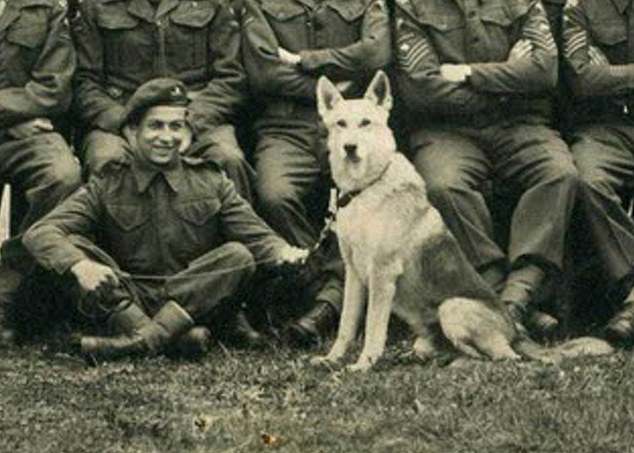
airplane on D-Day. Emile Corteil was a young private in the 9th Parachute Regiment and Glen was his German Shepard. When it came time to jump, Glen got spooked by all the noise below and Emile had to literally throw him out of the plane. The jump didn't killed them, but both did die on June 6, 1944. Reading their story, Jack become so angry at what he feels is Emile's betrayal of Glen, that he subsequently refuses to go on the class trip. In fact, Jack does a complete 180° turn, now finding the reality of war to be abhorrent.

Trouble is nobody's having any of that and Jack finds himself on the bus sitting between his friend Lucas, a special needs student, and Kassandra, a girl whose family had to flee their home in Aleppo because of war. But anger causes Jack to act out and now his punishment is to sit by the bus driver, a gruff, chain-smoking old soldier, and apart from the other kids.

Needless to say, Jack's class trip is a real eye-opener for him as he learns not just about the cost of war in human life, but also comes to understand why people are willing to fight and die for what they believe, and that there is a big difference between the reality of war and war fought in a video game.
Grave of Emile Corteil and
Glen in Ranville
Cemetery

It is interesting to read the way Palmer has brought three subsequent wars into this story. There is Jack's dad, who could be sent to fight in the war in Afghanistan, the bus driver who had fought in the Falklands War, and Kassandra, a refugee from Syria whose family lost everything, including her beloved dogs, in the fighting there. American readers may not be familiar with the Falklands war, but there is enough about it in the driver's story to understand what happened. Each one contributes to Jack's increasing understanding about war.

Palmer has poignantly captured the volatility of an 11-year-old's feelings and emotions in Jack, which run the gamut of happy, sad, angry, betrayed, and even understanding. Jack romantic, almost idealistic ideas about war come crashing down when he learns that his father actually puts his family first and being a soldier second, and those ideas seem to just spiral down as the story goes along until Jack can finally see his way to a more realistic concept of war, making this a nice coming of age story.

I have to admit, I knew nothing about paradogs until I read D-Day Dog but although found the idea interesting, I felt a big like Jack when he discovered what happened to Glen. I would definitely recommend D-Day Dog as it is a well-written contemporary story and a timely book for young readers who may be interested in WWII. 

You can find all kinds useful resources for D-Day Dog on author Tom Palmer's website HERE

This book is recommended for readers age 9+
This book was purchased from my personal library from Book Depository

There is a recent addendum to the story of Emile Cortiel and his dog Glen. Emile and Glen were buried together in Ranville Cemetery, even though it was a breach of military rules, but as of now, there is no mention it anywhere. Now, a new British memorial is to be built to honor the men and women killed in 1944 liberating France and will include a memorial dedicated to all the animals who were killed in action during the summer of 1944, including Glen. You can read the whole story HERE
Emile Corteil and Glen


Monday, May 20, 2019

When We Were Warriors by Emma Carroll

After reading Emma Carroll's WWII book Letters from the Lighthouse a while back, I knew I was going to have to go back for more. So I was pretty happy when I read about When We Were Warriors and ordered it from Book Depository immediately.

This time, instead of a complete novel, Carroll has written three short stories, all set in the summer of 1942, all along the Devon coast, and connected to each other by an interesting thread.

Story number 1 is called "The Night Visitors" and the main protagonist is a boy named Stan. Living in Bristol, Stan and his sisters are on their way to get some fish and chips for dinner when a bomb hits and changes their lives. With their house destroyed, and their mum hurt rather badly, Stan, older sister June, and younger sister Maggie are evacuated to the Somerset hills, to a large old supposedly haunted house called Frost Hollow Hall, joining other kids who have already been there for a while.

No sooner are they told about the three places on the property that are off limits to all the evacuees, then June and Clive Spencer, a smirky troublemaker, come up with a game of dare - it's the boys against the girls, and whichever team nicks the most things from each forbidden areas is the winner. Just as the game takes off, American soldiers arrive when one of their drivers, Eddie Johnson, drives right off the road and into a ditch outside Frost Hollow Hall. Left there to take care of the vehicle, things suddenly take a very strange turn.

The second story is called "Olive's Army" and takes place Budmouth Point, not far from Frost Hollow Hall. Londoners Olive and younger brother Cliff live with Ephraim Pengilly, the lighthouse keeper, while older sister Sukie and friend Esther, who had come to England on the Kindertransport, live with Queenie, the postmistress. Needless to say, Olive is quite shocked when Sukie announces that she is going to marry Ephraim, as soon as she asked him. But when a body washes up on the beach with identity papers claiming he is Ephraim Pengilly and that he is German, Sukie's fiancé is taken away to Plymouth for questioning - the day before their wedding.

Enter the Americans - who decide that the papers the dead man is carrying are plans for the German invasion everyone in Britain has been expecting. Off they go, following the plans to stop the invasion and leaving one soldier behind to guard the dead body. Yep, none other than Eddie Johnson. But what happens when Olive figures out what the German's plan is really about? Can she convince everyone, including Eddie, of what she's worked out and stop the invasion?

The third and final story is called "Operation Greyhound" and takes place in Plymouth, just up the coast from Budmouth lighthouse. Plymouth has already been nearly bombed out of existence, but when yet another air raid siren goes off, Velvet Jones heads to the shelter with her best friend Lynn. Luckily, their shelter warden, Mr. Perks, lets everyone bring their pets to the shelter, too. But on this night, they have a new warden, Mr. Jackson, and he is not letting pets into the shelter anymore. And now it's even more crowded that usual as people from Portland Place are sharing the shelter, thanks to bombing, including stuck up Mrs. Clements and son Robert.

Velvet and Lynn take it upon themselves to find an alternative pet-friendly shelter, but on the first night, Velvet finds a man lying in the street as bombs begin to fall, and yep, it's Eddie Johnson, American soldier. After helping him, Velvet realizes that their alternative shelter isn't going to work out, and she and Lynn decide to find another solution. But when they discover their truth about Robert Clements's father and then he and his pregnant dog go missing, the girls make some surprising discoveries, because sometimes people just aren't who or what you think they are. 

When I first got When We Were Warriors, I was a little disappointed to see it was three stories instead of a novel, but no sooner did I begin reading, and I was totally hooked, reading it straight through. It was, simply said, unputdownable.

And there were a lot of things I liked about this book. I loved that the stories are connected to each other by the presence of Eddie Johnson, an African American soldier on his own personal mission and whose life is ultimately changed. I also loved that so many characters were diverse. I had no idea how diverse small towns along the coast of England were at the time, but I somehow found it plausible. And I did discover that there apparently was some diversity in port cities, thanks to WWI (see Mixing It: Diversity in World War Two Britain by Wendy Webster, Oxford UP, 2018).

Did you recognize Olive, Sukie and Cliff in the second story? That's because they are the same wonderful characters in Letters From the Lighthouse and they are every bit as appealing. Remember Frost Hollow Hall in the first story? Well, I didn't, but you can bet the book by the same name will be the next Emma Carroll novel I read.

If you are looking for a great book that explores themes of family and friendship along with some mystery and adventure, look no further that When We Were Warriors for a wonderfully satisfying middle grade book.

This book is recommended for readers age 9+
This book was purchased for my personal library

Friday, April 19, 2019

My Best Friend: The Evacuee by Sally Morgan, illustrated by Gareth Conway

Young readers can follow two friends as they experience the first year and a half of World War II in completely different circumstances in this epistolary chapter book and discover just what it was like for kids at that time.

Londoners Harriet Hale, 11, and Teddy (Edward) Wilson, 10, have always been best friends and comic book lovers. In fact, they have even been working on their own comic book for a while now, working on it inside the Anderson shelter in Harriet's backyard. But Teddy has a secret and Harriet doesn't find out what it is until she receives a letter on 1st August 1940 and learns that her best friend has been evacuated to America. What a blow! Not only that, but he took Harriet's newest Beano comic book with him.

Meanwhile, Harriet is left in London, and although most of the other kids there have been evacuated to the countryside, Harriet is staying home with her mum. Soon, Harriet and Teddy begin corresponding with each other and their letter exchange is how readers learn what is going on in their lives.

Remaining in London means that Harriet must contend with the fear that Hitler is getting ready to invade the England. And that means that he has already begun to heavily boob London, even Buckingham Palace takes a hit. But for Harriet, the scariest is when the Underground shelter she and her mum are in takes a direct hit, and people begin stampeding out of the shelter, scaring her enough that for a while she refuses to shelter in the Underground whenever the air raid sirens go off.

For Teddy, life in Dayton, Ohio with the Mayer family isn't very eventful, but there is plenty to eat and no fear of invasion or bombs. There is also baseball, and while it's not cricket, it's still kind of fun for him. But even though the Mayer family really likes him, Teddy can't help but feel homesick. At first he believed he would be home by Christmas, but when that didn't happen the time stretched out longer and longer, until finally in 1945, he can return home.

The aren't many chapter books written about World War II, so I'm always curious to read one when I find it. I found My Best Friend: The Evacuee to be chock full of factual information and presented in such a way that an 11 year old would experience what is happening around them. Beside that direct hit on the Underground station where Harriet was, readers will learn how Teddy was able to be evacuated to America, and why that program had to be stopped when one of the ships was torpedoed in the Atlantic by a German submarine.

Sally Morgan has really captured the intensity of Harriet's fear and Teddy's homesickness, and has packed this story with historical facts that really make it an interesting work. It is a story that was written to commemorate the 80th anniversary of the start of WWII this year, and it is an excellent work for introducing young readers to this dark period on two different home fronts, without graphic descriptions. I like that Morgan pays homage to the women who did so much for the war effort, include Harriet's Aunt Lucy, who loves puzzles and is clearly working at code breaking at Bletchley, and her sister who may or may not be a land girl, but is definitely working on a farm.

There is lots of back matter, including a WWII timeline, and brief bios of relevant people from history who are mentioned in this book. 

My Best Friend: The Evacuee is an excellent addition to WWII books for young readers.

This book is recommended for 7+
This book was sent to me by the author, Sally Morgan


Sunday, February 10, 2019

#MMGM: How I Became a Spy: A Mystery of WWII London by Deborah Hopkinson

It's 1944, American servicemen have arrived in London and everyone is talking about the pending invasion of France to break the Nazi stronghold in Europe and end Hitler's reign. London is being bombed once again by the Germans, and for Bertie Bradshaw, 13, and his rescue dog Little Roo, it means finally being old enough to become a messenger for the Civil Defense post in his neighborhood.

One night, as the air raid sirens begin, Bertie bumps into an American girl in a blue coat about his age, who drops a little red notebook. Bertie picks it up to return, but the girl has already run off and so has Little Roo, down a different street and straight to a unconscious woman laying on the sidewalk. Determining that she isn't a bomb victim, Bertie reports the incident to his Civil Defense post, but when they return to the spot where the women was laying, she is nowhere in sight. What could have happened to this mysterious lady?

Back home, Bertie pulls out the red notebook to see if he could find the owner's name. Instead, he finds notes made by someone in training with the SOE (Special Operations Executive) to become a spy. Fascinated by what has been written, Bertie keeps reading until suddenly the writer begins using random letters that just look like gibberish. Thinking it might be a cipher, Bertie decides to talk to his best friend David, a German Jewish boy who had come to London in 1939 on the Kindertransport, and is a Sherlock Holmes fan who also happens knows all about ciphers.

The next day, a Saturday, Bertie and Little Roo head over to where most of the Americans are staying hoping to find the girl in the blue coat. Realizing it was a long shot, the two begin walking when Bertie notices that he is being following by a man. Dodging the man, Bertie decides to follow him instead and is led right to Baker Street, to a place called the Inter-Services Research Bureau. Thinking this might just be the SOE offices he read about in the notebook, there's no time to investigate what it's all about because suddenly his arm was grabbed by none other than the American girl in the blue coat, demanding he return the red notebook immediately. But why? A 13-year-old girl can't be training to become a spy, can she? But how is the notebook connected to this American girl named Eleanor Shea?

Right from the start there's a lot going on in this exciting mystery/adventure novel. It turns out that Eleanor knows that the notebook belongs to Violette Romy, a former French tutor of hers. David is able to help with some of the cipher in the notebook, but not all of it. As secrets about the impending top secret invasion and the French Resistance are revealed to the three friends, they also discover a series of double crosses and traitors putting both Violette's life and the liberation of Europe from the Nazis in jeopardy.

But that still leaves a question about the identity of the unconscious lady and the man following Bertie. Mystery abounds.

I loved reading How I Became a Spy. Not only is it full of historical references, but for added interest and authenticity, Hopkinson has also peopled it with some real, if not necessarily, familiar people, such as General Dwight Eisenhower, Leo Marks, a SOE code maker, and she modeled the character of Warden Ita, of the Civil Defense after the real air-raid warden E. Ita Ekpenyon, who was born in Nigeria. The story is narrated by Bertie, who is a lively character despite living with the memory of his paralyzing fear during the Blitz that caused injury to his older brother, Will and who alway feels like he has disappointed his father.

The novel takes place over the course of one week, beginning on Friday, February 18, 1944 and ending on Thursday, February 24, 1944, plus an Epilogue dated Sunday, July 2, 1944. The one week perimeter adds to the excitement and tension of needing to decode the pages written in cipher and then getting the information into the hands of the right people.

The bombing of London by the Luftwaffe in 1944, often referred to as the "Baby Blitz" isn't generally the setting for historical fiction, let alone that written for middle graders, making this a great addition to the body of home front literature.

One of my favorite things about How I Became a Spy is that Hopkinson has included four different ciphers scattered throughout the book, allowing readers to learn about some of the different kinds of ciphers they work alone with Bertie, David, and Eleanor. There is a Simple Substitution Cipher, a Caesar Cipher, a Atbash Cipher, and a Mixed-Alphabet Cipher. And at one point, they make and use a Cipher Wheel. I really liked this hands on activity for kids to try.

How I Became a Spy is an engaging historical fiction novel with engaging characters that will surely have wide-spread appeal. I can't recommend it highly enough.

This book is recommended for readers age 9+
This book was provided to me by the author

Be sure to check out the other Marvelous Middle Grade Monday offerings, now being carried on at Always in the Middle

Friday, August 17, 2018

The Prisoner in the Castle (a Maggie Hope Mystery #8) by Susan Elia MacNeal

In a homage to Agatha Christie's novel And Then There Were None, comes the eight installment in the Maggie Hope series. And it's a good one.

It's November 1942, and for almost five months now, SOE agent Maggie Hope has been held as a sequestered prisoner in a castle on the deserted Isle of Scarra in Scotland. Sure, she has freedom to move around around the castle and the island, since no one lives there but their jailer Captain Evans and the McNaughton family that helps out in the castle, but it also means no phone calls or letters or communication of any kind with the outside world. And Maggie isn't alone on the island. In fact, there are nine other agents, all sequestered because they, like Maggie, know high level wartime secrets that the Special Operations Executive believes they might inadvertently let fall into the wrong hands.

The agents are well taken care on the island. Once a month, a boat arrives with their Jungian psychologist Dr. Charles Jaeger and whatever supplies are needed, but staying only a very short time.

Into this already sinister setting comes SOE agent Camilla Oddell, sent to the island after killing another agent during a training drill. Naturally, once the first body is discovered, that of Captain Evans, she immediately comes under Maggie's suspicions. But why? What would be her motive? Breaking into Captain Evans' office, the agents use his radio to call Arisaig House, command center for SOE agent training, but before they can come to get his body, another death is discovered.

As more agents are murdered, it becomes clear to Maggie that the murderer is one of the agents. When a severe storm hits the island, lasting for days, and making it impossible for a boat from Arisaig House to come, Maggie realizes that there is also a German spy, who could be living in the castle or hiding elsewhere. Can she discover what is happening before she becomes a victim?

Meanwhile in London, the trial of the Blackout Beast (See The Queen's Accomplice, Maggie Hope #6) begins, and in a surprise move, Nicolas Reitter, the accused murderer, pleads not guilty. Now, the case will go to trial and Maggie is the only living witness. Detective Chief Inspector James Durgin, who has more than a professional interest in Maggie, must now try to find the sequestered agent, or Reitter will go free.

Yes, for a "locked room" or rather a deserted island mystery, there's a lot going on here. MacNeal has imbued this novel with an interesting, eclectic cast of characters, all reflecting the kind diverse backgrounds of the real agents in the SOE, and then some. Readers get a real sense of each one, even those that don't last very long. 

And this is a novel where the setting plays a much of a role as each character. Killoch Castle, where they all live, has a really storied history of its own. Built in 1900, it is a large and ugly Tudor style structure, a mix of "Victorian and Edwardian excess," and populated by a large collection of taxidermied wild animals. It had been the hunting lodge of a wealthy man with a big ego named Marcus Killoch, reputed to be quite the playboy in his day, but who is said to have killed ten of his invited guests one night, and then himself.

There certainly seems to be parallels between Killoch's murders, the murders of SOE agents, and Christi's And Then There Were None, but like all good mystery writers, MacNeal gives The Prisoner in the Castle her own spin.

I enjoyed reading this novel as much as I have enjoyed all the Maggie Hope mysteries. This one was very different, in that Maggie is very frustrated at not being able to use her training for the war effort (be careful what you wish for, Maggie), and yet it was still war related and exciting. And I have to admit, I was surprised by who turned out to be the killer and who was the spy. And they weren't the only surprises. And a surprise ending is always a good thing in a mystery.

This book is recommended for readers age 14+
This book was a EARC received from NetGalley

For your information, I am including the cast of the island characters, because in the beginning I found I had to make a list to keep them straight until I got to know them better:

The SOE Prisoners:
Maggie Hope
Dr Sayid Inayat khan (a nod to the real spy whose name was Noor Inayat Khan?)
Teddy Crane - older, arthritic
Ramsey Novak - mute
Quentin Asquith - gay
Anna O'Malley - scrappy, mousy and (to me) annoying
Helene Poole-Smythe - showgirl who married rich, and a flirt
Leonard Kingsley - admirer of Helene
Ian Lansbury - having affair with Helene and the first to go missing
Torvald Hagan - a little person
Camilla Oddell - the last agent to arrive on on the island

Captain Evans - their kind jailer

Dr. Charles Jaeger - their shrink
Captain MacLean 

The Three McNaughtons
Angus
Fiona
Murdo - their son

Friday, April 20, 2018

Ruby in the Ruins written and illustrated by Shirley Hughes

I mentioned in my review of Voices from the Second World War that writer/artist Shirley Hughes was one of the people who contributed her wartime experiences to that excellent collection of oral histories, and that she had also written a book based on them (see Whistling in the Dark).

Ruby in the Ruins is Hughes' latest picture book, one that takes place just at the end of WWII. Everyone in Ruby's London neighborhood is celebrating the end of the war with block parties, including Ruby and her Mum. 

But, though the fighting may have ended, the memory of the Blitz is still fresh in their minds. There were all those nights when the air raid sirens went off, and people were supposed to go to their nearest shelter. And kids had been sent out of London for safety, but Ruby and her Mum stayed - just in case her dad, who is in the army, got leave and could come home to visit for a visit. 


Those scary days and nights may be in the past, but all around her, Ruby sees houses had been bombed and blackened, and now they were fenced off piles of rubble that need to be cleared up. And while Ruby's friends have already welcomed their dads home from the war, she and her mum have to wait a long time for her dad.

When Ruby's dad finally does come home, Mum welcomes him with open arms, but Ruby doesn't know what to say to him. And besides that, now everything has changed. Ruby sleeps in the small attic room instead of with Mum, and  has forgotten that her tall dad takes up lots of space. Not only that, but she continues to feel rather shy around him.


But when her Mum allows Ruby to go off with two neighbor boys that she knows, they decide to explore the fenced off ruins of some bombed out buildings. When an accident happens, it proves to be just the catalyst that helps Ruby overcome her resentment and shyness towards her dad.


The detailed illustrations are done in ink, watercolor, and gouache, and, because Hughes has drawn them from her own memory of the war, have a real air of authenticity about them. The bombing damage to London's buildings was extensive and the fascination of playing in the rubble must have been irresistible for kids at that time, just as Hughes depicts, but also dangerous.

Ruby in the Ruins is a charming story with a pleasing ending, but it never become sugary sweet. What it does do, as Shirley Hughes always does so well, it look at the end of the war from the point of view of a child who world suddenly changes. The war is over, its no longer just Ruby and her Mum, and she experiences an expectable awkwardness when her Dad returns after being has been gone for such a long period of time. Post war picture books are in short supply, and I can't recommend this one enough.

Ruby in the Ruins will be available in the U.S. on May 8, 2018

This book is recommended for readers age 5+
This book was provided to me by the publisher, Candlewick Press

Sunday, September 17, 2017

That Burning Summer by Lydia Syson

It’s the summer of 1940 and Peggy, 16, younger brother Ernest, 11, and their mum have moved in with Uncle Fred and Aunt Myra, sheep farmers in Romney Marsh on the Kentish coast not far from the English Channel. Their father is gone, and Ernest thinks he is fighting in the war, but Peggy seems to know something more about where he is and so do the townspeople, who threat them with some amount of disdain.

Ernest is a bit of a neurotic boy, and like many, he's afraid that the Germans are going to invade any minute. He has gotten hold of the leaflet “If the Invader Comes…” issued by the War Office, which, rather than shoring up his courage, only makes Ernest more fearful.

Out riding his bike one day, Ernest sees a plane catch fire and crash land. When he reports it, as per the leaflet, everyone assumes it was a German plane that was swallowed by the marsh along with the pilot. But during the night, Peggy wakes up and discovers the injured pilot hiding by the henhouse.

It turns out the pilot, Henryk, is a Polish refugee who is flying with the RAF. Peggy decides to hide him in an abandoned church, and brings his clean clothes that belonged to her father, and some food. Henryk doesn’t want to return to the RAF, he has lost is love of flying, and has decided he just can’t fight anymore. As his story unfolds, Peggy learns about his escape from Poland after the Germans invaded, his travels to other countries to fight, and the loss of his family, including the tragic death of his three younger sisters.

Ever vigilant for invading Germans, Ernest eventually finds out about Henryk. As he gets to know him, he’s really torn - wanting to like Henryk but disturbed by what he believes to be Henryk’s LMF or Lack of Moral Fiber. Ernest has been bullied ever since arriving  in Romney Marsh and worries about his own LMF. In his need to prove his courage, Ernest’s wavering leads to all kind of dangerous complications for Peggy and Henryk, who meanwhile are finding themselves attracted to each other.

That Burning Summer is told from the alternating points of view of Peggy, Henryk, and Ernest. It begins with a copy of the leaflet from the War Office, and each of the seven chapter begins with the instructions of what to do in case of an invasion, instructions that are reflected in Ernest’s struggles with his fears of an invasion, his own possible lack of courage, and later with his feelings about Henryk. I though Syson did a masterful job of weaving each instruction into the unfolding of Ernest's story without making it sound forced.

But this is really Peggy’s coming of age story. Unlike her friend, Peggy doesn't really have feelings about boys, and certainly not about her own sexuality. Readers watch as she discovers her developing feelings for Henryk, and becomes aware of her budding sexuality. Besides the coming of age theme That Burning Summer also explores ideas of courage, cowardice, family, and loyalty in all her characters.

It is not a well-known fact that many Polish pilots flew for the RAF after their country was invaded and Syson brings how it came about nicely as Henryk's story unfolds. In addition, Syson includes interesting everyday details about wartime life in a small village, and a sub-story about where Peggy and Ernest’s father really is and why, along with a mystery as to who is sending cruel notes to their Mum. Another sub-story concerns an opportunistic bully who seems to know just how to get under Ernest’s skin, adding realism and depth to the novel. 

The novel really only covers the events of the summer and early fall of 1940, but there is also an epilogue set in 1946 that brings readers up-to-date with Peggy and Henryk's fate. 

That Burning Summer is a historical fiction novel that should appeal to readers who are interested in WWII, and especially those who also like a touch of romance.  

This book is recommended for readers age 14+
This book was a PFD received from the author

FYI: "If the Invader Comes" Leaflet (click to enlarge)


Friday, July 7, 2017

Letters from the Lighthouse by Emma Carroll

I was inspired to read this novel when I read about it on Mr. Ripley’s Enchanted Books 
last June. So I ordered a copy from The Book Depository and began reading the day it arrived and finished it in one sitting. Needless to say, it is a really good novel.

It’s February 1941, and even though it isn't usual, older sister Sukie Bradshaw has decided to take siblings Olive, 12, and Cliff, 8, to see a movie after tea. But no sooner do they get through the newsreel but the air raid siren goes off. To make matters worse, Sukie has disappeared. Leaving her brother at the Underground shelter, Olive goes in search of Sukie, and just as she reaches her sister, another bomb falls way too close to them. When Olive wakes up in hospital, she learns that Sukie is still  missing, and that she and younger brother Cliff are going to be evacuated to Budmouth Point, on the Devon coast, for safety. 

Olive has already lost her dad to the war when his plane was shot down, and can’t bear that her sister may be gone too. But how can she figure out where Sukie is and who the man she met just before that bomb fell is if she’s in Devon? Still, as soon as she is able, Olive and Cliff are sent to live with Queenie, the sister of their London neighbor, and Sukie's supposed pen-pal. 

Things don’t work out at Queenie’s, who is always busy doing all kinds of work in the cellar, and using Olive to make deliveries for her around the village. It gets especially hairy after Olive is forced to share her room with Esther Jenkins, an evacuee with whom Olive already has a contentious relationship. Olive and Cliff soon find themselves living with Ephraim, the lighthouse keeper. Life is better at the lighthouse, where Ephraim insists on doing everything, where the food is better and Cliff even has a dog to pal around with. 

It doesn’t take long for Olive to realize that there’s an awful lot of activity on the lighthouse radio, much more that seems right. Meanwhile, Olive is also trying to work out the coded message she found in the coat Sukie was wearing the night she disappeared. The longer Olive is lives in Budmouth Point, the more she realizes that Sukie’s disappearance just might have something to do with the clandestine activity she's noticed among some of the village residents…but what could it possibly be?

Letters from the Lighthouse is an exciting adventure and Olive is very appealing, lively narrator. There was something about her story that reminded me so much of the books I read about kids in WWII that were written during the war. The thing I noticed in those books was the ability to carry on despite the uncertainly of the future. One always hopes for the best, and that is the feeling that Carroll captured writing about Olive's search for Sukie - she is so convinced her sister is okay somewhere in the world and she needed to figure out where.  

As Olive's story unfolds, Carroll also provides the reader with a window though which to see and understand just what it means to be a child and live in a country at war and under siege, realistically depicting the fears and the privations, as well as the importance of family. the value of friends and neighbors, and need to learn trust and tolerance. Heading each chapter with expressions, warnings, and advice that were common during the war also helps give the novel a sense of authenticity.

As much as I enjoyed Letters from the Lighthouse, I did have a few plot points that bothered me - like how did Olive end up with the coat Sukie was wearing when the bomb fell in London, and how what happened to Sukie actually happened. They were explainable, but not to my satisfaction. BUT, these were not game changers for me, and if you like historical fiction about WWII, they shouldn't be for you either. 

This book is recommended for readers age 9+
This book was purchased for my personal library

Friday, March 10, 2017

The Queen's Accomplice ( A Maggie Hope Mystery #6) by Susan Elia MacNeal

It's 1942 and Maggie is back in London after her trip with the Prime Minister to meet with President Roosevelt. She's working in an SOE (Special Operations Executive) office on Baker Street, and is understandably surprised one night when she learns that her friends have fixed up the house she inherited from a grandmother she didn't even know she had. When her old collage friend shows up after her home blows up, Maggie is glad for the company - it's a house that holds some bad memories for Maggie.

On her job, Maggie is dealing with a misogynist boss who couldn't be more dismissive of her constant appeals for equal pay for the young women who are trained operatives and being sent into enemy territory or benefits for their families should anything happen to them. When it appears that an agent in France may be compromised, Maggie can't even get him understand her seriousness of the situation. Heck, she can't even get him to call her by her actual name. Apparently, the only use "Meggie" has is to fetch him his cuppa.

And, just as Londoners begin enjoying a bit of a break from the nightly bombing by the German Luftwaffe, under cover of the intense blackout conditions a mad man, dubbed the Blackout Beast by the newspapers, emerges who begins imitating the murders of Jack the Ripper and targeting the young women who are working for the SOE. These are women in London for a short time before beings sent overseas and their unfamiliarity with their surroundings and having no friends or family nearby makes them particularly vulnerable. Readers will certainly be surprised when they discover how this new Jack is able to overcome these trained agents so easily.

Because all the victims are SOE agents, Maggie gets sent to Scotland Yard to work with Detective Chief Inspector James Durgin, who also seems a bit of a misogynist at first and not at all happy about working with a female MI-5 operative. Working together, Maggie begins to see a mathematical pattern emerging as they investigate the murders, while DCI Durgin prefers to rely on his gut feeling. As the two get closer to solving the crime, they begin to appreciate each others methods a little bit more...and maybe even each other.

If you have been reading Maggie Hope mysteries as I have been, you know that by now it is a little like visiting an old friend. We know all about her friends, her boyfriends, her family history. And yet the novels never feel stale. In The Queen's Accomplice, Maggie's college friend Sarah, a dancer by profession, and her old boyfriend Hugh Thompson, are about to be sent to France as SOE operatives, passing themselves off as a married couple. Her old boyfriend John Sterling is still in California, working for Disney creating wartime propaganda. Maggie believes her mother, Clara Hess, a German and a high level Nazi supporter, and whom she never knew until the war, is dead. And her newly discovered German half sister Elise Hess had been sent to Ravensbrück Concentration Camp, but Maggie is now excitedly expecting her in London.

The Queen's Accomplice seemed like perfect book to read during Women's History Month, since MacNeal really highlights some of the difficulties women doing war work encountered back then. The parochial attitudes will no doubt resonate with some readers in today's new world.

And I was very happy to see MacNeal's reference to Lion Feuchtwanger's 1925 novel Jud Süß which is a formidable counter to the horrible, anti-Semitic movie made by the Nazis.

There is lots going on in her life, but Maggie Hope is a cozy mystery reader's delight.

This book is recommended for readers age 14+
This book was an EARC received from NetGalley