Showing posts with label Middle Grade. Show all posts

Friday, October 21, 2022

My Own Lighting by Lauren Wolk

It's 1944 and WWII is still being fought far from the home front in this sequel to Wolf Hollow. Annabelle McBride, 13, is finding it hard to move on from the events of the past winter when she tried to save her friend Toby, a homeless, shell shocked WWI veteran, from the cruelty of a girl named Betty Glengarry. Now, summer vacation has just started and Annabelle has promised to help her teacher clean up the schoolhouse for next September. While there, an unpleasant stranger named Drake Graf shows up looking for his lost dog Zeus. And just as Annabelle and Mrs. Taylor are leaving the schoolhouse, not only to they hear thunder in the distance, but Andy Woodbury, Betty's partner in crime, is not far away watching them.

As Annabelle is walking home, the storm begins and a lightning strike hits her, knocking her out and stopping her heart. But then someone appears, pounding her chest and getting her heart started again, before they run off and Annabelle is carried home by someone else. When she regains consciousness, she doesn't remember who helped her , but her senses - smell, hearing, vision - are so heightened her brothers call them superpowers. The morning after the lightning strike, as Annabelle's petting their dog Hunter, she is overcome with a strong sense of real peace. Then, she learns that her brother's dog Buster is missing and that Andy Woodbury has been living in their potato house with Mr. McBride's permission after he was badly beaten at home. Later, Annabelle realizes she knows animals better than before and in a whole new way. 

Being able to understand animals and feel what they feel proves to be very useful as more dogs begin to disappear. Animals are so much easier to understand than people are for animal-loving Annabelle. And so she sets out to try and discover where the missing dogs are, often in the contentious company of Andy Woodbury, while also trying to solve the mystery of who saved her life. In the course of all this, Annabelle meets the newly arrived to the area Mr. Edelman and his reclusive daughter Nora, who has her own healing to do and who has been secretly taking in injured and sick animals in need of attention that her father finds.   

Annabelle had just wanted to put the traumatic events caused by Betty and Andy behind her, but she soon learns that she must reconsider some things in order to come to terms with those events. She had never wanted to see Andy again, but after learning about the abuse he is subjected to at home and also seeing how kind and gentle he is with animals, Annabelle is forced to reconsider her feelings toward him. Annabelle and Andy are both very flawed characters but their individual journeys - one towards forgiveness, the other towards redemption - show us that we don't always know people as well as we think we do. I know it sounds like there's a lot of disparate threads running through this coming of age novel, but they do all come together in the end. And although Annabelle's journey includes references to Wolf Hollow, it is not absolutely necessary to have read that first novel to understand this one. 

My Own Lightning is a wonderfully layered novel that tackles themes of abuse, family, friendship, family, and acceptance and an excellent sequel to Wolf Hollow.

Monday, October 10, 2022

Yonder by Ali Standish

In 1940, Danny Timmons was 10 and living in a small Appalachian town called Foggy Gap the first time he really noticed Jack Bailey. Jack had rescued toddler twins caught in the floodwaters after the Watauga River burst its banks during a powerful rain storm. 

Three years later, Danny is almost 13, Jack is almost 16, and World War II is raging far from Foggy Gap and yet still touching the lives of its residents. Danny's father was only one of the men who had left for the war and now residents of Foggy Gap are doing all sorts of jobs men used to do. Danny and Jack have been delivering newspapers all over town for a year and a half now. But one summer morning in 1943, Jack never shows up for his share of the papers, so Danny delivers all of them, surprised since he knew Jack and his father really needed the money he brought home. 

Danny had always been bullied by Bruce Pittman and his pal Logan Abbot until one day in 1941 Jack had come to his rescue and became Danny's personal hero. Now, worried that Jack hadn't shown up to deliver papers. Danny and his mother, who was a reporter for the newspaper, drive out to see if he's alright. Jack lives with his father in a cabin with no indoor plumbing or electricity in the woods. His father, known for his temper and cruelty, isn't at all concerned that Jack has been missing since the day before, saying he is probably hunting, and chases them off his property.

Danny has reason to be worried about Jack. Back in December 1941, Jack had shown up at the newspaper office with swollen eyes, a bloody nose and bruises on his body. Jack stayed with the Timmons until Christmas, when his father came to get him. It was now also clear that Jack's father beat him on a fairly regular basis.  

With Mr. Timmons away at war, Jack and Danny become more than friends, with Jack mentoring Danny the way a father would. Jack also shares stories with Danny that his mother used to tell him, especially about a place called Yonder, an idyllic town with no trouble and no war. Naturally, when Jack goes missing, Danny is sure he has run away to Yonder and sets out to discover where it is and to bring Jack back home. 

While Jack's story plays out, so does the stories about Lou, Danny's former best friend, as girl obsessed with Nancy Drew, and Widow Wagner, a woman of German descent who, according to Bruce Pittman, was hiding Germans who has escaped POW camps and plotting an attack on the town. 

Yonder is a home front story and as the author writes in her Historical Notes, "...not many books have focused on the American homefront." And she's right - we don't know all that much about how Americans lived even though they were greatly impacted by the war. And yes, she has included the usual things like rationing, collecting scrap, women taking on men's jobs (Mrs. Timmons, who is pregnant, took over her husband's job at the newspaper), blue or gold stars hanging in the windows of families with soldiers in the war. But two things set this novel apart for me. The first is her interrogation of the idea of what makes a person a hero. And as Danny learns through Jack and his story it isn't always what we think it means. Second, Standish dispels the long held belief that Americans didn't know what was happening to the Jews in Europe. The headline WARSAW that Danny sees in an article his mother is reading in New Republic magazine, referring to the Warsaw Uprising, sparks a conversation about why the Jewish genocide isn't included in the media, something Mrs. Timmons tries to rectify in their local paper. 

Yonder is told in the first person present by Danny with recurring flashbacks that detail both his and Jack's story and friendship. Danny is a compelling narrator and keeps the story moving along very nicely. Through him and his keen observations, the novel explores themes of bullying, racism, abuse, bravery, courage, outsiders, family and friendships. 

Monday, September 12, 2022

Resist: One Girl's Fight Back Against the Nazis by Tom Palmer

A few years ago, I read a book called Dutch Girl: Audrey Hepburn and World War II by Robert Matzen, so I knew about her experiences during the war. What I didn't know when I started reading Resist, the new WWII book by Tom Palmer, was that it is a fictionalized story inspired by Audrey's life during the war. 

It's 1943, and Edda, 15, has a sheaf of illegal resistance newsletters stuffed inside her socks to be delivered to certain addresses. The delivery is her first her first resistance assignment and Edda is nervous, knowing if she were caught, it would mean death at the hands of the Nazis. Edda volunteers at the hospital, and had  asked Dr. Hendrik Visser't Hooft, a leading figure in the resistance, if she could help there, too. Years of studying ballet in England had given Edda an excellent memory, and she proved herself able to easily memorize the addresses for the newsletter delivery.

The Nazis had been occupying the Netherlands since 1940, forcing Edda's brother Alex to go into hiding to avoid being picked up by the Nazis and sent to a slave labor camp in Germany, and her Uncle Otto was one of 460 men who had been arrested and executed by the Nazis. So imagine Edda's stunned surprise when she sees her mother's name listed as a Nazi sympathiser in the newsletters she's carrying. How could Edda possible prove that her mother wasn't a collaborator?

When Dr. Visser't Hooft asked Edda if she would be interested in dancing as part of an evening of entertainment, a secret performance done after dark, to raise money to help people in hiding. she thinks this would help prove her mother's support for the resistance. But when she asks her mother's permission, Edda was told no, she could not participate, it is just too dangerous. After the Germans pick up her other brother Ian, 17, to send to Germany, Edda's mother has a change of heart and gives her permission to perform. On the way home from the performance, Edda finally asks her mother why she had been listed as someone not to be trusted and is relieved to learn that her mother feels it was a mistake to support Hitler and is now on the side of the resistance.

By 1944, the Dutch are hearing on illegal radios that the Allies are moving closer to Holland. But the Germans are getting desperate and are stealing most of the food for themselves and letting the Dutch starve. When the British finally arrive not far from Velp, everyone begins to hope the war will end for them soon. But the British are defeated, as is the hope of the Dutch. Then, one day, Edda is caught by German soldiers along with other girls her age. Afraid she would be sent to Germany like her brother Ian, Edda takes a chance and runs away, knowing how to avoid the soldiers because her resistance activity had taught her all she needed to know about the streets of Velp. 

When her mother hears what happened, Edda is sent to the cellar for her own safety with the rest of her family as the war continues above them. Early one morning, there's a knock on their front door,  and after her mother and grandfather go see who it is, they return with a box of food, apparently from the American army. Could it be that the war and the Nazi occupation in the Netherlands is finally coming to an end? And will Edda ever see her brother Ian again?

Resist is an interesting story, in part because I knew it was inspired by Audrey Hepburn's family and her resistance work. More importantly, however, Palmer shows his readers, without being too graphic, just what it was like for the Dutch people under Nazi occupation - the cruelty of the Nazi soldiers, the disregard for the lives of the Dutch people, and the extent of the starvation they were subjected to. 1944 was infamously known as the Hunger Winter. And just as importantly, the strength of the Dutch during that time. At one point, Edda, already an accomplished dancer, even gave ballet lessons to the local children. 

Palmer's portrayal of Edda is sensitive and I think true to who the real Audrey Hepburn was. He has brilliantly captured her thoughts, her fears for herself and her family, her anger at the Nazis for what they have done to her beloved country, friends and neighbors, and her need to resist the occupiers. These are the same qualities that followed Audrey Hepburn throughout her life, and lead her to do so much humanitarian work as well as acting.  

Back matter includes information about Audrey Hepburn as the inspiration for Edda, the occupation and starvation of the Netherlands, resistance activity there, a bit about Audrey Hepburn and Anne Frank, Audrey Hepburn and her work with UNICEF. and finally, Tom Palmer's research for this novel, including several biographies of Audrey Hepburn, and recommended children's books, such as Tamar by Mal Peet, among others. 

Resist is published by Barrington Stoke known for their books that are adapted for dyslexic and reluctant readers. and as a dyslexic, I can't recommend them highly enough.

Monday, August 15, 2022

Pax, Journey Home (Pax Book #2) by Sara Pennypacker, illustrated by Jon Klassen

A year has passed since Peter, now 13, was forced to release his beloved pet fox Pax into the wild when his father decided to join in the war that was happening. Now, the war is over and Peter has returned to Vola, a former soldier with a prosthetic leg who had taken him in after he was injured while looking for Pax. 

During the year after his release, Pax had finally found his place with Bristle and her younger brother Runt. And now Pax had a family of his own after Bristle gave birth to three kits, two males and one female, a curious vixen who immediately became her father's favorite, the one towards whom he feels most protective. But when Pax decides his family needs to find a new, safer home, he and the little vixen set out to find one. Those they face many dangerous obstacles, the worst is the contaminated water that makes Pas's daughter very sick.

Peter, meanwhile, has learned that his father did not survive the war. Now an orphan, he decides to join the Junior section of the Water Warriors, a group whose purpose is to "repurpose the training, the equipment, and the workforce of the military to repair the damage done in the war" and kids could help to clean the now contaminated water. 

As Pax and his increasingly ill daughter make their way back to Bristle, Peter, filled with guilt, realizes he must face his past and stay in his childhood home, then stand in the spot where he let Pax go and later lost his father. Embarking on their respective journeys home, Peter and Pax each faces obstacles and choices that could change their lives forever. Peter's journey could be one of redemption, Pax's journey one of forgiveness. But does Peter have the courage to do what he must do? And will Pax be able make a desperate decision to try to say his daughter's life? 

Pennypacker has kept to the same format as the first book, telling Peter and Pax's respective stories in alternating chapters. Reader's of Book #1 know that Pax is not an anthropomorphized fox (which would definitely have spoil the whole ambiance of the books). Instead, Pennypacker has again used italicized  words to represent the "vocalization, gesture, scent, and expression of fox communication. 

Whereas Pax is a wartime story, Pax, Journey Home is a post war story, and includes all the useless destruction and loss war brings. And while Peter is seeking personal redemption, he is also redeeming the land that was destroyed by soldiers like his father. And what of the wonderful Volo, who has taught Peter so much about rebuilding his body and his life, she's still there and waiting for Peter to find home. 

I didn't really expect there would be a sequel to Pax, but I'm glad there is. I didn't realize I wanted closure after finishing book #1 until I finished the perfectly titled Pax, Journey Home


Thursday, August 4, 2022

Mordechai Anielewicz: No to Despair by Rachel Hausfater, translated by Alison L. Strayer

Four hundred thousand Jews who had been living in and around Warsaw, Poland were herded into a ghetto created by the Nazis in the autumn of 1940.  Locked up in the overcrowded, unsanitary ghetto, people were cold, hungry, and sick, and death was everywhere. Most knew it was just a matter of time before they were sent to Treblinka and certain death. Feigele was a 12-year-old smuggler who was rescued by a young man one evening whole sneaking food back into the ghetto. In the summer of 1942, the Nazis initiated an Aktion, in which three hundred thousand Jews were rounded up and sent to Treblinka, including Feigele's entire family. Later, when she was 14, Feigele was recruited by her rescuer Mordechai Anielewicz to join his band of resisters and it is Feigele, devoted to Mordechai, who narrates the story of his final days in the Warsaw Ghetto. 

Knowing there was no chance of escaping the deportations that had finally begun to happen, Mordechai decided he would rather choose how he would die and go out with dignity than let the Nazis choose for him. And he wasn't the only one who felt that way. Soon, he had amassed an army of Jewish children between the ages of 13 and 24 who were still left in the ghetto and were willing to fight to the end. They were organized to find weapons outside the ghetto any way they could, and runners who were smuggling letters, provisions and guns into the ghetto. 

Mordechai was only 24 years old when he made his fateful decision on April 18, 1943. Knowing the Nazis were about to enter the ghetto, knowing that they would all die, that their struggle is hopeless, Mordechai refused to give into despair and declared war on the Germans. The next day, armed with tanks, machine guns, and planes overhead, 2,000 Nazi soldiers march into the ghetto and are repelled back by this small band of fighting Jews. No one was more surprised than Mordechai when the Nazis were repelled, and continued to retreat from the ghetto day after day, until the Nazis finally demolished it in May 1943.

Though this is a work of historical fiction, it is based on the real life of revolutionary Mordechai Anielewicz, one of the true hero of the Warsaw Uprising. Mordechai, Feigele tells the reader, had been bullied as a child and learned how to organize his friends and show their local tormentors that Jews can and will stand up for themselves when the need arises. And it was those skills he learned as a young boy that Mordechai called upon when he decided he would not let his Nazi captors choose the time and method of his death. 

Feigele's belief in and support for Mordechai never wavers and it is a testament to his courage that she was such a willing fighter along with the other revolutionaries in the ghetto. Additionally, her narration gives us a detailed picture of life in the ghetto, and the way people were forced to live. The story is well researched and Feigele's voice is quite compelling. I found I could not put the book down and read it in one sitting and even though I knew how the Warsaw Ghetto uprising ended, I found there were som facts I didn't know. 

Mordechai Anielewicx: No to Despair is a fascinating fictional biography that should appeal to anyone interested in the Holocaust, heroes of the Holocaust and Jewish history, as well as WWII. 

Monday, July 11, 2022

The Lion Above the Door by Onjali Q. Raúf

Every year for my birthday, I throw a few books I want to read into a shopping cart and say Happy Birthday to myself. One of the books I chose for my last birthday was The Lion About the Door. It's a contemporary WWII story by Onjali Q. Raúf, who have become a real favorite author of mine. 

Leo Kai Lim and his best friend Sangeeta Singh are both looking forward to their class trip to the RAF Museum and Rochester Cathedral (in Kent). They've been studying WWII in school and even though the two friends know that they are probably the only ones in their class who don't have a personal connection to anyone who fought in WWII, they are excited to see the planes on display. Leo's parents are from Singapore, and Sangreta is Indian descent. 

Leo and Sangeeta are the only two kids in their school who look like them and of course, there is a bully named Toby who never tires of going after Leo. He's kind of an Eddie Haskell character in that he acts sweet and innocent in front of teachers and parents, but all that changes in the school yard and sometimes in class. He makes fun of the Singaporean food Leo brings for lunch, pushes and shoves him and the morning of the school trip, Toby hits Leo hard several times with a tennis ball. As a bruise developed on his leg, Leo thinks about the bruise inside him that never seem to heal, getting hit over and over. Leo is convinced his inner bruise will only heal if "something big and unexpected and brilliant happened." But the chances of that happening were zero as far as he was concerned, after all, he and Sangeeta "were too different for brilliant things to ever happen to us. And the bruise knew it." (pg27) 

But imagine the surprise Leo gets when he sees the name Leo Kai Lim DFC and a golden lion above it carved into the marble with other names of other soldiers who were WWII heroes. Stunned by this discovery, Leo promises to find out all he can about this soldier. 

Back at school, Leo's teacher Mr. Scott announces that for Remembrance Day, their class has been selected to take part in TV's Real Kidz Rule competition, a program everyone loves. For Leo, it becomes the perfect opportunity to research all he can about Leo Kai Lim DFC and keep his promise. Unfortunately, finding information about this hero pilot of WWII turns out to be quite difficult. Sangeeta is also excited about the competition since it will give her an opportunity to research Indians who participated in the war for the British named Singh, as well as the contributions of Indian women. Could good things be coming Leo's way finally? Will his bruice have a chance to heal? Or is Leo headed for a big disappointment?

I really enjoyed reading The Lion Above the Door and found myself reluctant to put it down when I had to do other things. Leo's first-person narration is appealing and so endearing in its innocent truthfulness, even as Raúf threw themes of family and family history, cultural underrepresentation, contemporary and historical racism, perseverance, courage, and teamwork his way, but all with a sensitive hand and a combination of seriousness and humor. 

And because this is a Onjali Q. Raúf novel, there is one surprising turn of events when Olivia Morris, the coolest most popular girl in class offers to help Leo and one very zany episode when Leo and Sangeeta break into the RAF museum. 

I did like that Raúf allowed her characters to be flawed. For example, Leo had trouble with his dad's never standing up for himself or Leo until he learns why, and Mr. Scott is not always the most culturally sensitive person but he does learn to be more aware of it thanks to Leo and his project.

Back matter in this book includes information on racism and prejudice, now and during WWII, as well as the real forgotten heroes WWII included in this book.

The Lion Above the Door is one of my better birthday books and I highly recommend it to anyone who is interested in WWIIs ignored heroes, or for anyone concerned about cultural underrepresentation. Both Leo Kai Lims are heroes in my book. 

Sunday, June 19, 2022

World War I: The Great War to End All Wars by Julie Knutson, illustrated by Micah Rauch

I don't think that anyone expected World War I to be as far-reaching and as devastating as it was. Now, though, as it recedes into history, it becomes more and more important to understand how be began, how it expanded and what the cost was in terms of human life. You can read novels about the war, like the one I recently reviewed, Lines of Courage by Jennifer A. Nielsen, but no matter how good they are, they can only provide a limited idea of what WWI was like. And that is true for nonfiction works about this war, or any war, for that matter. What sets this new work from Nomad Press apart from so many other books about WWI for young people is the stress on using primary sources. In her introduction, Knutson talks about their importance and how primary sources used in this book can be accessed using the provided QR codes found throughout the book, or, if you don't have a smartphone, the links to websites where the information comes from.

To understand just how the world ended up in a war that began on 28 September 1914 and was supposed to end by Christmas, Knutson takes the reader back to the globalizing world of the 19th century in Chapter One, Alliances Between Nations. She shows that some of the factors that led to WWI in the late 1800s were the unification of Germany, making it a stronger, more powerful country; new and better advanced military technologies and the itch to test them out; disenfranchised groups, such as workers and women, organizing, making them a strong enough force to throw the balance of power off in many countries; the rise of nationalist groups; and the economics of the Industrial Revolution that helped the rich grow richer, and the poor remain poor. 

Chapter Two, The Dominoes Fall, looks at impact the 1914 assassination of Archduke Franz Ferdinand and his wife in Sarajo by a Bosnian Serb political activist had on the already strained relationship between the Austrian-Hungarian Empire and Serbia. Feeling that Serbia needed to be put in its place, Franz Joseph, the reigning monarch of Austria-Hungary, issued an ultimatum to Serbia - aside from taking responsibility for its terrorist activity and issuing an apology, Serbia would agree to be annexed by Austria-Hungary. The ultimatum already had the support of Germany, and both empires knew that Britain, France and Russia would never support it. And they were right - Knutson shows quite clearly how quickly Europe mobilized and sides were taken.

In Chapter Three, All's Not Quiet on the Western Front, Knutson explores the war beginning with the invasion of Belgium by Germany's powerful military with the intention of using Belgium as a way in to conquer France. The fighting was brutal and bloody, even with the help of the British. Soldiers dug deep  trenches across No Man's Land from each other, and though the war didn't end by Christmas, it was the year of the famous Christmas Truce. 

Chapter Four, Old Strategies, New Tech, Knutson shows that despite all kinds of new weapons, that from 1915 to 1917, neither side on the Western Front made any real advances since both sides had these new, powerful weapons. It was a war the introduced air power, U-boats, and tanks, but also a poison gas that not only destroyed the enemy, but settled in the land and water making them lethal. Gas masks were developed for protection but the gas lingered in the air. Armored vehicles, or tanks, were also developed to enable crossing No Man's Land areas. And U-boats were used for torpedoing ships carrying supplies. 

While the war raged on the Western Front, Chapter Five looks at The Eastern Front and Revolution in Russia. Russia may have been part of the Allied forces, but as Knutson shows, they left a trail of starvation, death and destruction as they advanced. Russian troops were particularly brutal towards Jewish residents wherever they went, believing that Jews were "to blame for the wrongs of the world." (pg. 79) Additionally, the Ottoman Empire, which had never trusted Armenian Christians, claimed they were to blame for losses during the winter of 1914-1915. Arrests and executions of intellectuals and community leaders began, and later women, children and the elderly were forced to relocate in the Syrian desert, resulting in the deaths of thousands. Then, Knutson describes how, in 1917, Russian revolutionaries fed up with the Tsar and the war began protesting aided by former soldiers who were now police officers. Once the Tsar's rule was toppled, a provisional government was set up, led by Vladimir Lenin, and the Bolshevik revolutionaries refused to continue taking part in the war. 

Chapter Six, Neutral No Longer, looks at the United States participation in WWI. Up until 1917, the US had remained neutral, though they did send supplies to the Allied countries. What happened that cause America to finally enter the war? According to Knutson, the US had a policy of staying out of European politics since George Washington's farewell address. Because of that, it didn't maintain a strong military and was not prepared for war. But in 1915, a German U-boat torpedoed and sunk the passenger ship the RMS Lusitania, and by 1917, Germany let the world know that from now on merchant and passenger vessels were fair game. This was followed by the Zimmermann telegram, sent from Germany to Mexico and promising that if the US entered the war, and Mexico sided with Germany, they would help Mexico recover lost territory in Texas, New Mexico and Arizona. Now, many Americans wanted the US to enter the war, but as it shown, not all of them.

Chapter Seven, A Fragile Peace, focuses on how peace was finally brokered and what that meant after everyone stopped fighting. An accounting shows that the number of human lives lost because of this war was staggering and not always on the battlefield. But, as is also shown, the war changed "the economic and social character of the world." (pg 115) The dollar became the new global currency, women received the vote, but African American soldiers were welcomed home with increased violence from whites who were afraid they would claim rights and take jobs away. And sadly, peace wasn't to last before the world found itself at war again.

Overall, Knutson has shown how World War I had a far reaching impact of the world in general and individuals on every continent in ways that make this complicated war really understandable for young scholars.   

Like the previous books in this Inquire & Investigate series, this is an interactive text that invites readers to dig deeper into each aspect covered to really understand what the war was like for those who experienced it. Along with photographs and maps, each chapter has sidebars with additional information and vocabulary labs, key question, and prompts for more exploration. There are also pages with projects about different aspects of the war to inquire about and investigate: 
In addition to the projects found within the chapters, the is a timeline and map in the front matter and an extensive Glossary, a list of Books and Websites for further exploration, a Selected Bibliography and a QR Code Glossary. 

I can't recommend this book highly enough. 

Saturday, June 11, 2022

Lines of Courage by Jennifer A. Nielsen

It should have been an exciting visit to Sarajevo with his father, but
instead Felix Baum, a 12-year old Jewish boy, witnesses the assassination of Archduke Franz Ferdinand and his wife, and feels he is a coward for not warning anyone when he saw the assassin with a hand grenade. Returning home, the Baums are visited by Major Dressler and his daughter Elsa from Germany, who gives Felix the gift of a carrier pigeon . War is soon declared, and Felix's father is called up. Learning that the Russians are coming, Felix and his mother try to leave Lemberg, but instead run into the cruel Russian Captain Garinov. Felix manages to irritate Garinov and pays dearly for it. Luckily, Elsa and her mother rescue Felix and his mother, enabling them to escape to Vienna.

Kara Webb, 13 almost 14, wants to be a Red Cross nurse more than anything, just like her mother. Allowed to accompany her mother on the Red Cross Ambulance train traveling throughout France picking up the wounded at Casualty Clearing Stations, Kara may only act as an orderly, never leaving the train. When the Germans begin using poison gas, the number of wounded increase, then the rail line are destroyed, so everyone has help carry soldiers from the battlefield to the train. When an orderly is injured, Kara is finally allowed to help. But when she rescues and hides an injured enemy soldier named Baum, she is no longer allowed to do anymore work on the train, even after Sergeant Baum leaves. Reaching Verdun around Christmas, Kara meets Juliette Caron, selling items to get money for her family to bribe a German guard to get her father out of their prison. Kara buys a bright red hat, but gives it right back to Juliette.  

Juliette and her family try to leave Verdun, but are soon caught by the Germans. Juliette manages to hide in the woods, but the Germans set up camp so close she can't run away without being seen. After falling asleep, she wakes up on Kara's Red Cross train, but now she doesn't know where her mother and two younger brothers are. After two months, Juliette leaves the train, searching for her family and hoping to free her father. In Lille, she runs into an old friend, Monique, who brings her home, but double crosses Juliette, taking her money. Then, the girls are captured by Germans and taken to a farm to work. Monique does help Juliette escape the farm, but then she runs into Major Dressler, who knows and admires her father. Dressler lets her go instead of sending her back to the farm, and she finds herself back on the ambulance train with Kara. Two months later, Juliette is on the road again, looking for her family when she sees an injured young boy and rescues him, bringing him to the cave she has found shelter in. 

The boy's name is Dimitri Petrenko, 14, and he's been serving in the war under Captain Garinov, now a Bolshevik who intensely dislikes him for supporting the Tsar. Garinov sends him into no man's land to get a rifle, where he is knocked unconscious and left for dead. After Juliette nurses him back to health, he returns to his unit, knowing what he now wants is freedom. But as soon as Garinov sees him, he orders Dimitri to lead a charge, one that costs him dearly. When news of the Russian Revolution reaches the trenches. Garinov refuses to fight anymore, wanting to return to Russia. After Garinov's mutiny, Dimitri finds himself fighting with the French in Belgium, where he is taken prisoner by the Germans. Taken to Major Dressler's home to work in Freiburg, Dimitri runs into Captain Garinov, also a prisoner. When Garinov finds an old medal in Dimitri's pocket, he tries to get him in trouble, but Elsa Dressler recognizes the medal as belonging to Felix's family. Convinced he didn't steal it, Major Dressler arranges for Dimitri to be driven to the French border and released. Meanwhile, Garinov has stolen a horse from Dressler and run away. 

The medal that is found on Dimitri is a red thread running through this story and connecting each of the main characters to each other. Felix refused the medal when his father offered it to him. Sergeant Baum had taken it with him to war as a reminder of his own father's courage. He had given it to  Kara, who gave it to Juliette. Later, Juliette gave it to Dimitri and Elsa had recognized it. 

The novel begins in 1914, with the assassination of the Archduke and goes through to November 11, 1918, the end of the war. It is a well-researched work and includes information I did not know, for example, the Red Cross Ambulance Train.

But...
I've always enjoyed Jennifer Nielsen's historical fiction for young readers, but I'm sorry to say, for me, this is not one of her best books. Writing a story about five very different characters from different countries who are connected to one another and including Dressler and Garinov in the mix is hard to do because so much much depends on coincidences not found in reality. And the novel is so filled with coincidences plus the improbability of its five characters running into each other the way they do was just too hard for me to believe. Nielsen does include some interesting WWI history in the story and in her Author's Note, but the multiple story lines overwhelmed me. I felt like she had five short stories and decided to turn it into a novel by knitting them together using a medal from an earlier Austrian conflict, but it just didn't work for me.

I think that given what is going on in Ukraine right now, this would be an interesting novel for anyone interested in history and especially WWI as long as the coincidences doesn't bother them. It is of note that so many young teens were asked to do the job of adults in this war. I can't imagine sending 14-year-olds to war, but I know it could happen again. 

Thank you to Edelweiss+ and Scholastic Press for providing me with a digital review copy of this novel.

Tuesday, May 24, 2022

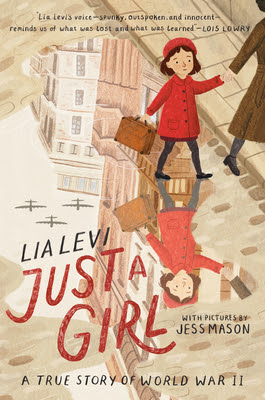
Just a Girl: A True Story of World War II by Lia Levi, pictures by Jess Mason, translated from the Italian by Sylvia Notini

Born in 1931 in Turin, Italy, Lia lived a pretty comfortable life with her parents, younger  sisters Gabriella and Vera, and Maria, their nanny. Lia was a shy girl so when Mussolini declared that Jewish children could no longer attend Italian schools, she is quite happy. That is, until she finds out that she would be attending a Jewish school. It isn't long before Lia's father loses his job because he is Jewish and the family is forced to live on their savings. 

When war is declared by Germany, Italy joins with Hitler and goes to war also. Within three hours of declaring war, French planes are dropping bombs in Turin. When Lia is in third grade, the family savings run out, and her Papa needs to find a job, but no one is allowed to hire Jews. The family decides to move to Milan, but when a promised job for Papa falls through, they are on the move again. This time, they are off to Rome.

Lia and her sisters have a grandmother who isn't Jewish and their first summer living in Rome, they are sent to stay with her during their summer vacation for three months. But the following summer, the war is getting closer to Rome, with the Americans landing in Sicily. And one night, they wake up to learn that Mussolini is no longer Italy's prime minister. Which should have been good news for Italy's Jews, except the Germans moved in and occupied the country. And where the Italians weren't always so good about enforcing Mussolini's laws, the Germans are quick to enforce Hitler's. 

Lia's parents decide to send her and her sisters to  live in a Catholic boarding school for safety's sake. By now, Lia is in her second year of middle school. She is given a false last name, Lenti instead of Levi, and must learn Catholic prayers. Then, in October, Lia's mother shows up at the school. She tells them that the Germans raided the Jewish quarter in Rome and took everyone away, but she doesn't know where her husband is. Luckily, they are all able to spend the rest of the war living at the boarding school.

This memoir, translated from the Italian by Sylvia Notini, is told in simple language though the deprivations, fears and anxieties the family experienced are made very clear. Graphic details are not included, and has caused one of my colleagues to complain that she felt it diminished the Holocaust. I don't agree. It is a unique story, but it is one person's actual experience and until Mussolini was removed from office, things were not as bad for Italian Jews as for Jews in Nazi occupied countries. 

I did like reading Lia Levi's recollections about living through the war. I thought she included a lot of small, but interesting details about what life was like for her family which are parts of history the books don't always tell you about. And Levi used two voices to tell her story - one is the first person account of young Lia and the other is the first person memories of the older Lia giving more information that the younger Lia wouldn't have known, but which helps readers to understand what was happening. My only complaint is that the timing was hard to follow. There aren't many dates mentioned and a timeline would have been very welcome. 

This is a poignant narrative, full of love, laugher, sadness, and loss, but an ideal way to introduce the Holocaust to young readers. And, right now, I think these stories need to be told and read.

Sunday, April 17, 2022

Always (Book #7 in the Felix and Zelda Family of Books) by Morris Gleitzman

I have to admit this was one tough book to read, mainly because I knew it was the end of the Felix and Zelda Family of Books. If you have read all 6 of the previous novels in this series, beginning with Once, you have gotten to know a mighty fine boy who grew up to be an outstanding man. 

Always, like book #3 Now, is not narrated by Felix alone but also by a young biracial boy named Wassim, living in Eastern Europe with his Uncle Otto now that he parents are both dead. Wassim owns a book his grandfather, Amon Kurtz, had given to him called William Does His Best by Richmal Crompton, along with a note that tells him if he is ever in big trouble to get in touch with Wilhelm Nowak. Wilhelm Nowak, readers of Then may remember, is the name on Felix's false identity card given to him by Genia and Amon was a reluctant Hitler Youth boy who had befriended Felix because of their mutual love of Richmal Crompton's books. Wassim knows that Wilhelm is really Felix Salinger, who, he learns, is 87-years-old and living in s retirement home in Australia. 

This is good because Uncle Otto, who by the way is white, is being used by a violent gang known as the Iron Weasels to store their stolen goods in his garage, and Wassim is being bullied by them because of being biracial. When things begin to heat up, and the Weasels almost kill Wassim, Uncle Otto, who knows about Felix, takes him to Australia and leaves him there.

Wassim tells Felix why he has come to him for help, and though Felix feels a strong bond with him, he is at first reluctant to return to Eastern Europe until the long racist arm of the Weasels extends into his personal life. But can an 87-year-old man and a ten-year-old boy fight a prejudice that is so rabid, so deeply rooted and just as violent as the Nazis had been? And can they also solve a mystery about property stolen by the Nazis and never found?

I couldn't wait to read this book, and even ordered it from England as soon as I could, then I read it in one sitting and afterwards I was sorry because it is the end of the Felix saga and I will miss looking forward to the next part of his story. 

This is an intriguing story and, yes, you have to suspend your disbelief in part of it, but that was ok for me. Wassim is an endearing, optimistic, hopeful boy, with lots of personality similarities to Felix when he was young. Felix knows that Wassim will be facing some real hard truths about his life when they return to Eastern Europe, but he's there for him and he knows that so is gruff Uncle Otto. There is a part of me that is hoping Gleitzman to carry on the Wassim story since I would like to know him better. 

Gleitzman does make a lot of references to the past Felix books, but I don't think that would be a problem for those who may not have read all of them. I'm not a big re-reader of books, but I am thinking I might re-read all seven Felix books. 

What really makes me sad is how Gleitzman has brought the same themes of racism, bigotry, and hated full circle,  and that they are still so much a part of our society.

Be sure to check out the other Marvelous Middle Grade Monday offerings, 
now being carried on by Greg at Always in the Middle

Sunday, March 27, 2022

Louisa June and the Nazis in the Waves by L. M. Elliott

No sooner had the United States entered World War II than German U-boats began cruising the waters off America's eastern seaboard looking for cargo ships carrying desperately needed supplies to Europe to torpedo. And Hitler's "wolfpack" were very successful. And now, for 13-year-old Louisa June Brookes, living in Tidewater Virginia, the war has really come home.

Her older sister Katie is off to welding school in Newport News and older brothers Will joins the merchant marines and Joe joins the navy. When a crew member becomes ill, her father, a tugboat captain, suggests her brother Butler replace him on a trip pushing barges to Philadelphia. Butler is set to graduate high school and begin studying at the College of William and Mary in the fall and it's a good opportunity to earn money for food and books. Of course, this leaves Louisa June and her mother to take care of their 70 acre farm. 

Louisa's mother has always suffered from bouts of what the family calls "melancholy" which has recently become more serious now that the war has arrived in Tidewater Virginia. It's Louisa's goal to try and get her mother to smile when the melancholy hits, and since this is a literary family, a good story will often do the trick. 

But when tragedy hits the convoy of barges they are pushing, Butler is killed, but  his dad survives. Louisa's mother goes into a full on depression, grieving for Butler. Blaming her husband for his death, and despite the seriousness of his injuries, refusing to allow him back in the house, forcing him to live in the barn.  Luckily, elderly Cousin Belle Archer, who has a few of her own war stories from WWI, is aware of Mama's melancholy, and is only too happy to help Louisa out with food, books and kittens now that running the house and taking care of her parents has become her responsibility. But Louisa wants to do more to help the war effort, like her friend Emmett does, keeping an eye out for Nazis in the waters around the Tidewater. 

On what was supposed to be a fun day out, Louisa and Cousin Belle witness a U-boat attack a convoy of merchant ships out in the Chesapeake Bay while relaxing on the beach at Old Point Comfort. They both immediately spring into action to try to help save some of the men. Before long, however, it becomes a family affair, but will it bring the Brookes family some closure on Butler's death and bring them together again or will it split the family even further apart?

I have always enjoyed reading L. M. Elliott's historical novels and this is no exception. And the German submarines lurking in the waters so close to shore isn't a topic that often makes its way into middle grade novels. The story is narrated in the first person by Louisa, who has quite a way with description. And describe she does - giving the reader not just everyday details about what it was like in those early days of the war, but wonderful details about living in Tidewater Virginia. I could almost hear the cry seagulls and smell the salt water. 

I also felt that Elliott did a great job tackling the subject of Louisa's mother's depression and how it impacts the entire family. I grew up with a mother depressed over the loss of a child and I could completely empathize with Louisa's attempts to try to lift her mother's moods, not realizing (as I didn't) that she really needed professional help. 

Be sure to read the back matter which gives information about some of the topics covers in this book, including German submarines and the merchant marines, kids becoming plane spotter, woman welders like Katie, experiences like Cousin Belle's in WWI, and of course depression. 

Louisa June and the Nzies in the Waves is a wonderful companion to L. M. Elliott's earlier novel Across a War-Tossed Sea and I highly recommend both.

Thank you Edelweiss+ for granting me access to a digital version of this book.

Be sure to check out the other Marvelous Middle Grade Monday offerings, 
now being carried on by Greg at Always in the Middle

Friday, January 7, 2022

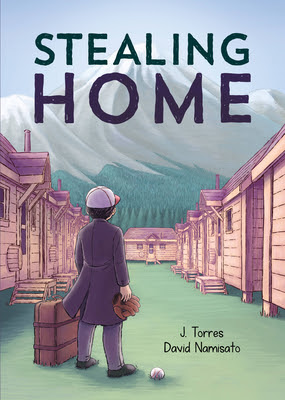
Stealing Home by J. Torres, illustrated by David Nmisato


Stealing Home by J. Torres,
illustrated by David Namisato
Kids Can Press, 2021, 112 pages

It's summer 1941 and the Asahi Baseball team is the pride of Powell Street in Vancouver, BC, "the champions of the Japanese community." For young Sandy Saito and his dad, Dr. Saito, that means going to games together and cheering their heroes on and later, playing catch in the backyard together. 

But all that changes on December 7, 1941 when the Japanese bomb Pearl Harbor. Suddenly, Sandy's dad was short tempered and didn't want to play catch anymore. The kids in school, who had been Sandy's friends, turn on him, calling him names and refusing to let any Japanese kids play baseball with them, even throwing rocks at them. 

Soon, Japanese persons are forced out of some areas of British Columbia and moved to "camps" in old, abandoned mining settlements, including the Saitos, but not before Dr. Saito goes out on a house call and doesn't come home. All his family knows is that the government sent him to "where he was needed most,"
leaving Mrs. Saito, Sandy and his younger brother Ty to cope with being relocated to an internment camp in the middle of the Canadian wilderness, with no electricity or running water. 

Adjusting to their new life isn't easy, but eventually Sandy and Ty make friends and have some fun. But it is all work for their mother and the other women, who need to find ways to keep their children warm in the coming winter, plus they now have to share their small shelter with another family, including a baby. However, it turns out that some of the players for the Asahi Baseball team are also at the camp. Is it possible that baseball can provide some sense of normalcy and happiness for Sandy and the other people in the camp?

J. Torres provides readers with a very clear picture of what life was like for Canadians of Japanese descent after the United States entered the war, in this graphic novel told in the first person from Sandy Saito's perspective. Interestingly, the Canada had entered the war immediately after Britain declared war on Germany on September 3, 1939 and yet had left Japanese persons living on its west coast along until Pearl Harbor. 

Torres has really captured the fear and confusion that Sandy felt about why things changed so abruptly because of events he doesn't completely understand, and his hurt feelings as his beloved father becomes more stressed and short-tempered. 

I find it interesting that baseball played such an important role in the lives of both Japanese Americans and Japanese Canadians during the war. Perhaps because it is a game of skill and both players and spectators can really get lost in, enabling them to escape their new reality of losing everything they had worked for and being put into slapped together internment camps in the middle of nowhere.

Stealing Home is a wonderful vehicle for introducing younger middle grade readers to this part of the history of WWII. I read a black and white ARC and so I can't comment on the final art, but the illustrations are detailed and not frighteningly graphic. 

You can learn more about the Asahi Baseball Team HERE

 This book was an eARC gratefully received from Edelweiss+

Sunday, January 2, 2022

The Blitz Bus by Glen Blackwell

The Blitz Bus by Glen Blackwell
Zoetrope Books, 2021, 218 pages
NetGalley E-ARC 

When his teacher assigns her class to write a fictional diary entry of a WWII evacuee, Jack, 12, just can't think of anything to write. Somehow, the war seems so long ago and he just can't relate. And now, he's going to be late meeting his best friend, Emmie Langford after school. Being a good friend, Emmie has been waiting at their bus stop when Jack finally shows up.

Everything seems normal until they reached their stop and notice a new blue storefront with a mannequin wearing a long coat and a gas mask in the window. Suddenly, there is a flash of light and it begins to rain heavily, so they head to the nearby Tube station for shelter, along with everyone else.

Everything at the Tube station feels like it's out of time, causing Emmie to think they are in the midst of a film set in 1940. But gradually she and Jack realize they have landed in the midst of a WWII air raid, instead, and that somehow they have traveled back in time. With no money, no food, and no friends, Jack and Emmie begin to try to figure out how they can return to their own time. Along the way, they become friends with Jan, a Polish boy who arrived in England a few years earlier on the Kindertransport. The three discover an old Anderson shelter behind a bombed and abandoned house as Jan helps them navigate this unfamiliar London. When they discover what appears someone trying to build a makeshift radio, they are convinced the mysterious boy/man they have noticed is a German spy. 

The German spy turns out to be Stan, who also arrived in London on the Kindertransport, but unlike Jan, whose foster family is quite kind, Stan's treats him terribly. As they become friends with Jan and Stan, can Jack and Emmie trust them with their secret and perhaps get some ideas of how they can return to the own time? Or will they be stranded in 1940 forever?

The Blitz Bus is an interesting time travel novel that points out how as things recede into history, they don't carry the same level of interest or impact that they once had. Jack may live in East London, which had been heavily bombed and damaged during the war, but he's interested in video games and football, not history. I thought that Blackwell portrayed what London in the Blitz was like quite well, layering it with the different experiences of the two Kindertransport kids, their loneliness and homesickness, emotions Jack comes to appreciate firsthand. 

The novel also points out how people were so suspicious of foreigners during the war that they often suspected them of being spies, just as Jack, Emmie, and Jan thought that about Stan. 

Interestingly, the Tube station that Emmie and Jack shelter in was the Bethnal Green Station which was destroyed in 1943, killing 173 people. Blackwell includes more about it in his back matter, that also includes information on the Kindertransport, and instructions for making the kind of radio out things found, similar to the radio Stan builds to listen to new about Poland. 

I have to admit that I was hoping that once they returned to their own time, Jack and Emmie would try to find out what happened to Jan and Stan, whether they were living, and if they were, did they remember their two time traveling friends? 

Readers looking for a time travel adventure, as well as those who enjoy historical fiction set in WWII will no doubt enjoy reading about Jack and Emmie's exploits in this imaginative novel.

This book was an eARC gratefully received from NetGalley

Tuesday, December 14, 2021

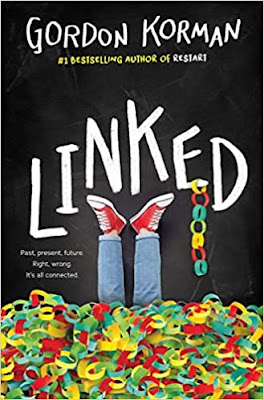
Linked by Gordon Korman

Just as he did in War Stories, Gordon Korman has brought WWII and the Holocaust into the present because, well, as William Faulkner reminds us the past is never past. The residents of Chokecherry, Colorado are reminded of that when a student, Michael Amorosa, discovers a large swastika painted on the atrium wall at Chokecherry Middle School. But who would do such a thing in this quiet very small town?

Chokecherry does have one thing happening that could put it on the map. After some dinosaur poop is discovered there, a group of paleontologists are sent to work on a dig hoping to find more dinosaur evidence. Among them is the Levinson family - the only Jewish family in town and daughter Dana Levinson is a student at the middle school, and who is very disturbed by the appearance of a swastika. 

Meanwhile, prankster Lincoln Rowley, 13 and called Link, and his friends are caught trying to dump 80 pounds of smelly dinosaur poop through the mail slot at the paleontologist's office in town. When Link is caught in the act, his father bans him playing any school sports. Link's father has a dream of turning Chokecherry into the next great tourist attraction, complete with a Disney-like amusement park. But no sooner is the first swastika washed away, but more of them begin showing up in various places around the school.

The school's answer to this is to hold a three week course in tolerance education, but the swastika's keep showing up and so does some surprising history. It seems Chokecherry was the scene of an incident in 1978 that involved KKK groups surrounding the town's foothills with burning crosses, referred to as the Night of a Thousand Flames. It's a subject Link's father does not want brought up, but talking to his parents about it reveals a surprising history in Link's family. His mother's mother, who is Catholic, is really Jewish, given to some French nuns for safety as a baby in 1941 when the Nazi's were occupying France and her parents were about to be arrested and sent to a concentration camp. Link, who up until now hadn't taken the swastikas seriously, is stunned by this news. If his great grandmother was Jewish, his grandmother is Jewish, that means he and his mother are technically Jewish, too. When Link begins to annoy Dana with question about Judaism, she suggests he get bar mitzvahed. Which he decides is a great idea and arranges lessons with the closest rabbi 100 miles away.

Meanwhile, it doesn't take long for a TikTok vlogger named ReelTok to latch on to the events in Chokecherry and start broadcasting right in the middle of town, hoping to stir things up. When ist becomes clear that the students are getting nothing out of the tolerance education they are being given, it's clear they need to do something else to counter the swastikas that are still showing up. Following the lead by the real school that collected 6 million paper clips, one for each Jewish person who perished in the Holocaust, the students at Chokecherry Middle School decide to make a paper chain with 6 million loops. It's an ambitious project and soon the whole school is behind it, gluing paper links together. But when they run out of construction paper in Chokecherry and the principal cancels the whole project, it feels like the person drawing the swastika's has won. But have they?

This is a Gordon Korman book so you know it is told from the perspective of different characters, with Link being at the center. It's not a format that always works, but Korman is a master at it and it work in his hands. It provides insight about each character, what they are thinking and how they are reacting to the events as they unfold, so it's very in-the-moment. 

Linked is told with a lot of Korman humor despite the seriousness of the Holocaust. The fact that the students are bored and turned off to the tolerance education but enthusiastic about the paper chain points to the fact that participatory learning might be better. At least, as a teacher, I think so, especially as the Holocaust recedes and students see it as just another topic in history. To his credit, Korman includes a lot of Holocaust history in this novel in such a way that the students really get they idea of what it was like. 

I loved how the theme of linking used. When you think about the novel, so many links come to mind. For example, Link's grandmother, who is still living, links past and present, while the fact that most people in Chokecherry think the racist Night of a Thousand Flames never happened links it to the importance of remembering those who perished in the Holocaust, signified by the loops of the paper chain. Other themes explored are identity, racism, redemption, community. Oh, yes, there is also a big surprise towards the end of the book. 

This book is recommended for readers age 10+
This book was borrowed from the NYPL

Sunday, November 7, 2021

I Saw a Beautiful Woodpecker: The Diary of a Young Boy at the Outbreak of World War II by Michal Skibinski, illustrated by Ala Bankroft

I Saw a Beautiful Woodpecker: 
The Diary of a Young Boy at the Outbreak of World War II
by Michal Skibinsky, illustrated by Ala Bankroft,
translated from the Polish by Eliza Marciniak
Prestel Publishing, 2021, 128 pages

Here is an uncomplicated book that captures the summer before WWII began in the notebook of a young boy. Eight-year-old Michal was give a school assignment for the summer holidays to write one sentence in a notebook about something that happened to him each day. The purpose of the assignment was to provide a means for practicing his penmanship and being moved up to the next grade was contingent on faithfully keeping this notebook. Michal's entries begin on July 15, 1939 and end on September 12, 1939. There are not entries for every single day but there are entries for most of them. 

According to the note at the end of this book, Michal lived in Warsaw, Poland. At first, his entries sound like a wonderfully idyllic summer vacation and are about things he observed in nature, like the beautiful woodpecker he saw, and the people he spent time with - his parents, brother Rafal, their nanny, and their  grandparents. 

But gradually, Michal's entries begin to get darker, until September 1, 1939 when he notes that war has begun. On September 6, 1939, he writes that a bomb was dropped near where he was staying. Because he was limited to one sentence per day, readers can only speculate on how he must have felt that day.

What interesting to note about this book, however, is how innocent most of Michal's entries are, even as the adults in his family were fully aware of trouble coming and taking precautions to get him and his brother out of harm's way according to the note at the end of the book. On July 26, 1939, Michal writes that a plane flew over where he was staying (this is the cover image). On the surface, this seems innocent enough, but one wonders if it was a reconnaissance plane from Nazi Germany, given the coming invasion of Poland.

Each entry is a two-page spread containing the date and the entry, but set against the background of Ala Bankroft's incredible painted almost impressionist illustrations reflecting Michal's observations. The colors are bold greens, browns, and blues reflecting nature and as war arrives, become darker, almost black, losing most of their color.  

I Saw a Beautiful Woodpecker is an unique document of its time as experienced by a child who probably didn't know what war is or that it was on his doorstep, even as he began his entries. Yet, the truth of his experience is in the simple declarative sentences with which he seems to have unwittingly witnessed the coming war through his young, innocent eyes.  

This book would be a great classroom/home school addition for anyone teaching the history of WWII.    

This book is recommended for readers age 7+
This book was gratefully received from Casey Blackwell at Media Masters Publicity 

Monday, October 18, 2021

Boy From Buchenwald: The True Story of a Holocaust Survivor by Robbie Waisman with Susan McClelland

Boy From Buchenwald: The True Story of a Holocaust Survivor
by Robbie Waisman with Susan McClelland
Bloomsbury, 2021, 288 pages

In 1942, 11-year-old Romek Waisman was marching to work at a munitions factory in Poland when a SS officer pulled him out of line and ordered him to get in a truck headed for a death camp. Like all the other men already in the truck, Romek had been ill. But fate stepped in and Romek was given another chance to live. 

In April, 1945, American troops liberated the Buchenwald Concentration Camp, where Romek had eventually been sent. He was one of a 1,000 children who had survived the Holocaust and placed under the protective services of the Oeuvre de Secours aux Enfants or OSE. In June 1945, Romek, along with 426 other boys, including Elie Wiesel, was sent by train to Écouis, France, where they could be rehabilitated. Ironically, the boys were dressed in Hitler Youth uniforms that had been found in a storage room in Buchenwald so that they could discard their striped lice infested camp pajamas. On the trip to Écouis, many of the French people who saw them, mistook who they were and began throwing rocks at them.

At Écouis, there was plenty of food, clean sheets and bathrooms, but after years of starvation and mistreatment, the boy were somewhat feral. That, combined with anger, caused them to behave violently at times, to steal, and to hoard. 

In between learning how to adjust to life after living under Nazi oppression for so long, Romek slowly regains memories of his loving family and his happy childhood before the Nazis invaded Poland and his experiences working in the munitions factory and later in Buchenwald. Throughout his ordeal, Romek held on to the idea that after the war and liberation, he would return to his home in Poland, where his family would all be there waiting for him. Much of his journey, then, is about coming to terms with the reality of what happened.

At one point, Romek's older sister is found and he journeys back to Germany to see her, but when she tells him she will be married soon and moving to Palestine, he returns to Écouis. There, he also meets a wealthy French couple Jean and Jane Brandt, who want him to meet their children. Jane begins taking Romek on cultural excursions, but when they offer to adopt him, he declines. 

After finally accepting the fact that only he and his sister survived, in 1948, at age 17, Romek emigrated to Canada, to begin a new chapter in his life and where he changed his name to Robert (Robbie) Waisman. Robbie married and had children, but it was many years before he could speak about his experiences under the Nazis. 

Boy From Buchenwald is a riveting read, and certainly one that is needed now as more and more survivors of Nazi atrocities are dying off. Robbie tells his story in an almost stream-of-consciousness manner, which might be confusing to some readers since it isn't always linear. And many of the incidents that Robbie writes about may also be difficult for them, but, despite that, this is a book that should be read and discussed. Robbie and his friends were so traumatized by what they experienced, yet they were still able to go on and lead productive lives. Ultimately, then, this book is quite inspiring and shows just how strong the human instinct to survive can be. 

Pair this book with Survivors Club: The True Story of a Very Young Prisoner of Auschwitz by Michael Bornstein for another important survivor story.

This book is recommended for readers age 10+
This book was an eARC gratefully received from NetGalley

Monday, September 20, 2021

The Swallows' Flight by Hilary McKay

Yes, The Swallows' Flight is a book about WWII and, yes, it is a companion to the WWI novel The Skylarks' War (Love to Everyone in the US) that told the story of siblings Clarissa (Clarry) and Peter Penrose and their friends, and whose children play a part in this novel.  In fact, this novel revolves around 5 children whose lives eventually come together - Erik and Hans in Berlin, Kate Penrose in Oxford, Ruby in Plymouth, and a scrapyard dog in London, though for the most part, the timeline isn't linear.

In 1931 Berlin, ten-year-olds Erik and Hans are best friends with big plans for the future - Erik plans to become head zookeeper at the Berlin Zoo and Hans plans to open a kiosk outside the zoo and sell strudel. But right now, Erik is collecting flies to feed the young swallows he has just rescued. Hans has an Uncle Karl who introduces the boys to flying, which they love, and eventually causes them to become Luftwaffe pilots even though they never supported Hitler and the Nazis.

Although she comes from a family where the girls are all named after flower, in 1927 Plymouth, England, Violet decides to name her daughter Ruby Amaryllis. Not only does Ruby have a different name, but she is born with red birthmarks scattered over her face, causing her feel self-conscious and to shy away from people as she gets older. As if birthmarks aren't bad enough, older brother Will, 8, has no use for his new sister, and as children, he never lets her forget that. Ruby's mother Violet's best friend is Clarry Penrose from Oxford, who is given the honest of becoming Ruby's godmother. 

Peter Penrose, now a doctor has married Vanessa and they have six children, including Kate, born in 1928 and who is their youngest. As it happened, Clarry is also Kate's godmother. Into this mix is unofficial cousin Rupert, who is as exciting and interesting to the Penrose children as is Han's Uncle Karl to him and Erik. But Kate is the only one who doesn't get to experience any adventures with Rupert. Kate is a sickly child, with lung problems and a constant cough, and by the time she would have been old enough, WWII had begun. But she is also inquisitive and a keen observer, and begins to keep a diary of everything that happens to everyone else. 

Dog lives in East London and no one knows just how old he is. He is kept chained up in the scrapyard, and is supposed to bark away potential thieves, but dreams of running free. The only kindness he experiences is the scrapyard girl who at least acknowledges him with an occasional "hello, dog" and who, at the start of the war, attaches a luggage tag to his collar with the name Pax burned into it. Not long after, Pax is released to fend for himself, but luckily meets the kindhearted Rupert. 

The story that unfolds is told in alternating chapters that recounts how the war impacts the lives of each of these five character until their lives converge. It's an unusual format, but one the works beautifully and the non-linear timeline is not at all confusing.  Don't worry if you haven't read the first book. While it is well worth reading, The Swallows' Flight stands alone and there is a even brief family tree for each of the human characters.  

McKay's writing is just beautiful and she has skillfully created a heartwarming, inspiration novel that includes appealing character's with distinct characteristics and personalities. There is just enough information about what is going on in the world, especially Germany, to give historical context to the individual stories. There is a glossary in the back matter as well as some historical background. 

The Swallows' Flight is available now in the UK and will be available in the US on October 19, 2021

This book is recommended for readers age 9+
This book was purchased for my personal library

Monday, September 13, 2021

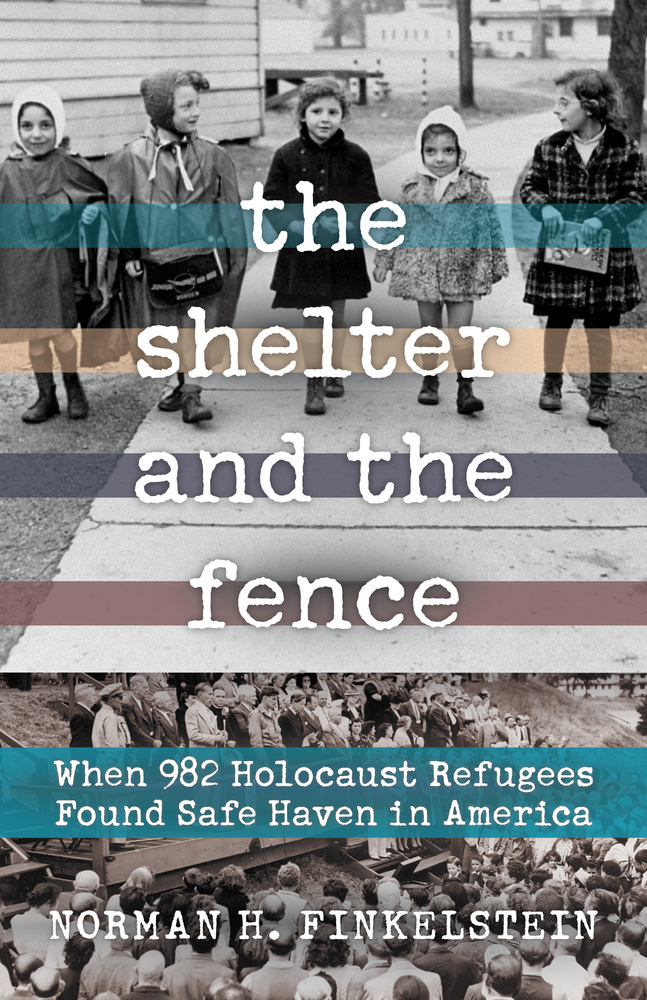
The Shelter and the Fence: When 982 Holocaust Refugees Found Safe Haven in America by Norman H. Finkelstein

In 1944, 982 Jewish refugees living in Italy were allowed to come to the United States, "invited" by President Franklin Roosevelt. Their story is one that is often overlooked or just given cursory mention in the history of America and the Holocaust, especially where middle grade readers are concerned. Now, librarian and history teacher Norman H. Finkelstein has written a history of this event aimed at those young readers. 

After providing some rudimentary information about the rise of the Nazis and their treatment of Jews through the 1930s in Germany and countries which they invaded, and ultimately Hitler's "Final Solution," Finkelstein turns his focus to those Jews who had sought safety in Italy. Italy had early on allied itself to Hitler, but Italians often refused to help them deport Jews. By 1943, Italy's fascist dictator had been overthrown and Allied troops had liberated southern Italy, but German troops were quickly moved into Central and Northern Italy, and immediately began deporting all the Jews they captured to death camps in Poland. 

Then. in 1944, Roosevelt issued an executive order setting up the War Refugee Board to rescue as many "persecuted minorities of Europe" as possible. Immigration laws were bypassed because the refugees who would be rescued were considered guests of the president and would not be allowed to stay in the US once the war was over. 

A diverse group of 982 refugees living in Rome were selected, most of whom were Jews, and after a rough two-week trip aboard the USS Henry Gibbons, followed by an overnight train trip from New York City to Oswego, New York, the refugees arrived at Fort Ontario on August 5, 1944. And though they were welcomed by the people of Oswego, for many refugees living in a confined space like the fort, surrounded by a chain link fence toped with barbed wire and watched by guards made many of them skeptical. And yet, the fort's barracks had been converted into furnished apartments for them, complete with laundry, bathing and toilet facilities for men and women, there was plenty to eat, though the refugees ate in dining halls instead of in their makeshift apartments. 

Soon, many of the refugees found work, while their children were allowed to attend school outside the fort. They could speak on the telephone with their family members already living in the US, but they were not allowed to visit anyone (well, there were a few forays out of the camp by some teens that no one knew about). Creating a safe haven for the 982 refugees was not without its problems and Finkelstein doesn't skip over these. The biggest problem was what to do with them when the war ended. The refugees had all signed an agreement that they would return to their homeland once the war was over, but now many had adjusted to living in the US and had no home or family to return to, and wished to remain in America. This resulted in a long legal fight and  Finkelstein devotes a lot of time to it. 

The Shelter and the Fence is a great introduction to this overlooked part of World War II history. It is easy to read, and there are lots of photographs and text boxes containing personal reflections by some of the people who were part of the rescue effort. I did find that at times I found the writing was confusing and I had to go back and reread parts of the book. Some things were too glossed over and without knowing the history could be disconcerting. This would make it a book that is best used as a supplementary text for social studies classes. The book does describe the many kindnesses on the part of the people living in Oswego, as well as those who did not want the refugees in their town or country. 

And while saving 982 people may seem like a token rescue compared to the overwhelming number of people who perished during the Holocaust and even the refusal to allow the 937 refugees aboard the St. Louis in 1939 to enter the US, it needs to be remembered that every life is important and so this rescue should not be trivialized.

The Shelter and the Fence is a compelling book and I think that the plight of the refugees will definitely resonate with today's readers when once again America's borders have become an issue. 

The New York Times published an article a year ago (September 11, 2020) about the 982 refugees who lived in Fort Ontario in Oswego, NY and you can read it HERE.

This book is recommended for readers age 9+
This book was borrowed from the NYPL