Showing posts with label Autobiography. Show all posts

Saturday, January 30, 2021

Out of Hiding: A Holocaust Survivor's Journey to America by Ruth Gruener with Rachel Klein

Anyone who has already read Alan Gratz's Prisoner B-3087 , the fictionalized Holocaust account of Jack Gruener, who survived 1 ghetto, 10 concentration camps, and 2 death marches, will also want to read Ruth Gruener's Holocaust survival story. Ruth was Jack's wife, but that came years after the Holocaust. And though Ruth never found herself in a concentration camp, her story is definitely harrowing, considering she was only five-years-old when the Nazis marched into her life.  

Ruth was originally named Aurelia Gamzer and called Luncia for short. She was a happy chid living in Lvov, Poland with her parents, Barbara and Isaac Gamzer, who owned a chocolate shop. Restrictions on Jews were imposed, and soon Luncia couldn't go to school, Jewish people had to wear a white armband with a blue Star of David, former friends and neighbors turned their backs on Jews, and they were forced to turn over businesses, including the Gamzer's chocolate shop, and any personal property of value to the Nazis. Soon, Jews were put into a ghetto, followed by roundups and deportations and certain death.

When a former customer offered to hide Luncia. her parents decided to do that to save her life. After sneaking her out of the ghetto, Luncia found herself in a situation where she had to sit quietly without getting up or looking out the window, all day long. When a neighbor did see her through the window one day, the family first put Luncia in a burlap bag in the basement during the day to hide her, and late insisted she climb into a trunk and hide in there.

Eventually, it was discovered that her parents were in hiding with a former employee of their shop, and Luncia was reunited with them. But imagine what it must have been like to be a child and overhear your mother talking about ways to kill herself and her family. Fortunately, the person who was supposed to do this backed out at the last minute, saying he didn't have stomach for killing. Finally, in July 1944, Lvov was liberated by the Russians and the Gamzer family could come out of hiding.

But surviving the Holocaust and finally being able to come out of hiding and restart their lives presented a whole new set of problems. Since Gamzers had lost their extended family, their home, and their possessions, they decided to emigrate to America, where they did have some relatives. But the immigration process was slow and the Gamzers were displaced persons. Eventually, they made their way first to Krakow, and later to to the apartment of other Holocaust survivors in Munich. And it was there that Luncia first met Jack Gruener, who finally immigrated in 1947.

By 1948, the Gamzers were also still trying to immigrated and finally received their visas in 1948, sailing for America on January 7, 1949. Arriving in America, Luncia became Ruth. She begins attending high school in Brooklyn, NY and making new friends. But suddenly she is plagued with vivid memories of her life in hiding. But Ruth is determined not to let these memories control her life and reconnecting with with Jack Gruner helps. They eventually married and had two children.

Ruth Gruener's story about surviving the Holocaust, about spending her childhood living in a ghetto, than in hiding, living with constant starvation, even with a bout of severe frostbite, separated from her parents and knowing that the people she loved had been killed is one more story that helps us understand just what happened. She describes her experience in a very detailed, matter of fact manner, but underneath you can still feel the horror and pain she lived through. 

I found it interesting that her father had the idea of hiding family photos in a jar and burying it was brilliant. After the war, before they left Lvov, he dug them up, untouched by war and nature. Those family photos must have felt like such a great gift after losing everything else. And thankfully, Ruth shares them in her book.  

Pair this book with Prisoner-B3087 for two very different but connected Holocaust survival stories. 

This book is recommended for readers age 9+
This book was an eARC gratefully received from Edelweiss+

Wednesday, October 30, 2019

Infinite Hope: A Black Artists' Journey from World War II to Peace, an Autobiography by Ashley Bryan

Infinite Hope: A Black Artists' Journey from World War II to Peace,
an Autobiography by Ashley Bryan
Caitlyn Dlouhy Books, 2019, 112 pages

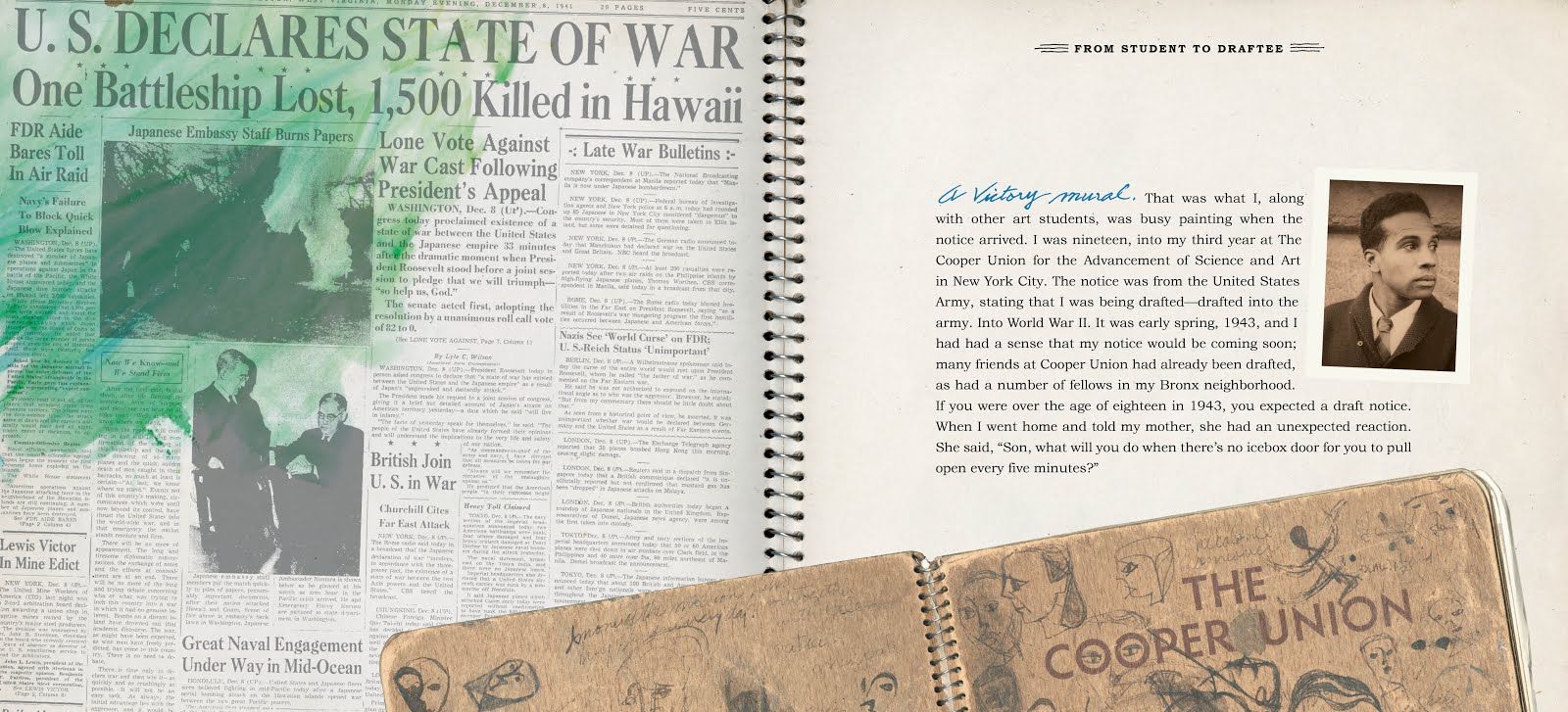
I've always been such an admirer of Ashley Bryan's work for young readers, so I was really interested when I heard he had written a book about his World War II experiences. Born and raised in Bronx,  New York, Ashley was a 19-year-old art student at the prestigious art college Cooper Union in Manhattan when, in 1943, he received his draft notice. The United States had already been at war since December 7, 1941, when Japan attacked the U.S. naval base at Pearl Harbor in Hawaii so he had been expecting to be drafted.


Though he had experienced prejudice growing up, the Army was the first time Ashley had ever experienced overt segregation and it began right at the start of his military career. He was quickly assigned to the 502nd Port Battalion, Company C and made up of only Black soldiers, where he became a winch operator. Stationed in Boston, his job was to load and unload supplies of all kinds on or off ships. In Boston, Ashley makes friends with some of the local kids, drawing with them and sharing cokes.

After a few months, the 502nd was sent to Glasgow, Scotland, where Ashley continued working as a stevedore loading and unloading supply ships. And the Scottish people, Ashley notes, welcomed the Black soldiers warmly and treated them like equals despite the Army's continued attempts to enforce their segregation policy by working the stevedores such long hours, making them too tired to venture out and socialize with the welcoming Scots. However, Ashley's battalion commander, Colonel James Pierce had a real appreciation for the arts, and gave Ashley permission able to attend the Glasgow School of Art. Not only that, but Colonel Pierce also created the 502nd Port Battalion band after noticing the many gifted musicians among the stevedores.

Ashley's time in Glasgow came to an end too quickly for him, and on June 2, 1944, the 502nd Port Battalion found themselves heading for the coast of Normandy and the invasion they had spent so much time preparing for.


Ashley's ship was anchored off the Normandy coast, at Omaha Beach where, beside loading and unloading ships, his battalion was to invade and clear the beach of land mines, a dangerous job give to the Black soldiers, many of whom lost their lives when mines exploded. Then they were ordered to dig foxholes where they would sleep and could take cover from enemy fire, and also to send up huge barrage balloons to make it difficult for the German Luftwaffe to attack for above.


All the while, Ashley carried paper and drawing materials with him, recording all that he witnessed. And yet, all of those drawings were carefully put away for most of Ashley's live, because, like many soldiers, he simply did not want to speak about or be reminded of his wartime experiences: "In a sense, I hid those drawings away just as I hid my experiences from those three years." (pg. 97) And it has taken for Ashley almost a lifetime to be able to finally confront his wartime experiences.

Using spare prose, and told in the first person as though he is speaking directly to you, Ashley allows his words, his illustrations and his letters to tell his story, together with photographs of the time that he's overlaid with sketches. And he manages to give readers an intimate view of what WWII was like for him and other black soldiers, to capture all the horrors of war, and the racism and injustice he and his fellow blacks soldiers were subjected to, always given the lowest, the meanest, often the most dangerous jobs to do, but also he records acts of camaraderie, kindnesses and genuine friendship.

I've gone over this book again and again, captivated by all of the boldly painted illustrations made from his sketches. It is easy to see how art helped him through those terrible years: "What gave me faith and direction was my art. In my knapsack, in my gas mask, I kept paper, pens, and pencils." (pg. 60) These sketches and illustrations are now a treasure trove of information to add to the history of African Americans in this country, and the history of WWII in general.

You can also hear Ashley Bryan speak about his WWII exhibit and his experience as a stevedore during the Battle of Normandy HERE

Pair this book with Courage Has No Color: the True Story of the Triple Nickles, America's First Black Paratroopers by Tanya Lee Stone, where you will also find some of Ashley Bryan's wartime sketches.

Infinite Hope is an autobiography not to be missed.

This book is recommended for readers age 10+
This book was purchased for my personal library

Monday, June 26, 2017

Krysia: A Polish Girl's Stolen Childhood During World War II, a Memoir by Krystyna Mihulka with Krystyna Poray Goddu

Nine-Year-Old Krysia Mihulka’s story actually begins without her even knowing it on the night of August 23, 1939 when the Soviet Foreign Minister Vyacheslav Molotov and German Foreign Minister Joachim von Ribbentrop signed the Treaty of Non-Aggression between Germany and the Union of Soviet Socialist Republics. The treaty peacefully divided up Poland - Nazis occupying the western half, the Soviets occupying the eastern half.

What does this have to do with a 9 year old girl living in Lwów, a small city in eastern Poland? Everything. The Molotov-Ribbentrop Pact, as it came to be called, sealed the fate of this young girl and her family once the war began. After the initial invasion and occupation of Poland by the Germans on September 1, 1939, the Soviet army invaded and occupied eastern Poland as per the Pact on September 17, 1939. 

The Mihulka family, father Andrzej, mother Zofia, Krysia, and younger brother Antek, 5, had lived a quiet, happy life surrounded by extended family and friends before the invasions. But her father, a respected lawyer, had been part of the Polish Army defending his country against the Nazis, so that when the Soviets came, he was forced into hiding, as all lawyers and judges were being summarily executed. Later, the Soviets arrived at the Mihulka home in the middle of the night looking for him, and proceeded to arrest Krysia, Antek, and their mother. The Soviets, they said, wanted to get rid the world of the “bourgeois rich” aka capitalists, like the Mihulkas.

At the railroad station, they were put into already crowded cattle cars. Eventually, they began the long, hard trip to a remote work camp on the steppes of Kazakhstan. Conditions there are terrible - bitter cold winters without blankets or clothing to keep warm, and a constant gnawing hunger. Krysia’s mother is subjected to constant nighttime interrogations about her husband whereabouts, and the children experienced both fear and anxiety, never knowing if she would return from those brutal sessions.

Then, in 1941, the Polish prisoners were suddenly granted amnesty after the Germans began their invasion of the Soviet Union, and the Soviet Union signed the Anglo-Soviet Treaty of Mutual Assistance on July 12, 1941 (the Soviets needed the help of Britain, who was an ally of the exiled Polish government). 

Krysia and her family left Kazakhstan, and went to Uzbekistan, where they were able to reunite with some family members. After a while, the Mihulka family made their way to Persia (present day Iran), and in 1944, Krysia and Antek were sent to Africa, where they were living when the war finally ended. It wasn’t until two years later that they discovered their father’s fate. 

For all the history that is included in this memoir, I found it to be very accessible, written in a voice that is at once young but knowledgable, even though the author is now in her in her 80s. Difficult concepts or unfamiliar historical events are clearly explained for even the youngest of readers. Krysia shares both her own experiences and fears in clear detail that is age appropriate, being truthful but without being too graphic (and those times were often graphically violent). 

There is a map to help young readers track the journey Krysia and her family went on beginning with Lwów and ending in Iran. This is followed by Polish pronunciation guide at the front of the book, which I found very helpful, and an Author’s Note explaining why she finally decided to tell her story with the help of her daughter and co-author, Krystyna Mihulka Goddu.  

I would definitely pair this incredibly interesting memoir with a book called The Endless Steppe written by Esther Hautzig which, you may recall, is also about the author as a young Polish girl, Esther Rudomin, and her family who were exiled to a labor camp in Siberia, Russia. Krysia and Esther’s true stories have much in common though told from two different perspectives.

The fate of families like Krysia’s is not a story that is often told, but it is a poignant, important one and this book helps bring it to light. She relates the events that happened to her in a simple, direct, easy to understand narrative style. And, I think, Krysia’s story will certainly resonate with readers given the current refugee problems in the world today.

This book is recommended for readers age 10+
This book was a EARC received from Edelweiss+

Friday, December 27, 2013

Leaving China: An Artist Paints His World War II Childhood written and illustrated by James McMullan

When James McMullan's grandparents, James and Lily McMullan arrived in China in 1888, it was with the intention of doing missionary work among the Chinese people in Cheefoo in the Shantung Peninsula (now called Yantai, in Shandong province).  But it didn't take long for that to change.  When they discovered that poor, destitute and hungry families would leave their baby girls to die rather than feeding them, they began saving them and raising them, soon building an orphanage and school for the growing girls.  The girls learned to speak English and how to do cutwork embroidery and before long, the McMullans had quite a busy commercial enterprise going.

Into this were born their own four children, who were raised in China, but sent abroad for further education.  The youngest son, James, studied music in Vancouver, Canada and married a Canadian girl named Rose.  James returned to China with Rose and in 1934, James McMullan Jr. was born.

Life was pretty good for the family, until one day the tortured dead body of a Chinese man washes up on the beach and young James begins to understand the fear and dread that has been underlying life in China since 1931.  Then, in 1937, the Japanese Army arrived in Cheefoo and life changed.  Road blocks were set up and anyone without papers suddenly faced an uncertain future.  And worse still, anyone without proof of having been inoculated against Cholera, was injected on the spot with the same needle used for everyone else.

By 1941, it is decided James and his mother would leave China, though his father is not allowed to go and instead enlists in the British Army.  Leaving China begins a round the world journey that will take James from Cheefoo (Yantai) to Shanghai to Western Canada, New York, Bombay (now Mumbai), Srinigar, Darjeeling, Calcutta (now Kolkata), Chungking (now Chonqing) , Shanghai and back to Western Canada, all while still a child.

James only saw his father once during the war, in Darjeeling, India when he was about to be enrolled in St. Paul's School there  It wasn't a good visit and sadly, James Sr. was later killed in a air crash.

Leaving China is certainly a different kind of memoir.  It is really a series of 54 one page memories with a corresponding illustration of the facing page.  The memories are simple and personal, yet they tell a story not only about James McMullan's life but they also give a picture of what life was like in China during the 1930s and early 1940s.

Like the memories, the full page painted illustrations are simple, yet have a quality that goes much deeper than the actual picture.  I wasn't surprised to recognize the artwork since I have been looking at Jame McMullan's wonderful Lincoln Center theater posters for years now.  McMullan wrote that for Leaving China, he wanted to catch the dream-like quality his memories held for him and in that respect, he has certainly succeeded.

As a memoir with a difference, this is certainly one that many readers will appreciate.  Don't be fooled into thinking that because there are so many illustrations, this is a children's picture book.  It is definitely  a book for older readers, and a wonderful supplement for anyone interested in Chinese history and/or World War II.

This book is recommended for readers age 12+
This book was an E-ARC received from NetGalley

This is book 15 of my 2013 Historical Fiction Reading Challenge hosted by Historical Tapestry

Friday, September 13, 2013

Going Solo by Roald Dahl, an encore presentation


Going Solo is one of my most popular posts and so I have decided to give it an encore presentation today.  After all, September 13th is Roald Dahl Day in honor of his birthday - he was born in Wales in 1916.ld Dahl Day in honor of his birthday - he was born in Wales in 1916.

Going Solo begins with Dahl traveling to East Africa to work for the Shell Oil Company in 1938 at the age of 22. It took two weeks to travel from London to Mombasa by boat and Dahl provides vivid, humorous descriptions of some of his fellow travelers, which he characterizes as “that peculiar Empire-building breed of Englishman who spends his whole life working in distant corners of British territory,” And they are a set of characters, for instance, the elderly Major and his wife who exercise every morning by running around the ship’s deck – stark naked. Or his roommate who sprinkles Epsom Salt on his shoulders everyday to look like he has dandruff in order to hide the fact that he wears a wig. 

Dahl was stationed at a place called Dar es Salaam, Tanzania, then called Tanganyika. He lived there with two other young Shell employees and their servants, but was also required to travel to Shell outposts, often for a month at a time. Dahl doesn’t go into any detail about his job, but he does about the people, the land and especially the animals he encountered.

I loved that life. We saw giraffe standing unafraid right beside the road, nibbling the tops of trees. We saw plenty of elephant and hippo and zebra and antelope and very occasionally a pride of lions. The only creatures I was frightened of were the snakes. (pg 26)
Dahl also provides amazing anecdotes about encounters with a lion and the dreaded killer mamba snakes he was so afraid of.

As soon as war was declared against Germany, Dahl was ordered to leave his job and became a temporary Army officer. His first order was to round up all the German civilians, mostly shopkeepers, in the area and put them in an internment camp, even though they had been doing friendly business with them all along. There was one ugly incident doing this, but in the end the task is accomplished, although the German women and children were allowed to return to their homes instead of the camp. 

In November 1939, Dahl decided to join the Royal Air Force, traveling alone for 600 miles to enlist in Nairobi. Flight training went well and Dahl was assigned to the 80 Squadron in the Western Desert. Flying solo to reach them, he could not find a landing airstrip to refuel before nightfall and was forced to land his plane in the desert, where it hit a boulder and burst in flame. Dahl survived, but spent months in hospital recovering from his injuries. Once he was sufficiently recovered, he was sent to Greece where the 80 Squadron had relocated and discovered they were expected to defend against a very well equipped enemy, the Germans and the Vichy French, with only 15 one man Hurricane planes of their own. Given his descriptions of the air battles with Germans, it is amazing anyone survived, and actually, not many did including Dahl's good friend, David Coke. Dahl seems to have had great good luck all through his RAF days. He was transferred to Palestine after Greece was captured by the Germans in April 1941. One of the oddest stories he tells was of finding a group of German Jews, about 50 children and two adults in the middle of a secret landing strip in Haifa, who had actually helped to build the landing strip. 

Altogether, Dahl flew sorties from April 1941 to June 1941 often as many as five times a day. He was invalided out of the RAF and sent back to England when he began to experience terrible headaches that caused him to blackout while flying. These headaches were the result of his old crash injuries.

I found Going Solo to be an oddly engaging book, pulled in from the start by Dahl’s wonderful descriptions of what was going on around him, first on the ship and then in Dar es Salaam and later in Kenya. Of course, the book was written in 1986, so one must always keep in mind that Dahl’s memories had forty years to marinate. Generally, I space out when I am confronted with detailed descriptions of military things because I don’t really understand that kind of stuff. However, I found Dahl’s explanations to be quite interesting and understandable without sounding condescending. Dahl loved photography and many of the black and white photos he took from this time in his life are interspersed throughout the book, as well as maps and bits of letters and telegrams. 

Dahl originally wrote about his RAF experiences in a 1946 book called Over to You: Ten Stories of Flyers and Flying, which is also still available, but the stories are definitely not meant for young readers. 

The official Roald Dahl website can be found HERE Visit it and have some fun!

Monday, February 4, 2013

26 Fairmount Avenue: The War Years by Tomie dePaola

Last year, Tomie dePaola won The Society of Illustrators Lifetime Achievement Award and his extensive interview with Lee Wind on the SCBWI blog reminded me that I still haven't read Tomie's books about his home front experiences during World War II.  He wrote about them in the last four of the eight books that make up his 26 Fairmount Avenue series, subtitled The War Years.

This post probably contains spoilers


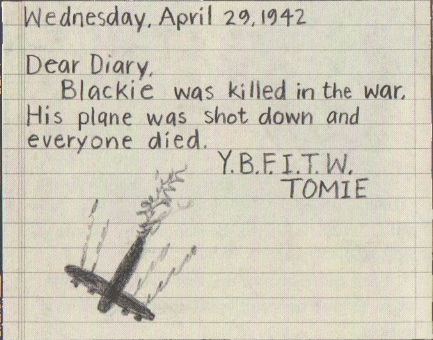
In Book 5, Things Will Never Be the Same, begins in January 1941, first-grader Tomie had just received his two best Christmas presents - a Junior Flexible Flyer sled and a diary with a lock and key, and so Book 5 begins with his very first diary entry.  With all the charm, honesty and bluntness of a very precocious and artistic 6 year old, Tomie takes us through the year 1941, diary entry by diary entry.  Each chapter begins with a short diary entry and the rest of the chapter goes into more depth everything that was going on at the time.  And 1941 is an exciting year for Tomie.  Through his diary, Tomie presents a wonderful picture of what life was life in that year preceding America's entry into the war.  Things he writes about include the day to day family life of the dePaola family, and the world of a first grader, for example, learning about President Roosevelt and the March of Dimes, and not being able to swim in the summer because of a Polio scare; the excitement over seeing Disney's Fantasia in the theater, his disappointment over who is second grade teacher is, about his tap dancing lessons which he loves, and of course all the holidays over the course of the year.  But all this changes on December 7, 1941.  Tomie writes in his diary:


As the dePaola's listen, along with the whole country, to the radio announcer talking about the attack on Pearl Harbor, Tomie's mother says to her family, "Things will never be the same."

Unlike Things Will Never Be the Same, which covers a whole yearBook 6, I'm Still Scared, diary entries only cover one month, December 7, 1941 to December 31, 1941, but is is a powerful month for second grader Tomie.  Not quite understanding what has happened and the implications of war, Tomie is a scared little boy and to make matters worse, no one really wants to explain what's going on to him.  Luckily for him, after listening to Roosevelt's speech on the radio, the family go to visit Tomie's grandparents and his grandfather, Tom, takes some time he talk to him about his fears.  But life had indeed changed.  At school, there were air raid drills, and at home, an air raid shelter had to be created in the basement just in case.  And Tomie had to contend with being called the ENEMY because of his Italian heritage.  War was everywhere.  Even at the movies showing a children's feature, the newsreels showed London in the Blitz, and Tomie realized it was the first time he had seen what war was like.  At the end of December, young Tomie is still scared.

Book 7, Why?, begins on January 1, 1942 and runs until April 29, 1942.  In his new diary, Tomie gives more details of his day to day life.  He writes about his excitement about being able to stay up late for New Year's Eve, of going to help in his grandfather's grocery store, and of his first surprise air raid drill at school.  But his real trouble comes when his teacher starts teaching the kids to write in cursive and refused to allow Tomie, a lefty, to hold the pen in a way that worked for him.  And Tomie talks more about his older brother Buddy and how angry/annoyed Buddy gets with him.  But perhaps saddest of all are the entries about his cousin Anthony A/K/A Blackie.  Blackie was a favorite cousin who had joined the Army Air Corps.  Tomie seemed able to adjust to everything involving the war - like rationing and air raid drills - but the news of Blackie's death is just incomprehensible to him.  In the end, he is left asking himself Why?

Book 8, For the Duration, is the final book in the 26 Fairmount Avenue series and begins on May 1, 1942 and runs through... Well, that's hard to say.  It seems that early on, Tomie's diary key disappeared.  While there are not more diary entries, Tomie still talks about his life and in 1942, patriotism is in full swing.  At school, Tomie gets very sad and runs out of the room when the class starts singing the Army Air Corps anthem.  At dancing school. there is a lot so rehearsing for a wonderful recital, but there are also bullies in the schoolyard who take his new tap shoes and start tossing them around.  And there are victory gardens and ration books and helping again in his grandfather's grocery.  Things between Tomie and his brother Buddy get worse and in the end, it is Buddy who has taken the diary key.  But one thing Tomie learns to understand completely is that some things disappear (chewing gum, fireworks) and other thing come into being (war bonds, war stamps), all "for the duration."

The 26 Fairmount Avenue series is an extraordinary group of chapter books recalling Tomie dePaola's early life living in Meridan, Connecticut.  For the most part, they are a series of vignettes told in great detail and include whimsical illustrations by Tomie thoughout the books.   Much of what Tomie writes is funny, charming, sad and so typical of kids that age.  Though I haven't reviewed for first four books here, I would really recommend the whole series to anyone who is a Tomie dePaola fan.  My only gripe is that we are left hanging about Buddy and the diary key.

And if you are a Tomie dePaola fan, be sure to read Lee Wind's interview with him:
Part 1 can be found here
Part 2 can be found here
Part 3 can be found here

These books are recommended for readers age 7+
Things Will Never Be the Same was borrowed from the Children's Center of the NYPL
I'm Still Scared was borrowed from the Yorkville Branch of the NYPL
Why? was borrowed from the Morningside Heights Branch of the NYPL
For the Duration was borrowed from the Bank Street College of Education Library

Nonfiction Monday is hosted this week by Tammy at Apples With Many Seeds


Monday, December 5, 2011

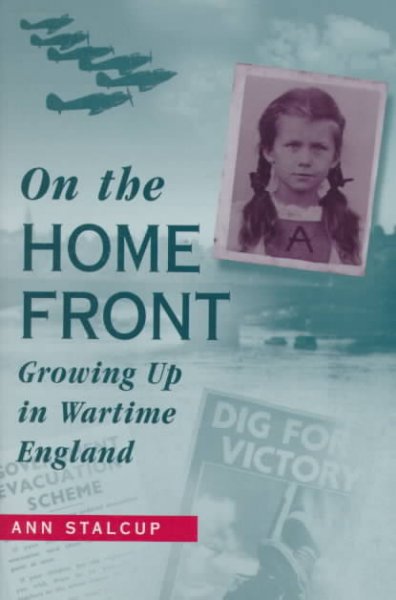
On the Home Front: Growing up in Wartime England by Ann Stalcup

In this slender volume, Ann Stalcup shares her memories of living through the Second World War as a young girl in Lydney, England, along the Severn River and close enough to Bristol to remember seeing the fires that resulted from a revenge bombing by the Germans. 

Stalcup’s earliest recollections was of people digging trenches and being afraid of her government issued gas mask at the age of 3 in 1938, when as all of England was preparing for war.  Then, Ann's father joined the Air Raid Patrol (ARP) in their village, and her grandparents in Birmingham built an Anderson Shelter in their backyard in Birmingham.  A year later England was at war with Germany, but all those preparations didn't prepare Ann for war.

Stalcup achieves a nice balance in this book, giving historical events from a more personalized point of view.  One very interesting example is the rescue of troops at Dunkirk.  Ann and all the people of Lydney felt part of that rescue when they discovered that one of the small ships had once been the pride and joy of a local man.  He had to sell it, but the buyer wrote and told him that his form boat would be making the trip across the English Channel

Other memories goes are about life within her home.  Immediately after the war began, the Stalcups had two 11 year old evacuees from London, along with so many other evacuated kids that the schools couldn't accommodate them, so they had to resort to split sessions: mornings the Lydney students, afternoons the evacuees.  Soon, two more evacuees joined them, but they returned home when the expected German attacks on England never happened that first year of war. 

Despite rationing, the author remembers how her mother was able to give her a 5th birthday party in 1940, though when her mother explained to one little girl that the centerpiece was not a real cake, the girl burst into tears of disappointment.  But Stalcup had her own disappointment, recalling that Queen Wilhelmina of Holland had lived nearby with her family for a while after the Netherlands was invaded.  She thought queens should always dress in gowns and tiaras, as Queen Mary did when she saw her before the war and was very disappointed by Queen Wilhelmina's drab clothing.

This is a book full of memories and anecdotes that covers each year of the war.  There are stories about the prisoners of war who helped out on farms, and who formed lifelong friendships with the English people they worked for.  Stalcup covers topics like the blackout curtains that everyone was required to hang, about longing for new shoes and why she never got them, and the joys of having a baby sister because it increased their ration. 

On the Home Front: Growing up in Wartime England is told in clear, simple language, perfect for young readers.  There is a glossary of unfamiliar terms used at the end of the book, as well as a bibliography for further reading.  There is also a collection of pictures included, some are personal photos from Stalcup’s family, so are simply stock photos, but interesting nonetheless. 

I like Stalcup’s writing style, too.  She sounds like she is speaking to you directly, simply reminiscing and telling some events in her life.  It reminded me of when I used to ask my mother to tell me about “the olden days” meaning her life as a girl. 

I also liked that in a number of places, Stalcup writes about being scared or not really understanding the things that were happening around her. I think it is so beneficial to young readers to hear an adult admit that they were once afraid or confused as children, since these young readers probably have often felt the same way in today’s world.

But what stands out in the book is the collective picture of how the English pulled together to get through the war, and which even at a young age, Ann Stalcup seems to have been proud to have been a part of.  The war ended when she was 10 years old, and, she writes, she could no longer remember a time when England was not at war. 

This book is recommended for readers age 8-11
This book was borrowed from Huguenot Park Branch of the NYPL     

Ann Stalcup received the following well-deserved honors for On the Home Front: Growing up in Wartime England:
1999 Selected as a Notable Trade Book in the Field of Social Studies by the Children’s Book Council.
1999 Selected as Outstanding Nonfiction Choice by The National Council of Teachers of English
1999 Selected as one of the 100 books on their 100 books on their Middle School California Collection list by the California Readers Committee

Non-Fiction Monday is hosted this week by Gathering Books


On the Home Front: Growing up in Wartime England
Ann Stalcup
Linnet Books
1998
91 Pages

Monday, October 10, 2011

Drawing from Memory by Allen Say

I met Allen Say at a “Meet the Artist” event at the Eric Carle Museum in 2007 when they were running an exhibit of his work called Allen Say: a Sense of Place. It was very nice to meet him, since he is a really charming, friendly person and one of my favorite author/illustrators.

While all of his books stem from his lifetime experiences, Drawing from Memory is Say’s first autobiographical work focused on how he became an artist. Born in Yokohama, Japan in 1937, he was taught by his mother to read at a very young age. Soon he was reading lots of comics and copying the pictures from them. He decided that he wanted to be an artist, and luckily, he had talent, but, unfortunately, not his parents blessing.

But then the war came and his life drastically changed. He and his mother left their home in Yokohama to live in relative safety with a mean uncle. Later, this mean uncle shows up in Once Under a Cherry Blossom Tree (one wonders how many of these kinds of people end up playing a dastardly role in future books.) Say’s father remained in Yokohama.

After the war, however, Say’s parents never got back together. His mother was forced to work financially and Say went to live with his grandmother, who also often and vocally disapproved of his artistic aspirations. But luckily Say got accepted into a school and was allowed to have his own apartment – at 12 years old. There he read about a great cartoonist, Noro Shinpei, and a young boy who had sought this man out and had become his apprentice. Say know at that moment what he needed to do.

Drawing from Memory gives readers an inside look at Allen Say’s development as an artist from childhood on, in both text and drawings. Many of the drawings are done from memory (hence the title of the book) with the exception of one sketch-book he didn’t burn before leaving Japan. The artwork is done in watercolor, pen and ink and various other mediums, all very effectively reflecting the emotions of the artist at the time. The drawings are punctuated with old photos giving credence to the drawings.

The book only covers Says life in Japan, before he came to America. But this was the period of his formation as an artist and was a very important time in his life. I did have a hard time believing he could leave his mentor, Noro Shinpei, with whom he was so happy, even though I know these things need to be done in order for an artist to come into his/her own.

Like all of Allen Say’s works, this is a wonderful book for both kids and adults. Kids, regardless of their future aspirations, if any, will find inspiration in Say’s journey to become an artist in the face of so many obstacles. Adults will learn, as Say’s mother did, to “Let you dear child journey.” (Pg 35)

Though Say doesn’t write much about his life during the war, I found the insider’s picture of post war Japan that he depicts in this book particularly interesting, since it is something we often don’t hear about. The unhappiness and discontent of the people that took place are depicted in the drawings demonstrations and clashes with the police. The people wanted jobs, money to live on, better education, a better government – in general a better world.

Drawing from Memory is a definite must for anyone who likes Allen Say’s previous work and for anyone not familiar with him.

This book is recommended for readers age 9 and up
This book was borrowed from the Webster Branch of the NYPL
 
Non-Fiction Monday is hosted today by Practically Paradise
 
 
Drawing from Memory
Allen Say
2011
Scholastic
63 Pages

Thursday, September 8, 2011

Sky: a True Story of Courage during World War II by Hanneke Ippisch

It isn’t uncommon for soldiers to return home from combat and never speak about their experiences. It is apparently also uncommon for people who work in resistance movements during a war to wait a long time before speaking about their experiences, if ever. Hanneke Ippisch was a young girl when World War II began, but she waited until she was 70 years old before telling her story about working for the Dutch Resistance. Hanneke was the younger daughter of a minister and his wife. She and her sister had a very comfortable life before Holland was forcibly occupied by the National Socialists in May 1940.

Everybody’s life immediately changed. Anything the Nazis needed/wanted was confiscated – they began with food and bicycles, which the Dutch were very dependent on. Later, they demanded anything, including long cherished family heirlooms, made of copper, brass and pewter be handed over, to be melted for bullets. And then, a curfew was established to curb any illegal activities. Life became harder and more unpleasant for everyone.

One night in 1943, Hanneke overheard her father speaking with a woman. Realizing what the conversation was about, she followed the woman home and told her she also wanted to work for the resistance. The woman told her to think about it for a few months.

Three months later, with the situation in Holland growing worse day by day, Hanneke went back to the woman and said she still wanted to work for the resistance. She was told to meet a certain man the next day, who gave her her first assignment - to bring false identity papers and food coupons to a Jewish family in hiding.

From then on, Hanneke’s job was to provide assistance to Jews. This included finding and escorting them to safe houses and even, sometimes, helping them escape Holland, getting food stamps and other necessities to them when they are in hiding and once resorting to hiding a group of Jews in the floor boards of her parent’s home. She was also responsible for taking Jewish children to the homes of Gentiles willing to take care of them as their own until after the war.

There were nine separate resistance organization in Holland during the war and Ms. Ippish gives some interesting details about they how worked together to accomplish things. Each group specialized in one area, for example, sabotage; falsifying documents, ID cards, food coupons etc; obtaining money to run things and cover expenses; assisting Jews,; communication specialists; printing specialists; and coding and decoding, where her father worked.

During the last year of the war, Hanneke, by now a very trusted member of the resistance, was given a new job. Every Friday, she was to find a place for the heads of the nine organizations for meet. One Friday in January 1945, she arrived at the meeting and was immediately arrested by the Nazis, along with five of the leaders.

She was put in prison, where conditions were deplorable. Prisoners were given little to eat, and often the rats got to it first, and everyone was covered with lice. Hanneke spent the rest of the war in a small, wet cell with five other women, except for the five days she spent alone in a dungeon room too small to even lie down in. But despite all this, she managed to not give any information to the Nazis when she was interrogated. Hanneke was still in prison when the war ended. All of the leaders of the resistance who had been arrested with her had been executed as traitors.

After the war, Hanneke worked in a variety of post war related jobs, before migrating to Montana in 1956, where she apparently still lives.

Sky is an interesting, exciting introduction to the Dutch Resistance told through one person’s personal involvement. It is a well-written book; the language used is clear and concise, making it an excellent introduction to this subject for young readers. Aside from detailing her own fascinating part in the resistance, Ms. Ippisch gives a comprehensive picture of what life was like for the people of Dutch under the Nazis. She also includes a selection of supporting photographs, many from her family’s collection; other photos were taken on a trip to Holland she made with her husband in the 1980s.

Also included are also copies of both real and counterfeit documents relating to the resistance. All information in occupied Holland was censured by the Nazis, but, at great risk, a copy from part of a newspaper that the allies dropped to let people know how the war was going outside the Netherlands, was saved by Hanneke’s family and is reproduced in Shy. A copy of the newspaper, “Haarlemsche Courant,” that was produced by the printing organization of the resistance, is also included though it is written in Dutch.

I think young readers might also be fascinated to see the incredibly small letters that she was able to sneak out to her family while in prison, especially when they read about how they were written and the translation of one letter and see how much information Hanneke was able to include on it.

This book is recommended for readers aged 9 and up.
This book was borrowed from the Soundview Branch of the NYPL.

More information may be found at the Dutch Resistance Museum, including an article on Wally van Hall, who was the head of the finance organization of the resistance, and one of the leaders with whom Hanneke worked and was arrested.

Monday, October 25, 2010

War Boy: a Wartime Childhood by Michael Foreman

I have wanted to read War Boy for a while, but had to wait because I needed to get it through Interlibrary Loan. I love ILL, and have been able to get so many great books using it. Thank you, NYPL.

War Boy was written and illustrated by Michael Foreman and the result is a charming book about his early childhood during World War II. His purpose is clearly to show what life was like for him, and with variations, for many other kids in wartime England. It is structured in a series of vignettes or memories, which are, by turns, humorous, sad, frightening and heartwarming. Altogether, they give a trenchant impression of Foreman’s early years and the war’s impact on his life and the lives of those around him.

Relying primarily on his own beautiful watercolor illustrations, with minimal text, Foreman literally paints a picture of life in Pakefield, Lowestoft, a small town on the east coast of Suffolk, England during the war. Because of its location, Lowestoft was a target for German bombing raids due to its being a coastal town, its large naval base and the Minesweeping Service that was also located there. It seems only appropriate, then, that Foreman would begin his story by describing the night an incendiary bomb came through the roof of his house, and exploded up the chimney. His older brother Pud put the fire out by throwing wet sand on it that was kept in the backyard. Foreman has enhanced this story, as he does throughout the book, with drawings of cigarette cards, enthusiastically collected by kids before the war, in this case, showing in pictures what to do if an incendiary bomb landed in your house. This is probably Foreman’s earliest memory of the war, since he was born in 1938 and the bomb fell on April 21, 1941.

Foreman’s mother had a small shop in Pakefield and a wide variety of soldiers and sailors spent time there because of its welcoming and homelike atmosphere. As a small child, he learned some very colorful language thanks to these guys, and was often dressed up as a soldier or sailor and drilled by them: “I was often inspected in the shop, then marched up and down the pavement while massed ranks of tea drinkers shouted ‘Left Right, Left Right, About Turn, Pick Them Feet Up.” (pg 28)

Included in Foreman’s account are the games played by the children in the area, candy they ate, loved and often didn’t get, schooldays and holidays, as well as some of the local characters one seems to find in all small towns. Interspersed among these ordinary aspects of life are detailed drawings of common wartime items like barrage balloons, airplanes such as Dorniers ans Stukas, and Anderson and Morrison shelters and how they all work.

Though nothing is written about in great detail, the world that Foreman lived in comes through clearly and concisely. It is a book recommended for readers ages 7-9, but I think that older kids would enjoy it as well, in part because Foreman includes the kinds of things kids often think are funny, especially those that involve bodily functions. Foreman not only writes and illustrates his own books, but has illustrated many other books in his very distinct style.

An exhibition of War Boy was presented by The National Army Museum in London, which unfortunately closed in June 2010. However, thanks to Culture24videos and YouTube, there are four short videos of an interview with Michael Foreman at the museum which I include here:


Non-Fiction Monday is hosted today by http://solvangsherrie.blogspot.com/

Saturday, October 2, 2010

The Diary of a Young Girl by Anne Frank

I know I can write. A few of my stories are good, my descriptions of the Secret Annex are humorous, much of my diary is vivid and alive, but… it remains to be seen whether I really have talent.
5 April 1944 (pg 247)

Today is the last day of Banned Book Week and I thought I would take a look at the history of Anne Frank’s famous diary and how it made its way into the arena of controversial books.*  Anne received her diary for her 13th birthday and used it to record her intimate thoughts and feelings about growing up and about life in the annex where she was in hiding from the Nazis for two years with seven other people.  Since it was first published in 1947, The Diary of a Young Girl has turned out to be a real chart topper – it is among one of the best selling young adult books of all time and it tops the list of commonly banned children’s books in public schools nationwide.

Its post-war history began when Anne’s manuscript was given to Otto Frank, the only surviving occupant of the secret annex, by Miep Gies when he returned home in1945 after being liberated from Auschwitz. As it happened, Anne had written two versions of her diary while in hiding, designated now at Version A and B. Version A is the original version. Version B is a rewrite of Version A and was done by Anne in 1944. She was hoping to publish it after the war was over. Version C is the diary edited by Otto Frank, a pick and choose combination of Versions A and B, in which he wrote in an epilogue that few kids probably read (including myself): ‘Apart from very few passages, which are of little interest to the reader, the original text has been printed.’

Version C is the edition that I read. It was sitting on a shelf at home and, one day when I was 11, I picked it up and read it. At some point, later on, I remember finding out that the diary had been edited. My friends and I, in our youthful zeal for truth, were incensed to think that her father had censored his daughter’s work, which amounted to about 30 percent of the original diary, having to do mostly with sexual references and Anne’s criticism of the other occupants of the attic.

This editing also proved to be most unfortunate when David Irving, a Holocaust denier, made allegations that Otto Frank, recognizing its financial possibilities, had written parts of the diary himself, and so it could not be taken seriously since it was a forgery. Claiming that a young girl’s record of her life in hiding is a sham also constitutes some form of censorship. Although it doesn’t seek to stop one from reading it, it does call into question its reliability for some people and devalues what had been Anne’s experience.

But Anne’s father wasn’t the diary’s only censor. The original Dutch publisher wanted certain tasteless or unseemly passages eliminated, mostly having to do with her development and sexual curiosity. The German publisher censored their edition of the diary by removing anything that would be offensive to German readers. In the United States, in 1982, it was challenged in Wise County, Virginia due to protests of several parents who complained that the book contains sexually offensive passages and undermined adult authority when Anne criticizes her mother. According to Dawn Sova in her book Literature Suppressed on Social Grounds, people have objected to the diary because Anne writes about the mistreatment of Jewish people. In 1983, four members of the Alabama State Textbook Committee called for the diary to be rejected because it is a “real downer.” In1998, it was removed for two months from the Baker Middle School in Corpus Christi, Texas after two parents charged that the book was pornographic. The book was returned after students waged a letter-writing campaign to keep it, and the review committee recommended the book’s retention. In 2010, The Diary of a Young Girl: the Definitive Edition was challenged and removed from the shelves of all Culpepper County, Virginia public schools and replaced with the original edition edited by Otto Frank (Version C.) The reason for this was one parent’s concern over the sexual nature of the unedited Definitive Edition.

Anne’s diary is now almost as infamous as it is famous. Recently it was the subject of a work by Francine Prose called Anne Frank: The Book, The Life, The Afterlife. In it, she looks at the diary not simply as the causal writing of a teenager but as a real work of art and Anne as a serious, prodigious writer. Anne has indeed achieved her goal of becoming a talented writer, and, through her writing, she has achieved her other goal of living on even after her death, but not without controversy and most unfortunately not the way that she had dreamed it would happened.

A page from Anne's diary

A more in depth look at the history of Anne’s diary can also be found at


This is an excellent site about Anne Frank and I would encourage everyone to explore it.


*I will look at the content of the diary in the near future.       

Monday, September 13, 2010

Going Solo by Roald Dahl

September is Roald Dahl month and September 13th is Roald Dahl Day in honor of his birthday – he was born in Wales in 1916. For that reason, I have chosen to look at one of his autobiographical books, Going Solo, for Non-Fiction Monday.

Going Solo begins with Dahl traveling to East Africa to work for the Shell Oil Company in 1938 at the age of 22. It took two weeks to travel from London to Mombasa by boat and Dahl provides vivid, humorous descriptions of some of his fellow travelers, which he characterizes as “that peculiar Empire-building breed of Englishman who spends his whole life working in distant corners of British territory,” And they are a set of characters, for instance, the elderly Major and his wife who exercise every morning by running around the ship’s deck – stark naked. Or his roommate who sprinkles Epsom Salt on his shoulders everyday to look like he has dandruff in order to hide the fact that he wears a wig.

Dahl was stationed at a place called Dar es Salaam, Tanzania, then called Tanganyika. He lived there with two other young Shell employees and their servants, but was also required to travel to Shell outposts, often for a month at a time. Dahl doesn’t go into any detail about his job, but he does about the people, the land and especially the animals he encountered.

I loved that life. We saw giraffe standing unafraid right beside the road, nibbling the tops of trees. We saw plenty of elephant and hippo and zebra and antelope and very occasionally a pride of lions. The only creatures I was frightened of were the snakes. (pg 26)
Dahl also provides amazing anecdotes about encounters with a lion and the dreaded killer mamba snakes he was so afraid of.

As soon as war was declared against Germany, Dahl was ordered to leave his job and became a temporary Army officer. His first order was to round up all the German civilians, mostly shopkeepers, in the area and put them in an internment camp, even though they had been doing friendly business with them all along. There was one ugly incident doing this, but in the end the task is accomplished, although the German women and children were allowed to return to their homes instead of the camp.

In November 1939, Dahl decided to join the Royal Air Force, traveling alone for 600 miles to enlist in Nairobi. Flight training went well and Dahl was assigned to the 80 Squadron in the Western Desert. Flying solo to reach them, he could not find a landing airstrip to refuel before nightfall and was forced to land his plane in the desert, where it hit a boulder and burst in flame. Dahl survived, but spent months in hospital recovering from his injuries. Once he was sufficiently recovered, he was sent to Greece where the 80 Squadron had relocated and discovered they were expected to defend against a very well equipped enemy, the Germans and the Vichy French, with only 15 one man Hurricane planes of their own. Given his descriptions of the air battles with Germans, it is amazing anyone survived, and actually, not many did including Dahl's good friend, David Coke. Dahl seems to have had great good luck all through his RAF days. He was transferred to Palestine after Greece was captured by the Germans in April 1941. One of the oddest stories he tells was of finding a group of German Jews, about 50 children and two adults in the middle of a secret landing strip in Haifa, who had actually helped to build the landing strip.

Altogether, Dahl flew sorties from April 1941 to June 1941 often as many as five times a day. He was invalided out of the RAF and sent back to England when he began to experience terrible headaches that caused him to blackout while flying. These headaches were the result of his old crash injuries.

I found Going Solo to be an oddly engaging book, pulled in from the start by Dahl’s wonderful descriptions of what was going on around him, first on the ship and then in Dar es Salaam and later in Kenya. Of course, the book was written in 1986, so one must always keep in mind that Dahl’s memories had forty years to marinate. Generally, I space out when I am confronted with detailed descriptions of military things because I don’t really understand that kind of stuff. However, I found Dahl’s explanations to be quite interesting and understandable without sounding condescending. Dahl loved photography and many of the black and white photos he took from this time in his life are interspersed throughout the book, as well as maps and bits of letters and telegrams.

Dahl originally wrote about his RAF experiences in a 1946 book called Over to You: Ten Stories of Flyers and Flying, which is also still available, but the stories are definitely not meant for young readers.

The official Roald Dahl website can be found at http://www.roalddahl.com/

This is the original book I found in the Hunter College Library and read.  There is a new reissue of it available now as shown.


Non-Fiction Monday is hosted today by http://www.rascofromrif.org/