Wednesday, July 17, 2013

From the Archives #25: The Quest of the MIssing Map by Carolyn Keene

What did girls read during WWII when they wanted to get away from the war?  Well, one of the things they liked to read were the same books that Laura Bush, Hilary Rodham Clinton, Oprah Winfrey, Sonia Sotomayor, Ruth Bader Ginsburg, Gayle King, Diane Sawyer, Nancy Pelosi, as well as Congresswoman Pat Schroeder, filmmaker Pamela Beere Briggs, SEC Chairwoman Mary Jo White, and Federal Judge Roslynn R. Mauskopf, American Girl Molly McIntire and I read, and maybe you did, too.

What am I talking about?
None other than Nancy Drew, the teenage girl detective who wore frocks and drove a roadster.  And, now that American Girl is going to retire Molly and her friend Emily Bennett, an evacuee from the London Blitz, I thought I would have a look at the Nancy Drew book that sat on Molly's night stand all these years.  

The Quest of the Missing Map was published in 1942, shortly after the US entered WWII.  The quest begins when Hannah Gruen, the Drew housekeeper, asks Nancy to help the Smiths, a family that she used to work for.  They are in possession of half of a map given to Mr. Smith by his father, a sea captain indicating a small uncharted island in the Atlantic where he had buried a treasure.  Now, needing money, the Smiths would like to find the other half of the map.  That half had been in possession of the twin brother of Mr. Smith but the twins had lost track of each other over time.

The search for the lost brother leads Nancy to a widow, Mrs. Chatham and her young daughter Trixie living on an estate not far away.   The estate had originally been owned by an inventor and there are all kinds of secrets places hidden away, especially in a small cottage on the grounds.  And as it turns out, the widow had been married to the lost twin brother, now deceased.

But, of course, Nancy isn't the only one who is suddenly looking for the treasure map.  Leaving the Smith home, Nancy realizes she is being followed by a Mr. Bellows, who had tried to buy the Smith's half of the map earlier  Later, the Smith home is robbed of the map.  The Smiths are upset, but Nancy had drawn a copy of the now missing half of map.  Unfortunately, she is overheard by a couple who also want to find the treasure when she tells the Smiths about her copy.

Later, at a college dance Nancy is attending with boyfriend Ned Nickerson, the couple kidnap her to try to get the map, though Nancy manages to easily get away.  But Nancy soon discovers that a clue may be in a ship model that Mrs. Chatham had sold.  Unfortunately, the crooks also learn about this, but again Nancy makes a copy of what she finds after hunting down the ship model.

The quest for the map begins to take dangerous turns and Nancy is in turn kidnapped twice, tied up, knocked out and robbed.  And ironically, no one really knows if there is a real treasure to be found or if this is just a wild goose chase.

Treasure or no treasure, this is an exciting Nancy Drew story.  There is a lot more action than I remembered, but one thing is for certain - Nancy is one cool headed character and we often get to witness her logical reasoning.  Though she consults her father, lawyer Carson Drew, occasionally, she is a very competent, feisty, independent 18 year old, and it doesn't hurt that she has that nice blue roadster for getting around.  Small wonder Nancy had such an impact on the lives of so many girls.

It is often said that Nancy Drew's world is never impacted by realities such as the Depression of the 1930s or World War II.  And that was how I remembered the series.  So imagine my surprise when I came across two war related references.  While exploring, Nancy and her friend George found two letters and a machine of some kind in a secret tunnel on Mrs. Chatham's estate.  One of the letters mentions the machine might be of interest to the War Department (pgs 76-89).   Later, an old man tells Nancy "War bickering...Yes, there's plenty of it these days.  What the world's a-coming to I don't know." (pg 141

Most of the Nancy Drew books I read were hand-me-downs which is how I ended up with some old original editions belonging to I don't know who.  But I am pretty certain I read the same edition as the book on Molly McIntire's nightstand.  Take a look at the title page:

Click to enlarge and read

The Quest of the Missing Map is the first time I have reread a Nancy Drew book since I was about 10 years old.  I can't say it was my favorite story, but I'm not sure I want to reread any more Nancy Drews.  I think I would rather let my romanticized memory of the books remain intact.   Sometimes that is just the better thing to do.

This book is recommended for readers age 9+
This book is part of my personal library

The New Yorker Magazine published an interesting article by Meghan O'Rourke from 2004 called Nancy Drew's Father (her creator/publisher Edward Stratemeyer not Carson Drew) in which she writes about Nancy's beginnings and her continues success.

The Quest of the Missing Map was ghost written by Mildred Wirt Benson, who wrote many of the early books in the Nancy Drew series.  You can find out more about Mildred and the other books she wrote HERE 

This is book 2 of my 2012 Cruisin' with the Cozies Reading Challenge hosted by Socrates' Book Review

This is book 5 of my Pre-1960 Classic Children's Books Reading Challenge hosted by Turning the Pages

Saturday, July 13, 2013

Flight Officer Joan Worralson reporting for duty...again. The Relaunch of Worrals of the WAAF by Captain W. E. Johns

The original Worrals
While Americans were busy with their 4th of July barbecues, fireworks and fun, our fiends across the pond were busy with something special of their own.  No, it wasn't the royal birth.  What it was was the relaunch by IndieBooks of the first three Worrals books originally written by Captain W. E. Johns during WWII at the RAF Museum in London.

Flight Officer Joan Worralson was first introduced to British girls in September 1941 with the publication of Worrals of the WAAF (reviewed here).  This was followed by 10 more novels and one book of short stories detailing the flying adventures of Worrals and her best friend Frecks in the Women's Auxiliary Air Force.  Though only supposed to ferry planes between their makers, aerodromes and the front, Worrals and Frecks manage to get themselves involved in all kinds of wartime situations other than ferrying.

Worrals was a much needed strong, competent role model for girls during those difficult and dangerous days of the war.  Fearless, feisty, witty, and plucky, Worrals was everything a girl could want in a protagonist even though Frecks probably embodied the average girl more - avoiding danger, enjoying chocolate and reading film star magazines were more her thing.

It has been a long while since the Worrals books were published and now they are sometimes difficult and/or expensive to find.  I know that from experience.  When I was working on my dissertation, it took me quite a long time to track them down and I was never able to find all 11 Worrals books.

But now with the relaunch of Worrals in the WAAF, followed by Worrals Carries On and Worrals Flies Again and the rest of the Worrals oeuvre, today's reader can enjoy reading about Joan Worralson's exploits once again.  The only two differences - we are not in the midst of a world war and there are new updated illustrations.  The original books had lovely realistic illustrations.  The new illustrations were done by Matt Kindt, a name that might already be familiar to any graphic novel fans.

The new Worrals 

Captain J. E. Johns, who also wrote the Biggles novels (reviewed here) stills has lots of old and new fans, so these new editions of Worrals should be welcome additions to many personal libraries.  If you are unfamiliar with Worrals, you can find lots of information at Roger Harris' dedicated Worrals website HERE.

Worrals is recommended for readers age 12+
Worrals of the WAAF was sent to me by the publisher

Tuesday, July 9, 2013

Kid Soldier by Jennifer Maruno

It all begins with a bicycle in a store window.  Richard Fuller, 15, decides that is what he wants but knowing his laundress mother could never afford to buy it for him, he is determined to earn the money himself.

Richard begins with a job picking fruit and generally helping out an elderly farmer, than moves on to delivering bread with Mr. Black, the baker in Niagara Falls, Ontario.  Both men take Richard under their wing, so to speak, but it is Mr. Black who initiates Richard into the life of a soldier.   Mr. Black invites Richard to the opening ceremonies at a Canadian Army Summer Camp where he is the cook.   Later, knowing that Richard is underage, Mr. Black uses his influence to get Richard into the camp under the name of someone who couldn't make it.

It turns out that Richard is quite good at signaling and enjoys his two weeks of playing soldier, taking much of what is thrown at him in stride, and not being terribly bothered that the other men, who smoke, drink and gamble. are older than he is.

Not long after he returns home, Canada finds itself at war with Germany and Richard, still under the influence of Mr. Black, decides to enlist, but under his own name not the assumed name of summer army camp.  And because he is a known face at the enlistment office, Richard manages to enlist using just his library card.  Unfortunately, his actions lead to an estrangement with his mother.

Eventually, Richard is shipped overseas, but that first year of war was a quiet one, earning the name the phony war.  But again, Richard takes it all in his stride, and excels at what he does.  Though he misses his mother, his spirits are buoyed by the support he gets from Mr. and Mrs. Black and from Amy, his next store neighbor who provides a humours  bit to the novel.  Amy keeps knitting socks for Richard, but they always seem to get lost along the way.  She finally comes up with a great plan for definitely getting the next pair of socks to him - it is such a good plan, even Richard is afraid to open the package.

But eventually the phony war ends and the Blitzkrieg begins and the reality of war really hits very close to home for Richard.

In her Author's Note, Maruno explains that many of the episodes and incidents she includes in Kid Soldier were based on details gotten from her father's diary, which give the novel a very tangible sense of historical reality.  Her father, like Richard, also participated in the army's summer camp under the same name as Richard - Chester Lee Huston.  It is hard to believe that a 15 year old boy could get away with enlisting, but it did happen, even in WWII.  

I found Kid Soldier to be an interesting novel.  The fact that a boy as young as 15 could be accepted into the army so easily is a very scary thought, but the idea of child soldiers always is and is something that still occurs in some parts of the world.  This was also an especially interesting novel because it was about a Canadian boy's experience of the war and books about that aren't as numerous as American or British books, even though the Canadians fought just as hard and suffered so many causalities.

The novel is well-written with well defined characters.  Written in the third person, the voice of the narrator is engaging, and the character of Richard is very likable, making this an very readable novel.

This book is recommended for readers age 13+
This book was an E-ARC from Netgalley.com

Wednesday, July 3, 2013

Movie Matinee #3: Felicity, an American Girl 1775

This review contains spoilers

It is spring 1775 in the British colony of Williamsburg, Virginia and it is also Felicity Merriman's 10th birthday.  Not your average girl of the time, Felicity loves horses and would rather ride her horse through the fields and pastures of Williamsburg than help out at home.

But her mother is determined that Felicity learn how to be a proper gentlewoman and signs her up for classes that will give her the skills she will need.  There, she meet Elizabeth Cole and her snooty older sister Annabelle.  Felicity and Elizabeth become immediate friends, though Annabell looks down on the Merrimans because Felicity's father is a merchant, not a gentleman.

Of course, gentlewoman lessons involve learning how to make and serve tea properly, but tea has already become a point of conflict between the loyalists, those who are loyal to the crown, and the patriots, who want independence from Britain because of the high tax on tea without any representation in Parliament.  The Merrimans, including their 15 year old apprentice Ben, are patriots while the Coles and Felicity's grandfather are loyalists.

Felicity has also fallen in love with a spirited mare she names Penny.  Penny is being abused by her owner, Jiggy Nye, who is trying to tame her.  Felicity is convinced she can tame Penny and begins to sneak out at night to try.  And she eventually succeeds.  But when she hears Jiggy Nye yell in a fit of anger that anyone who came ride his horse, is welcome to her, Felicity takes him at his word.  Accused of horse theft, Felicity must later return Penny to Jiggy Nye.  That night, Felicity again sneaks out and frees Penny.

Meanwhile, apprentice Bee has gone missing.  But summer has come and the Merrimans are off to visit grandfather, who surprises Felicity when he gives her Penny.  One day, Felicity overhears bounty hunters looking for Ben, who they say ran away to join General Washington's troops.  She takes Penny and find the injured Ben, convincing him to come to her grandfather's and to ask for her father's forgiveness.

Returning to Williamsburg, Felicity learns that the father of her friend Elizabeth has been imprisoned for being a loyalist.  Felicity's father sees no reason for his arrest and promises to try to get him out of prison.  While visiting him, Felicity also sees Jiggy Nye in the same cell.  Feeling pity for him, she brings him a blanket and some food.

Over the course of not quit a year, Felicity grows from a self-centered, impulsive girl who wants nothing more than to be independent to a thoughtful girl who cares about others, but there is still much in store for her.  Both her mother and Penny have pregnancies that result in life-threatening births.  Felicity manages to take care of the house and family maturely, efficiently and responsibly while her mother's life hangs in the balance.  And when Penny's foal is a breech birth, Felicity has the wisdom to turn to the one person who can help her - Jiggy Nye.

There are lots of historical elements in Felicity besides being an engaging coming of age story.  The two sides, patriot and loyalist, are explained clearly in the context of the story so that young viewers will have no trouble understanding the events that led to the American Revolution.  And in keeping with the themes of freedom, independence, and responsibility, the practice of apprenticeship is also clearly presented.  Apprenticeship was a legal contract to learn how to do something, and when Ben ran away, regardless of his ideological reasons, he broke the law by reneging on this contract.  The grandfather's reaction when Ben returns, that he should be imprisoned, give a good idea of how serious an apprenticeship was.

Felicity is an excellent movie, that may appeal to boys as well as girls.  It certainly was a hit over and over in my house whenever my niece L'naya visited.  We spent a lot of time drinking tea and talking about loyalists and patriots.  And in case Felicity looks familiar to you, it is because she is played by a 13 year old Shailene Woodley, whose acting career has really taken off in the last few years.

Shailene Woodley

This movie is recommended for viewers age 7+
This movie was purchased for L'naya by me.

Although the American Girl Felicity doll was retired a few years ago, you can still access lots of fun stuff and information about Felicity's world and the movie at the following web addresses:


This is part of my 2013 American Revolution Reading Challenge hosted by War Through the Generations

Happy Independence Day!


Monday, July 1, 2013

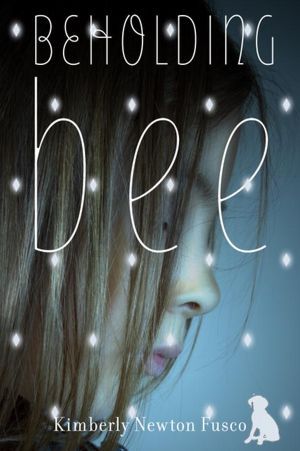
Beholding Bee by Kimberly Newton Fusco

It is 1942 and the effects of WWII are beginning to be felt in the traveling carnival where 12 year old Bee tends the hot dog stand.  Most of the men are gone - drafted or enlisted, and now sugar and gasoline being rationed and life in the carnival is getting harder and harder for the owner, Ellis.

Bee has lived in the back of a hauling truck with Pauline ever since she was 4 and her parents were killed in an accident.  Ellis wants to put her into the sideshow.  Bee has a diamond-shaped birthmark that covers one side of her face and he is sure people will pay good money to gawk at it.  Pauline has always protected Bee from this fate, but when Ellis sends her to Poughkeepsie to work in a stationary show, life becomes much harder for Bee.  Luckily, just as she needs someone to hold on to, a little dog the color of butterscotch that she names Peabody comes into Bee's life.

All Bee has really ever wanted is a permanent home and family, and now at Ellis's mercy and with Pauline gone, she realizes she must find that for herself.  So one morning, Bee runs away from the carnival with Peabody and Cordelia, a little piglet from the show.  And then she comes upon it - the absolutely perfect gingerbread house where two elderly ladies are living and waiting for her.  But wait, one of those ladies is familiar to Bee, she has seen her off and on before whenever things had gotten tough.

Bee moves in but it doesn't take long to realize something isn't quite right about Mrs. Potter and Mrs. Swift.  They certainly provide for her, even if they don't eat much, and they make sure she begins school, even if she is put in a 'special' class of kids separated from the 'regular' kids.  There, Bee makes a best friend, Ruth Ellen, a girl with a brace on her leg because of polio, and a worst enemy, Francine, a girl who continuously bullies her because of the 'diamond' on her face.

But more and more, Bee is bothered by the fact that only she and Peabody can see her caretakers.  One the one hand, it causes Bee problems with the nosy neighbor who thinks she's living in the house alone and the school principle who wants them to come to school for a meeting.  One the other hand, Bee loves these two odd ladies and doesn't like to be reminded that they came to help her and won't be able to stay forever.

Still, life is ever so much better for Bee now, except for the bullying over the birthmark so that she stills feels the need to cover up by pulling her hair tightly over it "like a curtain."  But sometimes, at home or at Ruth Ellen's, Bee forgets about her birthmark.

But then Mrs. Potter and Mrs. Swift begin to visibly fade away.  Was life in her gingerbread house too good to be true for Bee?  Or will she find the strength and courage to fight for the home and family that she wants so badly?

Beholding Bee is one of those Middle Grade novels I couldn't put down.  Bee, the book's first person narrator, tells her story in short, sometimes very short, chapters and in language so conversational it feels like she is speaking directly to you and only you.  Sometimes when she is speculating on a thought or idea, or when she is trying to figure out why someone has done something, her voice has an endearing quality I don't find often enough in Middle Grade novels.

And there is a lot going on in this wonderful coming of age story - issues around bullying, inclusion in school, self-esteem, self-reliance, courage.  Pauline has always protected her, especially from bullies, but now Bee is, essentially, on her own and must learn to take care of herself, even if that does mean making mistakes along the way.

This is a home front novel and there are some wonderful WWII references throughout the book giving the setting a real feeling of the time.  But the one realistic aspect that always gets to me in these books are the way they make you realize how very, very vulnerable children, are especially during a war.  Had Bee not found the courage to run away from a greedy adult who just wanted to exploit her, she would most certainly have ended up a carnival side show attraction with no one to stand up for her and stop it.

I have always like fantasy and sci-fi, but nothing pulls me into a book quite like magical realism.  And so I loved Beholding Bee.  Set so completely in reality, you begin to wonder about Mrs. Potter and Mrs. Swift.  Ghosts from the past? Figments of Bee's imagination?  I guess you will just have to read Beholding Bee and decide for yourself.

One more thing - Peabody is definitely the dog of my dreams.

This book is recommended for readers age 9+
This book was purchased for my personal library