With the fall of France and the war becoming worse for Britain, it was time for the Lockwood children, 12 year old Cecily and Jeremy, 14, to leave London. So it was off to Heron Hall, to their Uncle Peregrine Lockwood's estate, with their mother, Heloise.
Traveling on the train to the same village were groups of school children also being evacuated from London by the government. These school children are taken to the town hall and as Cecily watches them leaving one by one with women who were to care for them for the duration, she asks her mother if they couldn't also have a child. May Bright, 10, seems to fit the bill, despite her indifference towards Cecily.
Feeling powerless and picked on by her brother, Cecily wants someone that she can control and have power over. But May is an independent child with a mind of her own. And though she isn't impressed that her new luxurious surroundings at Heron Hall are more than she is accustomed to, it is the vast fields and woods that attract her. And in among it all are the remains of Snow Castle, a once beautiful castle made of white marble, where she meets two young oddly dressed boys. At first, believing they are evacuees running away from an unpleasant placement, it soon becomes apparent that something else is going on with these two boys.
When May and Cecily ask Uncle Peregrine about the castle, he begins to tell them, little by little each evening, the haunting story of Richard III, of his brother King Edward IV's death, of his two sons, the eldest of whom is next in line for the throne and how Richard had hidden the two boys in the Tower of London in order to make himself King.
Meanwhile, Jeremy, frustrated that he can't do anything to help the war effort but hid out in the country, he wants so very much to make his mark on the world. Each day, Jeremy reads the newspaper accounts of the war, becoming more and more exasperated that he is not there help. And so one night, he runs away to London. There, he discovers a burning, war torn London that he could never have imagined. Stunned by what he sees, feeling smaller than ever, Jeremy manages to do the very thing he sets out to do - help the war effort. It is his coming of age moment and Jeremy returns to Heron Hall a very different boy.
No one can turn a phrase, creating a hauntingly brilliant story quite like Sonya Hartnett can. Gracefully creating lyrical phrases, and characters that are hard to forget as you begin to recognize parts of yourself in each of them. There is spoiled, selfish Cecily, who, the reader thinks, will grow up to be just like her shallow, socialite mother, Heloise, but who surprises us so often; May, quiet and thoughtful, careful but unafraid, she becomes a favorite of Uncle Peregrine (kindred souls? maybe); Jeremy, on the cusp of becoming a young man and wanting to get there way too soon - all so realistically and captivatingly drawn.
The Children of the King is the story of the powerlessness of children and the people who want to control them - of the two princes at the hands of Richard III who craves power and control, of England's children at the hands of German bombs, sent by a dictator who also craves power and control. But it is on a smaller scale that we see how little power and control others really have over us unless we let them. Despite all Cecily's attempt at controlling May, she is the one who remains an independent spirit. And it is by running away, that Jeremy discovers the power each of us has to change another person's life.
Just as she did in The Midnight Garden, Hartnett once again uses the device of magical realism and of a story within a story. Here, they is used as a means of connecting past and present, reminding us that the past is never past, it lives in the present or as May tells the two boys in the castle "Everything is connected…We are here because you are here."And the dialectic that Hartnett creates in The Children of the King is just wonderful.
I should tell readers that there are a few graphic descriptions when Jeremy goes back to London, giving a sense of realism, but not graphic enough to scare away middle grade readers. And one does not need to already know the story of Richard III to understand Uncle Peregrine's story, he weaves in enough of it for readers to understand it perfectly well.
I put off reading this novel because I was afraid that I would be disappointed. The Midnight Garden was such a brilliant book, had Hartnett set her own bar too high? No, the bar is high but The Children of the King is right up there. But, in the end, all I can says is fans of Sonya Hartnett, rejoice! To those who will be reading her for the first time with this novel, you are lucky ducks.
This book is recommended for readers age 10+
This book was and eARC from Net Galley
The Children of the King will be available on March 25, 2014
This is book 4 of my 2014 Historical Fiction Reading Challenge hosted by Historical Tapestry
Showing posts with label Magical Realism. Show all posts
Tuesday, March 11, 2014
Tuesday, November 5, 2013
The Midnight Zoo by Sonya Hartnett, illustrated by Andrea Offermann
After Andrej, 12, his brother Tomas, 9, and baby sister Wilma escape the carnage that soldiers have wrought upon their parents and other members of their Romany caravan, they wander by night in search of food and other necessities, always fearing and avoiding the Leader's soldiers. One night, they wander into a village that has been totally demolished by bombs. Going through the rubble, looking for anything useful in the ashy remnants, they discover that the village zoo is still intact and decide it is a safe place to stop. It is the one place that is still intact, complete with soft, grassy lawn.
Curiosity gets the best of the boys and as they go from cage to cage, they discover the ten animals - a wolf, a lioness, a monkey, a seal, a kangaroo, an eagle, a chamois, a bear, a llama and a boar - are still alive, though they are a neglected, starving menagerie. But while they are exploring, planes flying overhead begin to drop bombs on the already ruined village once again.
And when the planes leave, to be amazement of the boys, the animals start talking. As night unfolds, they tell the two boys about the zoo, the zookeeper and his daughter, Alice. Alice loved and cared for the animals but when the Leader's soldiers invaded their country, Alice became a resistance fighter. Within the safety of the zoo, she and the other resistance fighters planned a way to sabotage an enemy train. The sabotage was successful, but the Leader became very angry and took revenge on the village, continually bombing it even though nothing is left but the zoo. Alice had to go into hiding in the mountains, but promised the animals that she would return.
As night wears on, each of the animals tell the boys how they came to be caged in the zoo. And the boys share their story with the animals. Each story is different, but each shares a common thread - loss of family, loss of freedom. I don't want to go into detail about their individual stories, because I think would spoil it for any future readers. They should be read not synopsized.
The novel is always referred to as a WW2 story and it certainly sounds like one. Hartnett has said that she really hates the idea of having to tell the reader "everything in clunking detail," but it is easy enough to flush out details that correspond to events in the novel. The reference to the Leader reminds us that Hitler was also called der Führer (the leader). The fact that the boys are Romany places the novel in Eastern Europe, and the invaders remind us of the German soldiers who invaded Czechoslovakia. When Alice and her friends sabotage the enemy train, a close friend of the Leader is killed, a parallel of the killing of Hitler's friend and Gestapo head Reinhard Heydrich in Prague in 1942. Angered and wanting revenge, Hitler ordered the massacre of Lidice.
I think that Hartnett deliberately kept these facts and events vague for two other reasons. First, she may have wanted this to be an ageless fable, not one that only relates to WW2, but to all conflicts. And second, because, as she said in an interview, she wants the reader to be "...part of the experience that is a book, and I like the reader to have some input into the creation of the work - to decide what happens in the end, if need be."
This second reason may be why there are so many mixed reactions to The Midnight Zoo. The story just doesn't have a tidy ending. But there is a tidy ending - the children and the animals find the elusive freedom they crave. How they find it isn't so tidy and depends on how you read some of Hartnetts's hints (my interpretation is below)
The Midnight Zoo is one of the most lyrically written books I have ever read. Hartnett masterfully combines realism , magical realism and personification to create an almost dream-like fable reminding us of the destructive nature of war. Accompanying the text are soft, almost ethereal black and white illustrations by Andrea Offermann at the beginning of each chapter, as you can see below, and full color cover illustration.
This book is recommended for readers age 10+ but I would age it at 12+
This book was purchased for my personal library
A PDF copy of an extensive teaching guide by Dr. Pam Macintyre for The Midnight Zoo can be found HERE
This is book 13 of my 2013 Historical Fiction Reading Challenge hosted by Historical Tapestry
Hartnett does not spare the reader any of the horrors of war in her descriptions. Knowing this, when I came to the end of the novel, I didn't not see it as hopeful or life affirming. At the end, when the figure of a woman in a dark cape appears, the children and animals see who they want to see, someone they believe will take care of them. For Tomas, she is his mother, for Andrej, she is Saint Sarah, patron saint of the Romany; for the animals, she is Alice. And when I thought back on the sentence "They had journeyed to the final edge of life beyond which there were no walls,"(pg 214) my initial reaction was that the planes had returned with their bombs and it was the moment of death when the woman called the children come and eagle prepares to fly, but it was also the moment when they have found true freedom in death.
Curiosity gets the best of the boys and as they go from cage to cage, they discover the ten animals - a wolf, a lioness, a monkey, a seal, a kangaroo, an eagle, a chamois, a bear, a llama and a boar - are still alive, though they are a neglected, starving menagerie. But while they are exploring, planes flying overhead begin to drop bombs on the already ruined village once again.
And when the planes leave, to be amazement of the boys, the animals start talking. As night unfolds, they tell the two boys about the zoo, the zookeeper and his daughter, Alice. Alice loved and cared for the animals but when the Leader's soldiers invaded their country, Alice became a resistance fighter. Within the safety of the zoo, she and the other resistance fighters planned a way to sabotage an enemy train. The sabotage was successful, but the Leader became very angry and took revenge on the village, continually bombing it even though nothing is left but the zoo. Alice had to go into hiding in the mountains, but promised the animals that she would return.
As night wears on, each of the animals tell the boys how they came to be caged in the zoo. And the boys share their story with the animals. Each story is different, but each shares a common thread - loss of family, loss of freedom. I don't want to go into detail about their individual stories, because I think would spoil it for any future readers. They should be read not synopsized.
The novel is always referred to as a WW2 story and it certainly sounds like one. Hartnett has said that she really hates the idea of having to tell the reader "everything in clunking detail," but it is easy enough to flush out details that correspond to events in the novel. The reference to the Leader reminds us that Hitler was also called der Führer (the leader). The fact that the boys are Romany places the novel in Eastern Europe, and the invaders remind us of the German soldiers who invaded Czechoslovakia. When Alice and her friends sabotage the enemy train, a close friend of the Leader is killed, a parallel of the killing of Hitler's friend and Gestapo head Reinhard Heydrich in Prague in 1942. Angered and wanting revenge, Hitler ordered the massacre of Lidice.
I think that Hartnett deliberately kept these facts and events vague for two other reasons. First, she may have wanted this to be an ageless fable, not one that only relates to WW2, but to all conflicts. And second, because, as she said in an interview, she wants the reader to be "...part of the experience that is a book, and I like the reader to have some input into the creation of the work - to decide what happens in the end, if need be."
This second reason may be why there are so many mixed reactions to The Midnight Zoo. The story just doesn't have a tidy ending. But there is a tidy ending - the children and the animals find the elusive freedom they crave. How they find it isn't so tidy and depends on how you read some of Hartnetts's hints (my interpretation is below)
The Midnight Zoo is one of the most lyrically written books I have ever read. Hartnett masterfully combines realism , magical realism and personification to create an almost dream-like fable reminding us of the destructive nature of war. Accompanying the text are soft, almost ethereal black and white illustrations by Andrea Offermann at the beginning of each chapter, as you can see below, and full color cover illustration.
This book is recommended for readers age 10+ but I would age it at 12+
This book was purchased for my personal library
A PDF copy of an extensive teaching guide by Dr. Pam Macintyre for The Midnight Zoo can be found HERE
This is book 13 of my 2013 Historical Fiction Reading Challenge hosted by Historical Tapestry
**Not really a Spoiler, but my interpretation of the ending**
Monday, July 1, 2013
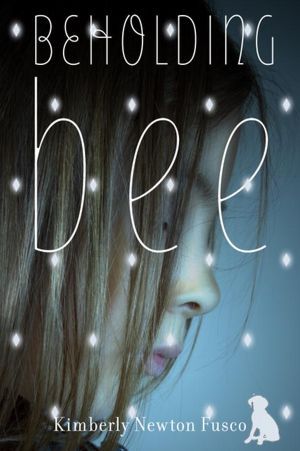
Beholding Bee by Kimberly Newton Fusco
It is 1942 and the effects of WWII are beginning to be felt in the traveling carnival where 12 year old Bee tends the hot dog stand. Most of the men are gone - drafted or enlisted, and now sugar and gasoline being rationed and life in the carnival is getting harder and harder for the owner, Ellis.
Bee has lived in the back of a hauling truck with Pauline ever since she was 4 and her parents were killed in an accident. Ellis wants to put her into the sideshow. Bee has a diamond-shaped birthmark that covers one side of her face and he is sure people will pay good money to gawk at it. Pauline has always protected Bee from this fate, but when Ellis sends her to Poughkeepsie to work in a stationary show, life becomes much harder for Bee. Luckily, just as she needs someone to hold on to, a little dog the color of butterscotch that she names Peabody comes into Bee's life.
All Bee has really ever wanted is a permanent home and family, and now at Ellis's mercy and with Pauline gone, she realizes she must find that for herself. So one morning, Bee runs away from the carnival with Peabody and Cordelia, a little piglet from the show. And then she comes upon it - the absolutely perfect gingerbread house where two elderly ladies are living and waiting for her. But wait, one of those ladies is familiar to Bee, she has seen her off and on before whenever things had gotten tough.
Bee moves in but it doesn't take long to realize something isn't quite right about Mrs. Potter and Mrs. Swift. They certainly provide for her, even if they don't eat much, and they make sure she begins school, even if she is put in a 'special' class of kids separated from the 'regular' kids. There, Bee makes a best friend, Ruth Ellen, a girl with a brace on her leg because of polio, and a worst enemy, Francine, a girl who continuously bullies her because of the 'diamond' on her face.
But more and more, Bee is bothered by the fact that only she and Peabody can see her caretakers. One the one hand, it causes Bee problems with the nosy neighbor who thinks she's living in the house alone and the school principle who wants them to come to school for a meeting. One the other hand, Bee loves these two odd ladies and doesn't like to be reminded that they came to help her and won't be able to stay forever.
Still, life is ever so much better for Bee now, except for the bullying over the birthmark so that she stills feels the need to cover up by pulling her hair tightly over it "like a curtain." But sometimes, at home or at Ruth Ellen's, Bee forgets about her birthmark.
But then Mrs. Potter and Mrs. Swift begin to visibly fade away. Was life in her gingerbread house too good to be true for Bee? Or will she find the strength and courage to fight for the home and family that she wants so badly?
Beholding Bee is one of those Middle Grade novels I couldn't put down. Bee, the book's first person narrator, tells her story in short, sometimes very short, chapters and in language so conversational it feels like she is speaking directly to you and only you. Sometimes when she is speculating on a thought or idea, or when she is trying to figure out why someone has done something, her voice has an endearing quality I don't find often enough in Middle Grade novels.
And there is a lot going on in this wonderful coming of age story - issues around bullying, inclusion in school, self-esteem, self-reliance, courage. Pauline has always protected her, especially from bullies, but now Bee is, essentially, on her own and must learn to take care of herself, even if that does mean making mistakes along the way.
This is a home front novel and there are some wonderful WWII references throughout the book giving the setting a real feeling of the time. But the one realistic aspect that always gets to me in these books are the way they make you realize how very, very vulnerable children, are especially during a war. Had Bee not found the courage to run away from a greedy adult who just wanted to exploit her, she would most certainly have ended up a carnival side show attraction with no one to stand up for her and stop it.
I have always like fantasy and sci-fi, but nothing pulls me into a book quite like magical realism. And so I loved Beholding Bee. Set so completely in reality, you begin to wonder about Mrs. Potter and Mrs. Swift. Ghosts from the past? Figments of Bee's imagination? I guess you will just have to read Beholding Bee and decide for yourself.
One more thing - Peabody is definitely the dog of my dreams.
This book is recommended for readers age 9+
This book was purchased for my personal library
Bee has lived in the back of a hauling truck with Pauline ever since she was 4 and her parents were killed in an accident. Ellis wants to put her into the sideshow. Bee has a diamond-shaped birthmark that covers one side of her face and he is sure people will pay good money to gawk at it. Pauline has always protected Bee from this fate, but when Ellis sends her to Poughkeepsie to work in a stationary show, life becomes much harder for Bee. Luckily, just as she needs someone to hold on to, a little dog the color of butterscotch that she names Peabody comes into Bee's life.
All Bee has really ever wanted is a permanent home and family, and now at Ellis's mercy and with Pauline gone, she realizes she must find that for herself. So one morning, Bee runs away from the carnival with Peabody and Cordelia, a little piglet from the show. And then she comes upon it - the absolutely perfect gingerbread house where two elderly ladies are living and waiting for her. But wait, one of those ladies is familiar to Bee, she has seen her off and on before whenever things had gotten tough.
Bee moves in but it doesn't take long to realize something isn't quite right about Mrs. Potter and Mrs. Swift. They certainly provide for her, even if they don't eat much, and they make sure she begins school, even if she is put in a 'special' class of kids separated from the 'regular' kids. There, Bee makes a best friend, Ruth Ellen, a girl with a brace on her leg because of polio, and a worst enemy, Francine, a girl who continuously bullies her because of the 'diamond' on her face.
But more and more, Bee is bothered by the fact that only she and Peabody can see her caretakers. One the one hand, it causes Bee problems with the nosy neighbor who thinks she's living in the house alone and the school principle who wants them to come to school for a meeting. One the other hand, Bee loves these two odd ladies and doesn't like to be reminded that they came to help her and won't be able to stay forever.
Still, life is ever so much better for Bee now, except for the bullying over the birthmark so that she stills feels the need to cover up by pulling her hair tightly over it "like a curtain." But sometimes, at home or at Ruth Ellen's, Bee forgets about her birthmark.
But then Mrs. Potter and Mrs. Swift begin to visibly fade away. Was life in her gingerbread house too good to be true for Bee? Or will she find the strength and courage to fight for the home and family that she wants so badly?
Beholding Bee is one of those Middle Grade novels I couldn't put down. Bee, the book's first person narrator, tells her story in short, sometimes very short, chapters and in language so conversational it feels like she is speaking directly to you and only you. Sometimes when she is speculating on a thought or idea, or when she is trying to figure out why someone has done something, her voice has an endearing quality I don't find often enough in Middle Grade novels.
And there is a lot going on in this wonderful coming of age story - issues around bullying, inclusion in school, self-esteem, self-reliance, courage. Pauline has always protected her, especially from bullies, but now Bee is, essentially, on her own and must learn to take care of herself, even if that does mean making mistakes along the way.
This is a home front novel and there are some wonderful WWII references throughout the book giving the setting a real feeling of the time. But the one realistic aspect that always gets to me in these books are the way they make you realize how very, very vulnerable children, are especially during a war. Had Bee not found the courage to run away from a greedy adult who just wanted to exploit her, she would most certainly have ended up a carnival side show attraction with no one to stand up for her and stop it.
I have always like fantasy and sci-fi, but nothing pulls me into a book quite like magical realism. And so I loved Beholding Bee. Set so completely in reality, you begin to wonder about Mrs. Potter and Mrs. Swift. Ghosts from the past? Figments of Bee's imagination? I guess you will just have to read Beholding Bee and decide for yourself.
One more thing - Peabody is definitely the dog of my dreams.
This book is recommended for readers age 9+
This book was purchased for my personal library
Subscribe to:
Posts (Atom)