Thursday, May 31, 2012

Toys Go To War: World War II Military Toys, Games, Puzzles and Books by Jack Matthews

My original interest in World War II began with children's books when I was working on a project about books published in the 1930s and 1940s.  For that project, the stories all had to be written during that time period and had to be about how the war impacted the lives young people for young readers.  Pretty much the same perimeters as my blog.  In fact, I called this blog The Children's War because the Second World War impacted the lives of children more than any other modern war ever had.  Millions of people, including children, were moved through evacuations, resettlement or transported to concentration camps right from the beginning and in some cases, even before the war began.

Some of my vintage WWII books 
I managed to amass a large collection of books to meet my criteria from England, Germany and the United States.   But, given my love of pop culture, it didn't take long for my  interest to spread into other areas.  Before I knew it, I was looking at comic books, rationing, knitting, and, inevitably, toys that were also part of the experience of young people during the war.

So I sent for a copy of Toys Go To War, not because I wanted to start another collection, the books were quite enough, and besides that, I couldn't afford to think about toys financially and there simply wasn't room for that in my house.  So I content myself with looking through the pages of Jack Matthews Toys Go To War.
Here is a wonderful book that gives a pictorial, often anecdotal history of World War II toys, followed by chapters devoted to various kinds of toys.  The chapters are divided by the kinds of toys or pastimes under discussion.  There are chapters on puzzles and books, wooden toys, toys obtained by collecting cereal boxtops and toys that are put together by the owner, among others.  And one example of the kinds of anecdotes included is the one that tells how God Bless America is substituted for Gesundheit whenever someone sneezed, because Gesundheit was an enemy word.

Since most factories were turned over to war production, and metals, rubber and paper used for making necessary munitions, there wouldn't seem to be much left for childhood entertainments.  And yet, toys and games were produced, most of which were designed to instill/reinforce a sense of patriotism in kids.  Cardboard planes, tanks and even soldiers could be found under a Christmas tree, paper dolls became even more popular then previously and books were printed according to the war economy (which means that today the pages are quite browned and brittle - some of an older cousins old hand-me-down Nancy Drew books are from this time period and can't even be opened anymore with extensive damage to the pages.)

This is a great book if you are interested in what kids played with or even how kids were propagandized into supporting the war.  There is a small valuation guide at the back if you might want to start collecting, but I think the main purpose of this book is just to see what kids played with during this most difficult of times and maybe even a walk down memory lane for the author.  Matthews also includes, as you will see, some of the German games that are really not so very different from the games produced for American and British children (German books for boys and girls are not so very different either.  They were nothing like I expected them to be.  For the most part, they were just patriotic stories, but not the kind of virulent anti-Semitism I had expected.)

Some example of what can be found in Toys Go To War:
Wartime Wedding Paper Dolls

Books for Boys and Girls

Bubble Gum Cards, Paper Doll Military Clothes

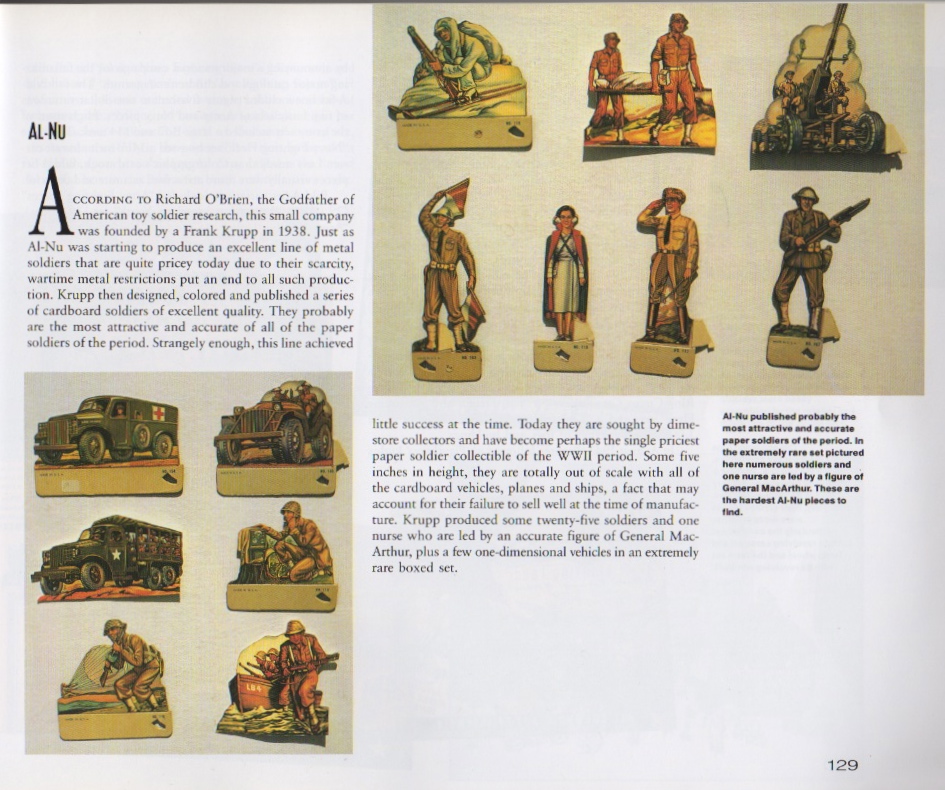
Soldier Paper Cut Outs for Boys

Patriotic Puzzles
Games for German Children
The book is recommended for readers age 10+
This book was purchased for my personal library.

Tuesday, May 29, 2012

Code Name Verity by Elizabeth Wein

"It's like being in love, discovering your best friend."
                                                             Verity (page 88)
From Electric Monkey Books:
Two young women become unlikely best friends during WWII, until one is captured by the Gestapo.
Only in wartime could a stalwart lass from Manchester rub shoulders with a Scottish aristocrat, one a pilot, the other a special operations executive.  Yet whenever their paths cross, they complement each other perfectly and before long become devoted to each other.  But then a vital mission goes wrong, and one of the friends has to bail out of a faulty plane over France.  She is captured by the Gestapo and becomes a prisoner of war.  The story begins in Verity's own words, as she writes her account for her captors.
Truth or lies? Honour or betrayal? Everything they've ever believed in is put to the test.

From Disney - Hyperion:
Oct. 11th, 1943 - A British spy plane crashes in Nazi-occupied France.  Its pilot and passenger are best friends.  One of the girls has a chance at survival.  The other has lost the game before its barely begun.
When "Verity" is arrested by the Gestapo, she's sure she doesn't stand a chance.  As a secret agent captured in enemy territory, she's living a spy's worst nightmare.  Her Nazi interrogators give her a simple choice: reveal her mission or face a grisly execution.
As she intricately weaves her confession, Verity uncovers her past, how she became friends with the pilot Maddie, and why she left Maddie in the wrecked fuselage of their plane.  One each new scrap of paper, Verity battles for her life, confronting her views on courage and failure and her desperate hope to make it home.  But will trading her secrets be enough to save her from the enemy?

OK, I need to rely on the publisher's blurbs to help me not give away too much of this most wonderful of stories.
I finished reading Code Name Verity at 2 o'clock in the morning because I couldn't put it down.  When I woke up a few hours later, I picked it up and began reading it all over again.  It is just that powerful.

Simply put, it is a story about the friendship between two young women during the Second World War.  Maddie, a commoner who is also a gifted mechanic and whose love affair with flying began on an ordinary Sunday while out with her then best school friend Beryl.  The two girls had gone for a picnic tea on Maddie's motorbike, a Silent Superb, when a plane crash landed in a field not far away from them and, after rescuing the pilot, another young woman, Maddie knew that she too wanted to fly.  And so she became a gifted pilot and airplane mechanic, became part of the ATA program (Air Transport Auxiliary) ferrying planes around England and doing her bit for the war effort.

Verity is a well-bred, well-educated Scottish girl who grew up in a castle, went to school in Switzerland, speaks fluent German and who is doing her bit for the war effort as a British spy.  They would be unlikely friends under normal conditions, but war makes for strange bedfellows and it didn't take long for Verity and Maddie to realize they "make a sensational team.

The story is told in two parts.  Part One is Verity's version of the events leading up to her friendship with Maddie and how they ended flying together to Nazi occupied France.  Now in the hands of the Gestapo, and at their mercy, Verity is providing them with what they want - information about England's airfields, wireless codes and any other information they believe will help them conquer the British.

Part Two is not told from Verity's point of view.  And in order to avoid spoilers, I shall leave it at that.

Needless to say, Code Name Verity is one of the best books I have read in a long time, best not just because it it a good story, but because it kept me guessing and questioning for just long enough.  And I love a good unreliable narrator and Verity is one of the most delicious of these, spinning out her tales like Scheherazade to buy more time and playing a game with her cruel German literature loving Gestapo captor SS Hauptsturmführer von Linden.

Bravos to Elizabeth Wein for crafting such a wonderful story.  She has clearly done her WWII research for Code Name Verity and  it is apparent throughout the entire book with rich details woven into the the story.  And it is mesmerizing, the whole book holding you in its grip wanting the next part of Verity's narrative.  When I came to the end of Code Name Verity the first time I read it, and it all came together and made sense, the only thing I  could do was shake my head and say out loud "Elizabeth Wein, you are wizard, utterly brilliant."

In fact, Elizabeth Wein wrote an article on how she researched Code Name Verity which you can read here.

Or visit her on her website E Wein and be sure to look at some of her wonderful WWII knitting.

This book is recommended for readers age 14+
The UK edition of this book was purchased for my personal library (and I am glad I did, cause I like the cover so much more than the US edition)
The US edition was received as an E-ARC from netgalley.com


This is book 4 of my European Reading Challenge hosted by Rose City Reader
This is book 3 of my Historical Fiction Challenge hosted by Historical Tapestry

Saturday, May 26, 2012

Memorial Day 2012

This weekend we celebrate Memorial Day.  Memorial Day was originally called Decoration Day, because it was a time when people would decorate the graves of those soldiers who has fallen in war to honor and remember them.

In many of the national cemeteries, they still mark all the graves with a flag for this weekend.  This makes me feel good, since my baby brother is buried in one of those cemeteries.

I always think of the poem "In Flanders Fields" on Memorial Day because I had to learn it in school and never forgot.  The poem has an interesting history.

In 1915, Lieutenant Colonel John McCrea who a poem called "In Flanders Fields" while presiding over the funeral of a fellow fallen soldier who was killed in the Second Battle of Ypres in Belgium and buried in Flanders Fields, a field were red poppies grew everywhere.  McCrea was not very happy with the poem he wrote and threw it away, but one of his fellow officers saved it.  It was published in Punch on December 8, 1915.

In What Have We Learned, Charlie Brown? which was broadcast for Memorial Day in 1983, Linus recites "In Flanders Fields" while the Peanuts gang is visiting the cemetery there:


So, if you see a vet selling poppies this weekend, and you decide to buy one, remember that the money goes towards helping needy veterans.  Oh, and by the way, they are mady by vet themselves, and although they receive a small amount of money for making poppies, so many it is their only source of income.

All this being said, have a happy, healthy and safe Memorial Day and have some fun, too.

Wednesday, May 23, 2012

Victory (Resistance Book 3) by Carla Jablonski and Leland Purvis

With Victory, Book 3, the talented team of Carla Jablonski and Leland Purvis will bring their graphic novel trilogy about kids working in the French Resistance during World War II to its conclusion when it is published on July 17, 2012.

Victory begins after the Nazi occupation of France and one month after the allied invasion of Normandy.  For the first time, victory seems to be a possibility for the allied forces, but tensions are also running very high.  As Nazi losses increase, so does their cruel treatment of their victims.  And now, to make matters worse, there is infighting among the different resistance groups.

Paul Tessier has just gotten himself arrested by the Milice (a paramilitary group of Frenchmen formed by the Germans to do their dirty work) to find out what cell another resistance worker is being held in.  When he is freed, Paul hurriedly reports back to his friend and fellow resistance worker Jacques with the information.

Meanwhile, Paul's older sister Sylvie is still dating a German soldier in order to get information from him about Gestapo plans.  When the soldier tells her that the Gestapo is going to search in the Jura Mountains for the Marquis, a group of resistance fighters, she immediately reports back to Jacques and Paul.  Trouble is, however, it looks like Sylvie is beginning to fall for the German soldier, which could be a real problem.

Paul and Jacques now want the resistance workers to arm themselves with stolen German weapons.  Since they only have a few weapons, they decide to sabotage a trains using what they have and manage to get more of from the Germans on the train. In retaliation and believing the citizens of this small southern French town know who attacked the train, the Nazis begin to execute 10 townspeople every hour until someone turns the saboteurs in.

While all this is going on, Marie, Paul's younger sister, has been deeply depressed about their father, who is missing in a German POW camp, and their Jewish friend and former neighbor Henri, whom Paul and Jacques helped to escape to Paris earlier, where he was reunited with his parents that everyone had believed to be dead.  While out walking in the woods, Marie finds a downed allied airplane with a wounded pilot.  She gets Paul to help her hide the pilot so his wounds can be taken care of.  The pilot was on a mission to deliver a message to resistance fighters in Paris from DeGaulle in London about the direction he wants the resistance to go in now that the Germans are losing the war.  Naturally, Paul and Jacques volunteer to complete the pilot's message, arriving in Paris just in time participate in the Battle of Paris that ultimately leads to its liberation from its German occupiers and the return of Charles DeGaulle.  But not before a few surprises for Paul.

Victory is every bit as exciting, informative and well done as the previous two volumes, and every bit a well written as Resistance and Defiance.  This story, like it predecessors, is full of intrigue, adventure, danger, and suspense.  Altogether these excellently done graphic novels give an interesting perspective on a part of World War II most people don't really know about and would probably not like to think about their kids participating in - young peoples involvement in resistance movements throughout Europe.  But it makes you realize how incredibly brave these young people were in the face of such odds.

Leland Purvis has also continued to produce exceptionally well detailed drawings perfectly matched to the text and Hilary Sycamore's coloring only adds to the over effect of the graphics.

All in all, the Resistance trilogy is well worth reading and should be appeal to the most reluctant readers.

This book is recommended for readers age 12+
This was received as an E-ARC from netgalley.com

Victory will be published on July 17, 2012.

Tuesday, May 22, 2012

Top Ten Tuesday #8: Top Ten Blog/Sites That Aren't About Books


Top Ten Tuesday is a weekly event hosted by The Broke and the Bookish

Here are my personal top ten favorite non-book related sites or blogs in no particular order

1- Pinterest - a great place to do exactly what you are supposed to do with it - pin up things you want to remember for whatever reason AND you don't need to clutter your real world with any of it until you want to do something you have pinned.

2- Twitter - I am not a big tweeter but I love Twitter for what I do use it for, not to mention finding more than a few really great people on it.

3- Wendolonia - this is a bento website that I like to follow because when I need to take lunch somewhere, I bento.  Well, I don't make cute bento food, just healthy stuff in little bento boxes.  

4- INY so I like to read lots of NY history sites, but my favorite is Daytonian in New York.  Here Tom Miller gives a detailed history about some of my favorite NYC buildings and homes.

5- Skype - i am on skype a lot talking to my kiddo in China, in fact as I write this, I am chatting with her.

6- Facebook - I mostly use my personal FB page to keep in touch with my cousins scattered around the globe.

7- YouTube - because somewhere on YouTube someone has uploaded just the thing you want.

8- Wikipedia - for instant gratification when you need to know something.

9- Photobucket - to fix up those nice graphics and photos for my blog and for other projects I am working on.

10- The New York Times - even though I get the paper delivered, I find I use the Times website at least once a day, mostly for archived information, especially old book reviews and recipes.

What are your favorite non-book related place on the web?